Strong 5.5 magnitude tremor scares Tokyo residents and agency rules out giant waves
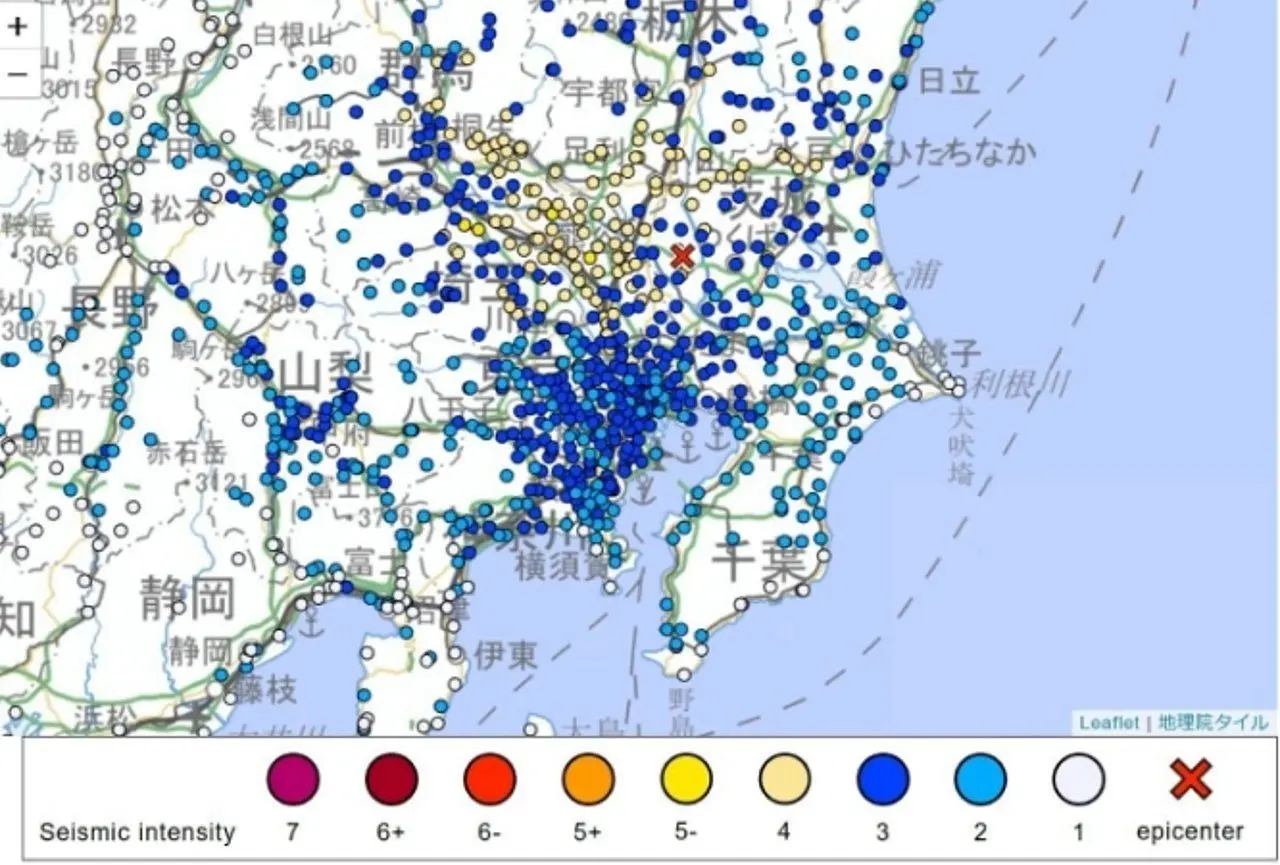
A strong earthquake of magnitude 5.5 surprised residents of greater Tokyo overnight on Tuesday, local time. The geological phenomenon reverberated through several areas of the Kanto region, prompting an immediate response from the Japan Meteorological Agency (JMA). To the relief of millions of residents living near the coast, government experts quickly confirmed that there is no possibility of giant waves forming from this event.
Epicenter of the geological phenomenon and most affected areas in Ibaraki
Official data indicate that the origin of the tectonic rupture occurred in the southern portion of Ibaraki Prefecture. The clock was showing exactly 7:45 pm when the earth began to shake with greater violence, reaching level 5 in a national metric that assesses the physical impact of the earthquake, whose maximum limit reaches 7.
- Ota Municipality, located within the territory of Gunma Prefecture, where the impact reached level 5.
- Kazo City, belonging to the jurisdiction of Saitama Prefecture, which also registered the same force.
- Several other neighboring districts and communities felt the direct impact of underground movement.
How the Shindo metric works to measure surface impacts
The Japanese territory adopts a unique measurement system called Shindo, which classifies tremors into levels from 0 to 7 based on visible damage and human perception. Unlike the Richter scale, which calculates the total energy released at depth, the local method focuses on what happens on the streets and inside homes. In practice, level 5 is enough to knock over unsecured furniture, break crockery and make walking without support difficult. The exact force felt by each neighborhood varies drastically depending on the composition of the soil and the exact distance to the breaking point.
Cutting-edge technology and infrastructure guarantee civil protection
Living with the constant threat of earthquakes has transformed the Asian country into the biggest global reference in survival engineering. Urban legislation requires that all modern buildings have shock absorbers or flexible bases capable of absorbing extreme shock without collapsing. In parallel, a complex network of underground sensors triggers alarms on the entire population’s cell phones seconds before the main impact reaches the surface, guaranteeing precious time for people to seek shelter under tables or move away from windows.
Leia Também

Messi reaches 19 goals in FIFA World Cups with great free kick for Argentina in clash with Jordan

Cristiano Ronaldo shines beyond the pitch at the 2026 World Cup with business empire and family luxury

At 41, Cristiano Ronaldo reaffirms his historic legacy and prepares to shine in the 2026 World Cup
Rapid analysis by authorities removes danger of coastal flooding
Minutes after the initial scare, government seismologists completed reading the tide gauges and issued the definitive report ruling out any change in sea level. Tectonic movements that occur in the interior of the continent, or at extreme depths below the ocean floor, rarely have the mechanics necessary to displace large masses of water. This transparent and agile communication by the State is essential to maintain public order, avoiding unnecessary evacuations and ensuring that routine returns to normal as quickly as possible.