
US-Iran peace deal advances, but major disagreements persist over nuclear future and crucial shipping

The nations of the United States and Iran, involved in a military conflict since the end of February, announced last weekend the realization of an understanding to end hostilities.
However, this declaration does not represent an immediate end to the war. The pact establishes, as an initial measure, a period of ceasefire, functioning as a pause in the clashes, and not the final conclusion of the aggressions.
This interruption of hostilities would last while both nations negotiate the central element of the agreement, which remains undefined: the entirety of Iran’s nuclear program, a topic of global concern. Furthermore, other relevant issues, such as maritime circulation in the strategic Strait of Hormuz, vital for international trade, and the financial reparation owed to Iran, await complete clarification.
The full terms of the understanding will be released next Friday (19), during a formal document signing event, scheduled to take place in Geneva, Switzerland.
Main points of contention that persist in the agreement
The future of Iran’s nuclear program remains uncertain
This aspect represents the core of the discussions and has not yet been resolved. The pact to be formalized on Friday determines, as announced by Tehran, that representatives of both countries must reach a consensus within a maximum period of sixty days.
The Trump administration insists that Iran fully discontinue its nuclear activities, which Washington claims are aimed at developing atomic weapons. This accusation was, in fact, the primary justification for the US attack on Iran on February 28, triggering the conflict.
Then-President Trump mentioned that his delegation of negotiators demanded the entry of an autonomous commission in Iran to track all nuclear material and transfer the already enriched uranium, currently on Iranian soil, out of the country, with Russia being a possible destination, having already offered itself for this role.
Tehran, in turn, refutes these allegations, stating that the atomic program has exclusively peaceful and civil purposes.
The issue appears to be complex and, so far, Washington and Tehran have shown great distance in reaching a common agreement.
Scenario for navigation in the Strait of Hormuz still has obstacles
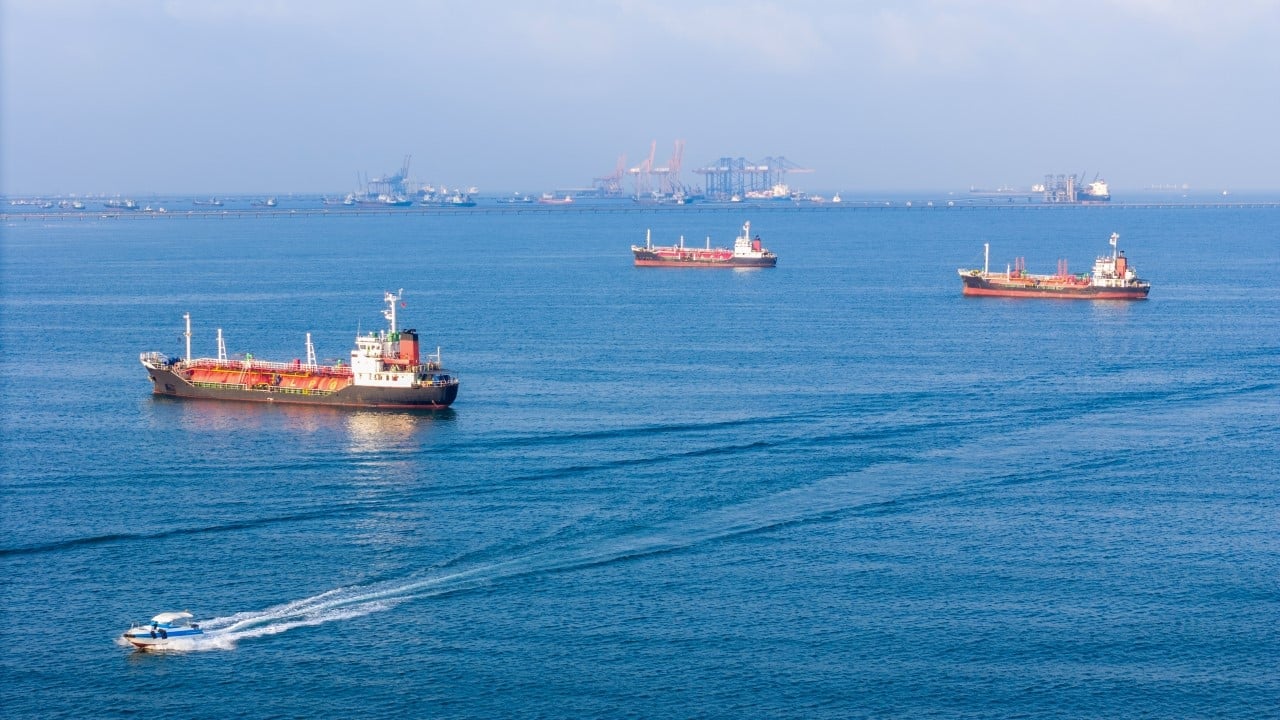
Both the US and Iran have declared that the Strait of Hormuz, a maritime region that became an epicenter of friction during the conflict, will be opened to traffic immediately.
Similarly, Donald Trump assured that he had issued orders to lift the naval embargo imposed by US Navy vessels at the entrance to the strait, which prevented the passage of ships trading with Iranian port terminals in the area.
However, the alignment of opinions ends at this point. Last Monday (15), Trump even declared that the circulation of vessels in the canal had already resumed shortly after the announcement. However, Iran, which has practical control over maritime flow in Hormuz, did not corroborate this information.
The Iranian Ministry of Defense, additionally, reported that it will impose a “service tax” on vessels crossing the strait, in direct contradiction to Donald Trump’s statement that the agreement explicitly vetoes the charging of any toll for local naval traffic.
Additionally, Iran has installed naval mines in the strait as a method of regulating passage, although the exact location of these devices is uncertain, including for authorities in Tehran.
A thorough operation to deactivate all explosives present could extend over a period of up to fifty days. Before this happens, as required by insurance companies and maritime logistics companies, passage through the strait will remain impractical for cargo transport.
Sanctions relief and financial compensation are points of friction
Among the demands formalized by Iran to conclude the clash are the removal of sanctions imposed on the sale of oil, petrochemical products and their derivatives, in addition to the unrestricted release of Iranian financial assets that remain blocked.
The United States, in turn, accepted the easing and mitigation of economic restrictions, but in a progressive manner and linked to effective compliance with the terms of the pact.
Tehran’s main purpose is to reactivate its oil exports, aiming to revitalize the national economy, which has been severely impacted by more than three months of clashes.
The Iranian government also expects the US and its partners to propose a restructuring plan for the country, with a minimum amount of US$300 billion, as a form of reparation for the damage caused by the conflict. Washington has so far refrained from commenting on this request.
Persistence of conflict and occupation in Lebanese territory generate disagreement
This is one of the topics with the least convergence of ideas, especially between Israel and the other parties involved in the negotiations.
The official communication on the understanding, delivered by the Prime Minister of Pakistan, Shehbaz Sharif, highlighted that the definitive interruption of military actions would also cover the combat front in Lebanon.
The cessation of Israeli attacks on Lebanese soil constitutes an explicit condition from Tehran for the formalization of the agreement. This is due to Iran’s alliance and financial support for Hezbollah, a group that has been the target of Israel’s attacks in Lebanon. The terrorist organization had launched attacks against Israel days after the start of the conflict, as a form of retaliation for US and Israeli bombings against Iran.
On Monday, then-Prime Minister Benjamin Netanyahu declared that his military forces will maintain a presence in the “security zones”, areas already occupied by Israel within Lebanese territory, and that they will remain there “as long as necessary”.
It remains uncertain whether the understanding includes any withdrawal or military concession by Israel with regard to its troops deployed in the neighboring country.



