
Democratic Republic of Congo marks return to the World Cup after 52 years in great sapeur style

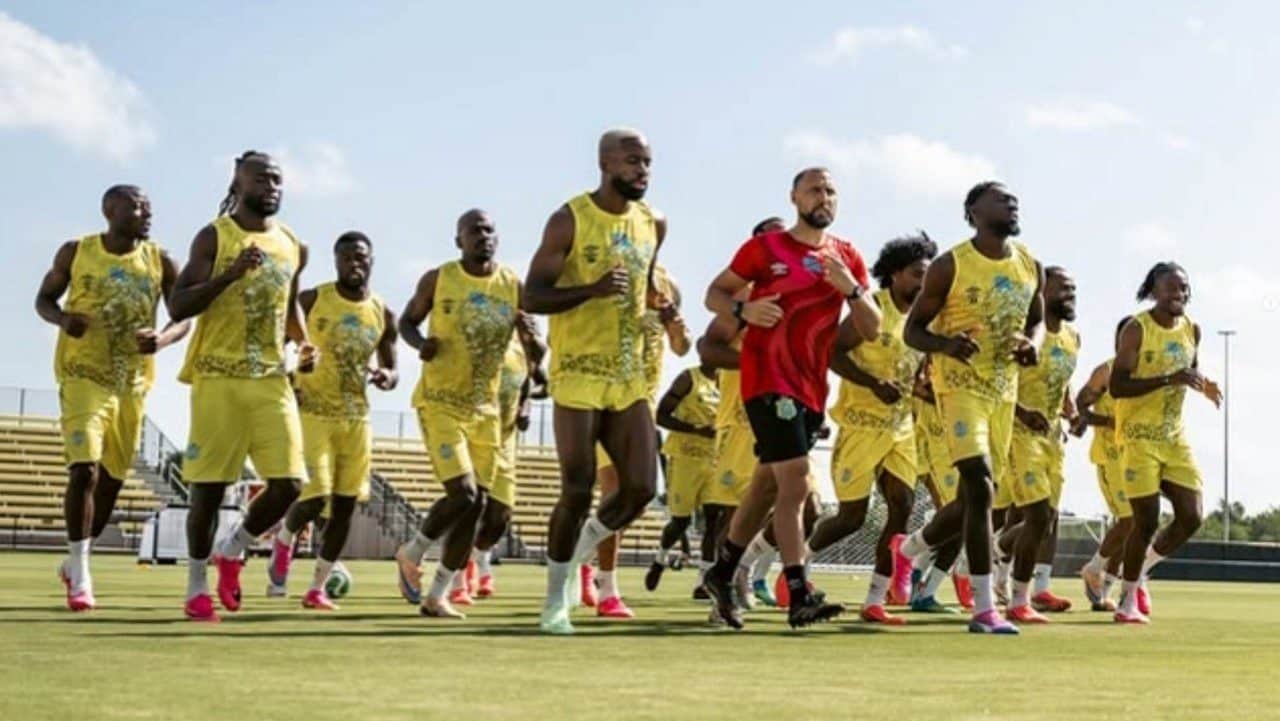
The players from the Democratic Republic of Congo made a strong impression when they arrived in Houston, in the United States, for the World Cup. The arrival of the delegation marked a historic moment for football in the country, breaking a long 52-year fast without participating in the global tournament.
Attention was not just focused on sports presence. The team chose tailored outfits, consisting of black suits with leopard print details, which quickly went viral. This choice of clothing has become a powerful cultural statement, capturing looks and generating discussions on social media about contemporary African style.
The remarkable arrival of the Congolese delegation to the United States
Last week, the Democratic Republic of the Congo men’s soccer team touched down on American soil and immediately turned heads. As they passed through Houston airport, the athletes sported impeccable black suits, highlighted by a subtle yet impactful touch of leopard print.
The player images, which combined formality with a bold design element, were shared widely. They became a symbol of sophistication and self-affirmation, highlighting that, for many, the delegation had already achieved a victory before even stepping onto the pitch.
The cultural depth behind “sapeur” fashion
For fashion enthusiasts and historians, the elegance displayed by the Congolese team is not something new, but an inheritance. The costumes are a clear tribute to the “sapeurs”, or the Société des Ambianceurs et des Personnes Élégantes, a cultural and aesthetic movement that has defined style in the Congo and beyond its borders for generations.
The “sapeurs” are known for their dandyism, bold colors and extravagant cuts of their clothes. However, the central principle of this style has always been dignity and elegance. More than mere fashion consumers, they are artists who use clothing as a form of social and cultural expression, often subverting expectations in challenging contexts.
A legacy of distinction that transcends generations
The “sapeur” movement has deep historical roots, dating back to the colonial and post-colonial periods, where the style was a way of resisting and affirming African identity in the face of European cultural imposition. Dressing carefully and carefully became an act of resilience, a counterpoint to poverty and conflicts.
Over the decades, “les sapeurs” have transformed Kinshasa and Brazzaville into true style hubs, influencing global fashion. The team’s choice to showcase this tradition not only celebrates an aesthetic legacy, but also projects an image of pride, sophistication and national identity on a global audience stage, contradicting stereotypes.
DRC’s long-awaited return to the world football stage
The participation of the Democratic Republic of Congo in the World Cup, after more than five decades of absence, carries immense symbolic weight. The expectation is palpable for the team’s first match, which represents not only a sporting challenge, but an opportunity to reaffirm the Congolese presence and culture on the international scene.
The gesture of wearing “sapeurs” costumes was not random; it reinforces the message of Herman Ainsi, a resident of Kinshasa, who declared: “When it comes to knowing how to dress for the World Cup, we have already won.” The phrase summarizes the spirit of cultural victory that the Congolese delegation already demonstrates even before the opening whistle.
Global impact and visibility for Congolese culture
The impact of leopard print suits demonstrates how football can be a powerful vehicle for cultural diplomacy. By showcasing its rich fashion heritage, the Democratic Republic of the Congo has captured the imagination of millions, generating a wave of admiration for African creativity and style.
The visibility achieved by the photos and videos of the players, wearing their imposing attire, serves as a reminder of the country’s vibrant culture. While the world awaits the team’s performance on the field, Congo has already secured a prominent place in the debate about style and identity, proving that elegance can be a powerful form of national expression.



