
Historian Carlo Ginzburg, renowned for The Cheese and the Worms, dies aged 87

The academic world mourns the death of Italian historian Carlo Ginzburg, a central figure in the development of microhistory and in-depth studies of popular culture. Ginzburg passed away at the age of 87 this Wednesday (17), as announced by his daughter, the author and philosopher Lisa Ginzburg, in an emotional post on Instagram, accompanied by a photograph next to her father, with the brief message “Goodbye, dad”. His intellectual legacy leaves an indelible mark on the way we understand the past.
Microhistory, a field in which Ginzburg was one of the main exponents, represents an innovative and challenging approach to historical research. This research method proposes the analysis of events and experiences on a small scale, focusing on specific individuals or communities. Its central objective is to question and offer an alternative perspective to the grand explanatory schemes that have dominated traditional historiography for decades, such as Marxist-based historical materialism. By delving into often overlooked details, Ginzburg’s microhistory revealed the complex social, cultural, and mental threads of bygone eras, providing a more nuanced understanding of the human experience.
Ginzburg’s influence on the Brazilian cultural scene
Carlo Ginzburg’s presence in Brazil was notable and of great value for academic exchange. In 2002, the historian scheduled his first visit to Porto Alegre, where he played a fundamental role in the joint opening of the 1st National Symposium on Cultural History and the 9th Symposium on Ancient History. The events, which brought together important names in the area, took place in the Hall of Events of the Federal University of Rio Grande do Sul (UFRGS), consolidating its importance for Brazilian academia.
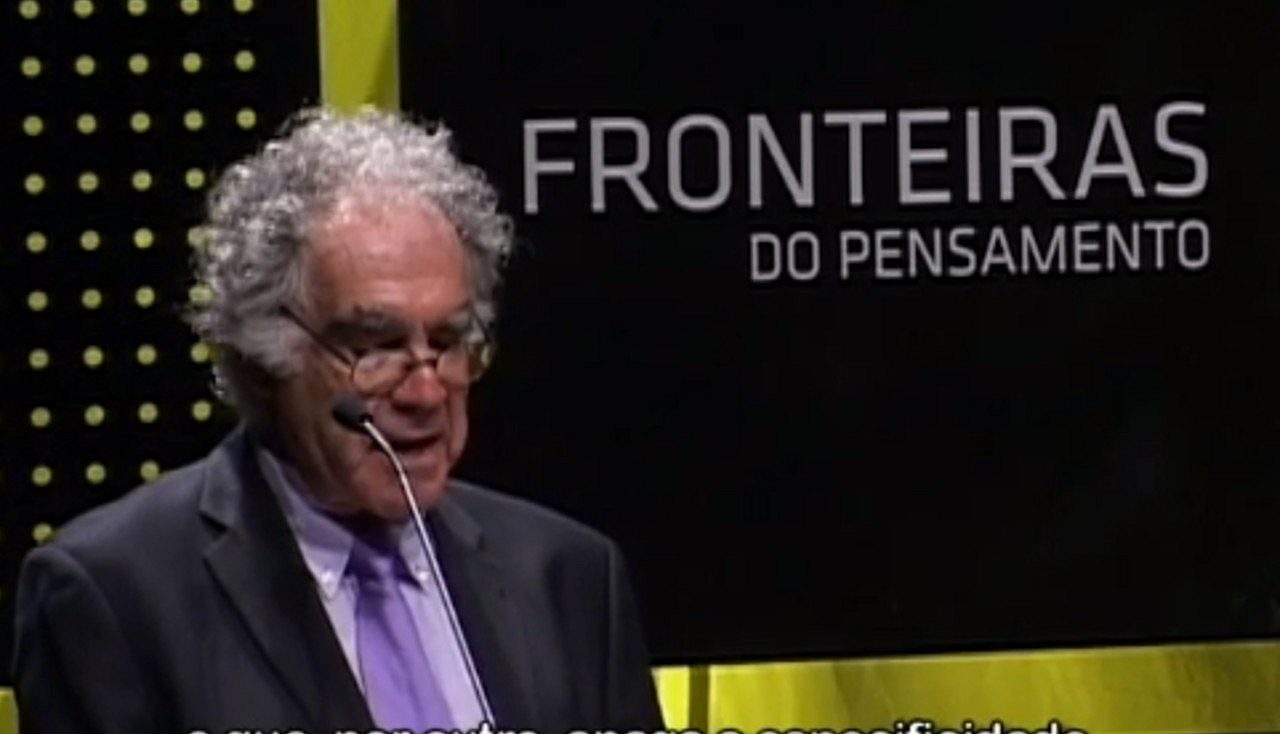
Years later, in 2010, Ginzburg returned to the capital of Rio Grande do Sul to participate in the prestigious “Fronteiras do Pensamento” project. His performance as a lecturer at this cultural forum demonstrated the breadth of his impact, connecting academic rigor with a broader audience interested in high-level intellectual discussions.
Still in Rio Grande do Sul, in 2007, Carlo Ginzburg was among the prominent guests at the Passo Fundo Literary Journey. His participation in an event focused on literature reinforces the interdisciplinary character of his work, which transcended the strict boundaries of history, dialoguing with literature, philosophy and anthropology.
Among the historian’s most important works, which shaped generations of researchers and students, stand out “The Cheese and the Vermes”, “History of the Night” and “The Walkers of Good”. All of these titles were released in Brazil by Companhia das Letras, a publisher that played a crucial role in spreading his thought in the country, making his analysis accessible to a vast number of readers and researchers.
Carlo Ginzburg’s trajectory: from childhood to academic consecration
Born in Turin, Italy, on April 15, 1939, Carlo Ginzburg carried a notable family legacy that profoundly influenced his formation. His mother, Natalia Ginzburg, was an acclaimed novelist and translator, while his father, Leone Ginzburg, a professor of Russian literature, was an ardent anti-fascist campaigner. Leone’s life was tragically taken by the Germans during World War II when Carlo was just five years old. This premature loss and his parents’ political engagement, especially his paternal anti-fascism, shaped Ginzburg’s conscience and ethical commitments, directing him towards a constant search for justice and the voice of the marginalized in history.
Ginzburg was a left-wing intellectual and dedicated his career to exploring a wide range of topics. His notable studies ranged from the complex witchcraft trials of Renaissance Italy, where he uncovered the social and cultural dynamics behind the persecutions, to the intricate beliefs in popular magic of the time. He also delved deeply into the intellectual history of Europe, always seeking the links between the micro and the macro, the popular and the erudite, revealing layers of meaning that escaped conventional approaches.
Ginzburg’s solid academic background included completing his doctorate in Philosophy at the renowned Scuola Normale in Pisa. His teaching career was equally brilliant, passing through prestigious institutions such as the University of Bologna, again the Scuola Normale Superiore of Pisa, and the University of California at Los Angeles (UCLA). These stints at leading institutions in Europe and the United States solidified his reputation as a global thinker, with a vast network of academic influence.
An indelible milestone in his career was the release of “The Cheese and the Vermes” in 1976. This book quickly became a classic and was translated into several languages, including Portuguese. The work meticulously reconstructs the mental universe and heretical beliefs of Menocchio, a 16th century miller, originally from Friuli, in the northeast region of Italy. Using records from an Inquisition court, Ginzburg demonstrates how the historian can access the voices of the “little people” of history, revealing a deep conflict between popular culture and erudite culture of the time. The work’s relevance lies in its ability to humanize the past, showing the agency and ideas of ordinary individuals, challenging the view of a history dominated only by big names and events.
In an episode that illustrates his commitment to justice and the intersection between history and ethics, Ginzburg took a stand in defense of far-left journalist Adriano Sofri. Sofri was convicted of the murder of a police chief in 1972, in a case that lasted for years in Italian justice. A personal friend of Ginzburg, Sofri received a 22-year prison sentence in 1997, after a series of seven trials, and was released in 2012. In 1991, Ginzburg published “The Judge and the Historian”, a book that analyzed Sofri’s first trial. In the work, he argued about possible mistakes by the Judiciary, drawing convincing parallels with the witchcraft trials of the 16th and 17th centuries, which he had exhaustively researched. This intervention highlighted Ginzburg’s belief that historical methodology could be a crucial tool for critique and the search for truth in contemporary contexts.



