Xiaomi releases HyperOS 3.1 based on Android 16 for POCO F7, POCO X7 and several Redmi and Xiaomi
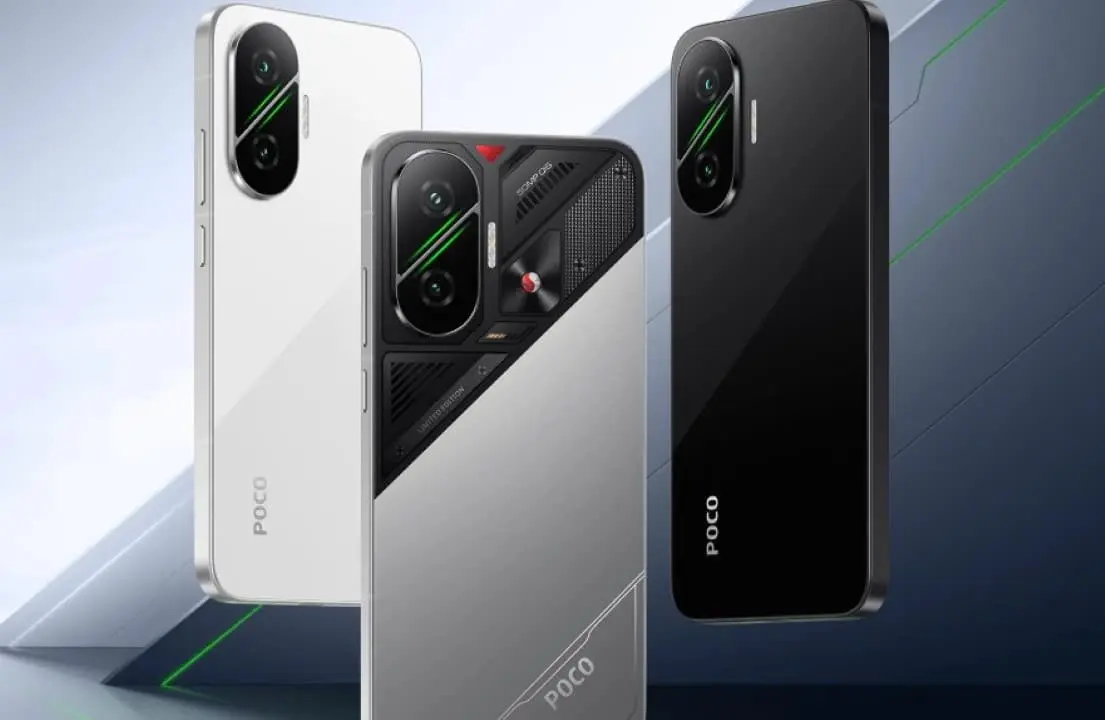
In June, the technological giant Xiaomi expanded the availability of new HyperOS packages, covering several smartphones from its Xiaomi, Redmi and POCO lines. Firmware data, updated until June 16, 2026, reveals that the latest versions bring Android 16 as the basis for devices such as POCO F7, POCO X7, Redmi Note 14 Pro 5G, POCO X6 5G and Xiaomi 14T Pro.
It is essential to understand that the arrival of these updates does not occur simultaneously in all locations. This is due to the fact that each regional market operates with a different ROM version, whose codes indicate the destination for territories such as Global, Europe, India, Indonesia, Taiwan, Russia and Turkey.
Consequently, a smartphone purchased in Brazil may have a different update package receipt schedule than an identical device sold in Europe or Asian countries.
Cell phone models that have already received recent system updates
One of the most recently verified software packages is code OS3.0.301.0.WOLIDXM, targeting the POCO F7 in Indonesia. This particular build already adopts Android 16 and began appearing in public records in mid-June.
The Redmi Note 14 Pro 5G and POCO X7 were other devices to receive the OS3.0.301.0.WOOTRXM package, developed for the Turkish market. It is common for these two specific models to share the same software platform in some regions.
In Taiwan, an additional update has been confirmed, identified by the code OS3.0.301.0.WNRTWXM, and is intended for the Redmi Note 13 Pro 5G and the POCO X6 5G.
The Xiaomi 14T Pro appears with a specific version for Taiwan, while a series of other models from the brand continue to receive their respective regional packages at different stages of the distribution process.
To make it easier to see recent updates, check the table below:
- POCO F7: Indonesia (version OS3.0.301.0.WOLIDXM)
- POCO X7 and Redmi Note 14 Pro 5G: Türkiye (version OS3.0.301.0.WOOTRXM)
- POCO X6 5G and Redmi Note 13 Pro 5G: Taiwan (version OS3.0.301.0.WNRTWXM)
- Xiaomi 14T Pro: Taiwan (version OS3.0.301.0.WNNTWXM)
Understand the nomenclature of HyperOS 3.1 versions and their identification codes
An issue that can cause confusion for users lies in the way software packages are numbered. Although the public refers to the update as part of the HyperOS 3.1 family, it is common for many international ROMs to have identifications such as OS3.0.301.0.
This discrepancy is explained by the internal coding system that Xiaomi uses. Therefore, it is crucial that device owners check the full package code, embedded Android version, and changelog details, rather than focusing solely on the leading digits.
Additionally, it is necessary to distinguish between a software version that has already been released to the public and a compilation that is still in the internal testing phase. The simple detection of a package under development does not imply its immediate availability to all users via OTA update.
Leia Também

VAR decides to cancel Colombia’s goal against Portugal after a thorough analysis of the tip of the boot, impacting the classification in Group K of the 2026 World Cup

Lautaro Martínez simply scores a great penalty in Jordan x Argentina at the 2026 World Cup

Rota officer and family member of Eloá Pimentel is ambushed by gunfire at a traffic light in ABC Paulista
Main new features and improvements expected in HyperOS 3.1
HyperOS 3.1 represents a significant evolution compared to the previous version, HyperOS 3, and is built on the basis of Android 16. This new iteration focuses primarily on optimizing system stability, navigation fluidity, animation quality and memory management efficiency.
Among the features announced for this new generation, highlights include improvements to Xiaomi HyperIsland, changes to the interface for accessing recent applications, revisions to the Gallery app and more robust integration between smartphones, tablets and other connected devices.
Xiaomi, however, emphasizes that all features may not be present on all devices. The availability of specific resources is conditioned by the device model, its regional version, the applications that are installed and the capabilities inherent to its hardware.
The update packages made available in June also incorporate security improvements. However, it is important to emphasize that the date of the security patch may differ between models, and it would not be necessary to state that everyone received precisely the same version for May or June 2026.
Changing the device region does not guarantee a faster update
Although changing the region in your smartphone’s settings may indeed direct you to consult a different update server, this action does not in itself ensure immediate receipt of the new software package.
The effective release of the update is intrinsically linked to the ROM code that is installed on the device. A device configured with a global ROM, for example, does not convert to a European, Indian or Indonesian version merely because the user changed its location in the settings.
Additionally, it is worth noting that certain updates are initially targeted at members of the Mi Pilot program or small groups of testers. Only after the absence of significant flaws is the package expanded to a wider user base.
Recommended procedure to check if the update has reached your device
The officially recommended method for checking the availability of updates is to access the Settings menu, select the “About phone” option, then tap the HyperOS icon and, finally, choose “Check for updates”.
It is essential that the device’s battery is sufficiently charged, and that there is free storage space available. Furthermore, making a prior backup of photographs and other valuable files is highly recommended before any procedure.
For those considering manual installation, it is essential that the software package is strictly compatible with the exact model and ROM region of the device. An inconsistent file can be blocked by the operating system or, in more serious cases, cause failures. For the vast majority of users, the safest and most hassle-free option is to wait for notification of the official update delivered via OTA.