
US will not pay $300 billion to rebuild Iran, Trump says about peace deal


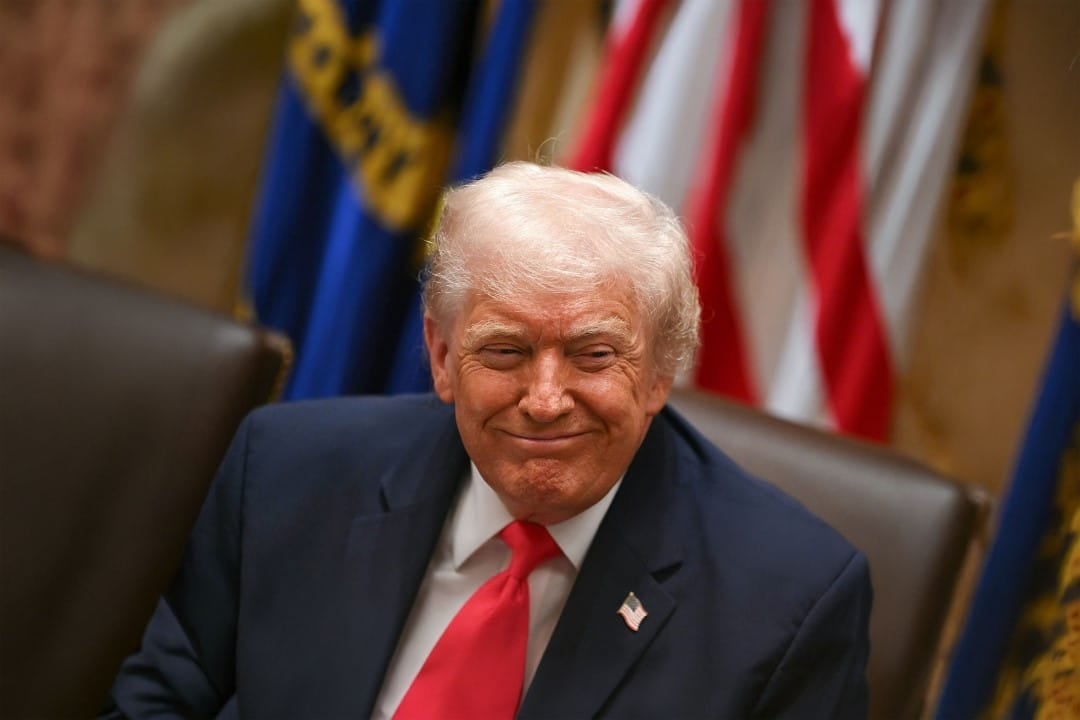
A financial controversy quickly emerged after the signing of the peace agreement between the United States and Iran. North American President Donald Trump denied this Thursday (18) that his nation will pay for the US$300 billion (approximately R$1.5 trillion) allocated to the Iran reconstruction plan, an explicit amount in the recently signed memorandum. Trump’s statement, published on his social network Truth Social, adds a layer of uncertainty to a diplomatic pact considered historic for the stabilization of the Middle East.
The amount, described as a “minimum of US$300 billion”, appears in one of the clauses of the document signed on Wednesday (17) by Trump and Iranian President Masou Pezeshkian. Although the text establishes that the United States “will develop the plan with its regional partners”, the source of the funding is not explained, creating a vacuum of interpretation that generated the current dispute. The controversy arises at a crucial moment, where mutual trust is essential for the implementation of the other provisions of the agreement.
The dispute over financing Iranian reconstruction
Donald Trump’s categorical denial of the payment of US$300 billion highlighted one of the first cracks in the implementation of the recently signed peace agreement. The US president used his Truth Social platform to dispel what he called “fake news”, emphasizing that the success of the initiative for the US is measured in other terms. He highlighted, in his post, the importance of “falling oil prices and victory” as real indicators of triumph for the United States, directing attention to the stock market.
The clause in question, the sixth of the fourteen points of the agreement, details the United States’ commitment to “develop a definitive and mutually agreed plan, worth a minimum of 300 billion dollars, for the reconstruction and economic development of the Islamic Republic of Iran”, together with its regional partners. However, the absence of a clear financing mechanism for this amount, or the specification of who would actually bear most of the cost, turned a point of cooperation into one of contention in the first few days after signing. This ambiguity allows Trump to interpret that the “development of the plan” does not necessarily imply a direct disbursement from American coffers, but rather leadership in mobilizing resources or facilitating investments.
The main commitments of the historic agreement
The agreement signed by the United States and Iran represents a significant milestone after years of intense geopolitical tension in the Middle East region. Officially released on Wednesday (17), the document covers fourteen crucial points that aim not only to end the conflict, but also to establish the basis for future cooperation. Among the most important guarantees are that Tehran will not develop nuclear weapons, the suspension of American economic sanctions and the provision of financial compensation to the Iranian government, which is now the subject of dispute.
The pillars of this pact range from the immediate cessation of hostilities to complex issues of nuclear development and maritime security. The expectation is that, with the implementation of these clauses, the region will be able to experience a period of greater stability and growth. The following list details the main points of the memorandum of understanding:
- Immediate end of the conflict:The US and Iran declare the permanent end of military operations on all fronts, including Lebanon, with a commitment not to initiate new clashes and guarantee Lebanese sovereignty.
- Respect for sovereignty:Both nations undertake to respect each other’s territorial integrity and sovereignty, refraining from interfering in internal affairs.
- Final negotiation:Commitment to reaching a definitive agreement within 60 days, with the possibility of mutual extension.
- Suspension of the naval blockade:The United States will begin lifting its naval blockade of Iran, with a complete withdrawal of regional military forces within 30 days of signing the final agreement.
- Reopening of the Strait of Hormuz:Iran pledges to reopen the Strait of Hormuz within 30 days, guaranteeing safe and free passage for commercial ships for 60 days, and to dialogue with Oman on future administration.
- Reconstruction plan:The US, together with regional partners, will draw up a plan for the development and economic reconstruction of Iran, with a minimum value of US$300 billion.
- End of sanctions:The United States will lift all types of sanctions against Iran, including UN resolutions, IAEA resolutions and US unilateral sanctions.
- Nuclear commitment:Iran reaffirms that it will not produce or acquire nuclear weapons, and both parties agree on mechanisms for diluting enriched uranium under IAEA supervision.
- Maintaining the status quo:While awaiting the final agreement, Iran maintains its nuclear policy and the US does not impose new sanctions or mobilize more forces in the Middle East.
- Oil trading:The US commits to allowing Iran to sell its oil and petrochemical products.
- Asset release:The United States commits to releasing all Iranian assets and funds that were frozen or restricted by sanctions.
- Implementation mechanism:Both parties agree to establish an executive mechanism to oversee the execution of the memorandum and future adherence to the final agreement.
- Focus on negotiations:After the implementation of initial clauses, final agreement negotiations will focus on the remaining clauses.
- UN ratification:The final agreement will be ratified through a binding UN Security Council resolution within 60 days.
Economic implications of lifting sanctions for Iran
The promise to lift all sanctions against Iran, including those imposed by the United Nations Security Council, the International Atomic Energy Agency (IAEA) and the various unilateral American sanctions, represents a monumental economic relief for the Islamic Republic. For many years, these sanctions strangled the Iranian economy, severely restricting its oil exports – the country’s main source of revenue – and preventing access to international financial markets. Lifting these barriers can inject new life into key sectors of the economy, enabling the resumption of growth and improving the population’s living conditions.
The release of Iranian assets and funds frozen in foreign banks, another crucial point of the agreement, complements the lifting of sanctions. It is estimated that billions of dollars in revenue from oil and other assets have been held up due to international restrictions. With the full availability of these resources, the Iranian government will have a significantly greater capacity to invest in infrastructure, boost industries, and potentially finance part of its own reconstruction and economic development plan. This restored financial capacity could even reduce Iran’s dependence on external contributions to the $300 billion plan, offering a different perspective to Trump’s refusal to bear the costs.
Iran’s full return to the global oil and petrochemicals market is a transformative factor. Unrestricted access to energy exports will allow Tehran to regain its market share and significantly increase its revenues, providing the capital needed to revitalize its economy. The expectation is that this movement will contribute to the stabilization of global oil prices and open new commercial opportunities for the country, which seeks to reenter the international economic community after a long period of isolation.
The strategic reopening of the Strait of Hormuz
The reopening of the Strait of Hormuz, one of the most vital maritime routes in the world, under Iranian guarantees of safe and free passage, is one of the most geopolitically relevant points of the agreement. Through which about a fifth of the world’s oil passes, the strait has historically been a point of tension and instability, with Iranian threats of closure in times of conflict. The normalization of traffic at this crossing not only stabilizes energy markets, but also signals a de-escalation of potential military clashes in the region.
Iran’s commitment to dialogue with the Sultanate of Oman and other Persian Gulf countries on the future administration of the strait demonstrates a new stance of regional cooperation. This dialogue is fundamental to building an environment of trust and collective security, replacing the competition and distrust that have marked relations for decades. Shared or coordinated management of the strait can mitigate incident risks and ensure the fluidity of global trade, benefiting all nations that depend on this strategic route. The withdrawal of American military forces from the vicinity of Iran, also foreseen in the agreement, complements this vision of regionalization of security, where the Gulf countries themselves would assume a more prominent role in maintaining stability.
Iran’s nuclear commitment under international scrutiny
Iran’s reaffirmation that it will not produce or acquire nuclear weapons is a cornerstone for international trust and a key driver of the peace agreement. This promise, coupled with the establishment of a mechanism for the dilution of enriched uranium under the strict supervision of the International Atomic Energy Agency (IAEA), seeks to ensure that Iran’s nuclear program remains strictly for peaceful purposes. IAEA oversight is crucial for transparent and independent verification of Iran’s nuclear activities, preventing any diversion for military purposes and rebuilding the country’s credibility in the global community.
The issue of uranium enrichment, historically one of the most contentious points in negotiations with Iran, will be discussed in future talks. While the final agreement should establish a satisfactory framework for this issue, the technological and political complexity involved suggests that this will be a persistent challenge. The experience of previous nuclear agreements, which were later dismantled or faced strong opposition, serves as a reminder of the fragility of such commitments. However, the inclusion of an in-situ dilution mechanism and continued oversight by the IAEA indicate a move toward more robust control.
Trump’s call for a comprehensive ceasefire in Israel
In addition to the issue of financing for the reconstruction of Iran, Donald Trump also took advantage of his social media platform to send a direct message to Israel. In a second post on Truth Social, the American president urged the ally to comply with the ceasefire provided for in the peace agreement that was signed with Iran. This request underlines the comprehensive nature of the pact, which seeks to stabilize not only direct relations between the signatories, but also to pacify broader regional conflicts, including those involving Israel and groups such as Hezbollah in Lebanon.
Trump expressed the expectation of “a complete ceasefire on all fronts”, explicitly mentioning Lebanon, Hezbollah and Israel. This demand reflects the United States’ intention to promote lasting peace throughout the Middle East by encouraging all parties involved to uphold their commitments and allow negotiations to progress without interruption. The inclusion of these actors in Trump’s appeal demonstrates that the peace dynamic established with Iran is seen as a catalyst for broader regional stabilization, although the implementation of such a broad ceasefire represents a considerable diplomatic challenge and depends on the support of multiple actors with diverse and, at times, conflicting interests.
The challenges ahead for peace in the Middle East
Despite the initial optimism that accompanies the signing of any peace agreement, the immediate controversy over financing Iran’s reconstruction serves as a reminder of the complexity and fragility of such pacts. Trump’s refusal to fund the US$300 billion, even when the amount is stated in the document, exposes the fissures in mutual trust and the different interpretations of the obligations contained in the memorandum. This initial dispute could make negotiations on the final agreement difficult and test the durability of the commitments made.
Ratifying the final agreement through a binding UN Security Council resolution within 60 days is a crucial step, but not without obstacles. The implementation of all 14 points will depend not only on the political will of the United States and Iran, but also on the cooperation of regional and international partners. The ability to maintain the status quo during the transition period, with Iran maintaining its nuclear program at current levels and the US refraining from new sanctions or military mobilization, will be critical to avoiding backsliding and preserving the spirit of diplomacy.
The history of relations in the Middle East shows that peace is an ongoing and often painful process, fraught with unexpected challenges. The agreement with Iran, although promising, represents only the beginning of a long road. Overcoming historical mistrust, ensuring effective nuclear oversight, economically stabilizing Iran, and maintaining a comprehensive ceasefire are ambitious goals that will require diplomatic persistence, flexibility, and an unwavering commitment from all parties involved if the vision of a more peaceful Middle East is to become a lasting reality.



