Anne Hathaway Reveals Trap: Identical AI-Created Thank You Letters Seriously Compromise Job Applications

Renowned actress Anne Hathaway issued a strong warning to candidates who use ChatGPT to write thank you letters in selection processes: she can easily identify the interference of artificial intelligence. Although the age of AI makes it easier to apply to various vacancies, the Oscar-winning artist demonstrated that the same technology can expose a candidate’s lack of originality.
During a recent selection process for a role, Hathaway said she received several thank you letters from qualified candidates. To their surprise, all the messages, sent after the interviews, revealed the clear signature of artificial intelligence algorithms.
Asked about how she perceived the use of the tool, the actress explained the uniformity. “They were all exactly the same thank you notes”, detailed Hathaway, highlighting the standardized repetition of the texts.
Initially, the first letter impressed her positively, conveying an image of professionalism. However, upon receiving the subsequent ones, all identical and with the same phrases, the perception changed drastically, and the automated origin became evident.
“I thought: ‘Ah, no… I’m noticing something I shouldn’t'”, confessed the artist. She reinforced the warning, warning that candidates who try to game the system with AI-generated texts can easily be unmasked.
Although Anne Hathaway viewed the situation with some humor, actress Meryl Streep, her co-star and also present in the interview, clearly articulated the perspective that many employers would have in the face of such an occurrence.
“There are countless ‘Anne Hathaways’ you’ll be applying for; it’s impossible to write them all by hand,” Streep said with a gesture of impatience. She emphasized that a small effort dedicated to personalization can be the difference in winning a position, especially in unique opportunities, where the lack of dedication becomes noticeable.
“My God, that would be a complete disaster,” Meryl Streep added. “Nobody on that list of candidates would have gotten the job,” he said, reinforcing the seriousness of the lack of authenticity.
The thank you letter, therefore, should be a strategic asset for the candidate, and not a disqualifying factor.
Leia Também
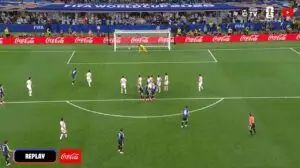
Messi reaches 19 goals in FIFA World Cups with great free kick for Argentina in clash with Jordan
Cristiano Ronaldo shines beyond the pitch at the 2026 World Cup with business empire and family luxury

At 41, Cristiano Ronaldo reaffirms his historic legacy and prepares to shine in the 2026 World Cup
In a scenario of economic uncertainty, with increasing layoffs caused by advances in AI and the most challenging job market in 37 years, young people’s search for automation in writing thank you letters is understandable.
For many large-scale job seekers applying to hundreds of positions, using AI to create these grades is not a reflection of laziness, but rather a strategy for managing what experts call a “hiring nightmare.”
The very practice of the thank you letter has already been the subject of debate, with critics arguing that it adds an unpaid workload to an already grueling selection process, filled with multiple interviews, skills tests and even confidential psychological profile assessments.
The dilemma arises when all postulants employ the same tools and prompts to generate standardized messages. This homogeneity not only nullifies the ability to differentiate, but also conveys an impression of genuine disinterest in the organization and the desired position.
In a competitive market, where even a young person with a master’s degree can spend months applying to thousands of vacancies without success, it is essential to find ways to stand out. In these contexts, an additional effort, such as writing a thank you letter manually, can represent a significant advantage, given the rarity of this practice today, as noted by a Gen Z hiring manager.
“It only takes a few seconds, and it’s clear that most people aren’t sending it, so you’ll definitely stand out if you send a thank you to your interviewer after the conversation,” said Sophie Rocha, marketing professional at Home From College, a careers platform focused on Generation Z.