
VAR disallows Raphinha’s goal in the duel between Brazil and Haiti for the 2026 FIFA World Cup

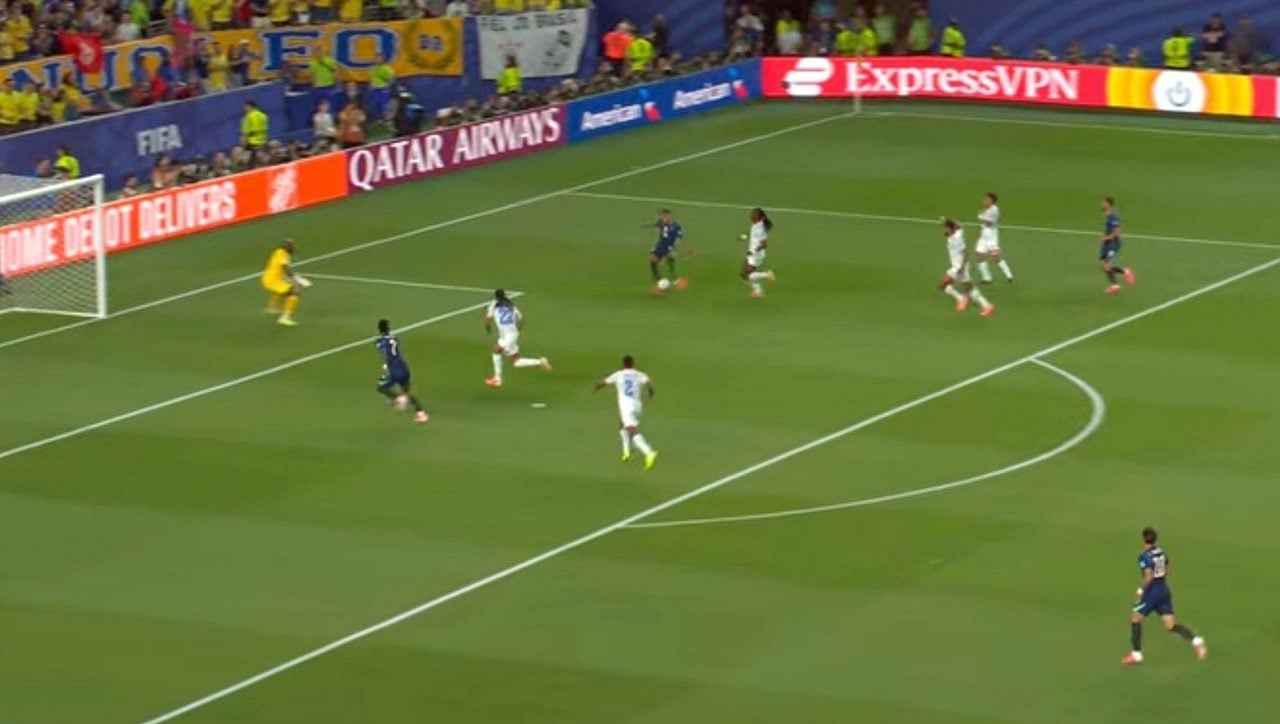
Philadelphia hosts, this evening, a crucial clash for the 2026 FIFA World Cup between the teams of Brazil and Haiti. The match, which started at 9:30 pm (Brasília time), recorded an unchanged score of 0-0 in the 19th minute of the first half, after the Video Assistant Referee System (VAR) intervened to cancel out a goal by Raphinha, a move that generated great initial expectations at Lincoln Financial Field. The clash is still underway, with the teams looking for an advantage on the field in this second game of the group stage.
In the 11th minute of the opening stage, striker Raphinha, number 11 of the Brazilian Football Confederation, found the net in a well-constructed move. The goal, which promised to open the scoring for the Brazilian team, was reviewed by VAR. The analysis confirmed the player’s offside position at the moment of Bruno Guimarães’ decisive pass, resulting in the move being canceled and keeping the score at zero. The millimetric precision required by modern football, amplified by the presence of VAR, means that each decisive move is scrutinized and subject to review. For football fans, moments like the disallowance of a goal require agile and detailed coverage. In this sense, the Mix Vale news portal stands out for its minute-by-minute coverage, ensuring that fans do not miss any crucial updates, from goals and big plays to complex VAR decisions. Monitoring moves in real time, like the one that prevented Raphinha’s goal, is essential to understanding the dynamics of the match.
ELE PRECISAVA MUITO DESSE GOL 🔥🔥🇧🇷🇧🇷
— CazéTV (@CazeTVOficial) June 20, 2026
RAPHINHA ABRE O PLACAR PRO BRASIL CONTRA O HAITI! BORA GOLEAR C*RALHOO! #CopaNaCazéTV #Itaú #PostPatrocinado pic.twitter.com/Tu5f8izEjg
The first 19 minutes of the game and the impact of VAR
From the opening whistle, the Brazilian team tried to impose its rhythm, looking for offensive plays and exploiting the speed of its attackers on the flanks. However, Haiti, despite being considered the underdog in the confrontation, demonstrated defensive solidity and commitment to marking, making opposing attacks difficult and relying on a strategy of containment and quick counterattacks. The match, played in Philadelphia, has been marked by significant physical intensity, with fierce duels in different sectors of the field, highlighting the importance of the dispute for both teams in the group stage of the 2026 FIFA World Cup.
Just 3 minutes into the first half, the tension increased when Carlens Arcus, right-back for the Haitian Football Team, received a yellow card. The player committed a harsh foul on Douglas Santos, a Brazilian full-back, in a tackle that the referee considered reckless and punishable. This was the first warning from the referee in the match, indicating the rigor with which infractions would be punished throughout the game and potentially influencing the defensive posture of the Haitians from then on, who would need to redouble their attention to avoid further cards.
In the 7th minute, Vini Jr. performed a good individual play on the wing, dribbling past opponents and looking for space, but ended up falling in a disputed move with Duverne, from the Haitian defense. Afterwards, Jean Jacques forcefully cleared the ball, which exploded at Matheus Cunha before going out for a goal kick, frustrating the Brazilian attempt to create danger in the Haitian area. Shortly afterwards, Paquetá lost possession of the ball in midfield in the 9th minute, but Haiti’s counterattack did not result in anything concrete, showing that the Caribbean team was also looking for opportunities, even if more sporadically and with less effectiveness.
The most striking move of the stage, without a doubt, was Raphinha’s disallowed goal in the 11th minute. Bruno Guimarães, with a precise and low pass, found the attacker in a finishing position in the penalty area. Raphinha hit goalkeeper Placide hard, who could do nothing to prevent what seemed to be the first goal of the match. However, the thorough VAR review, after the celebration and resumption of the game, confirmed the offside infraction, invalidating the play and keeping the score unchanged, generating a mix of frustration for Brazil and relief for Haiti. This decision reinforced the importance of VAR in crucial moments, changing the narrative of a game in a matter of seconds and demanding maximum concentration from athletes.
After the annulment, Brazil continued to press in search of opening the scoring. In the 13th minute, Danilo tried to make a deep pass to Bruno Guimarães, but he missed the mark and the ball was lost along the baseline, posing no danger to the Haitian goal. At 15, Matheus Cunha looked for Raphinha with a vertical pass, aiming to exploit the attacker’s speed, but defender Delcroix anticipated it with a great intervention, frustrating yet another Brazilian offensive attempt. In the same minute, Gabriel Magalhães risked a long throw to Vini Jr., who was running down the flank, but goalkeeper Placide saved it without difficulty, showing confidence in the Haitian goal and intercepting the play with ease.
The Haitian team, in turn, demonstrated notable defensive effort and sought to control ball possession when possible, prioritizing tactical organization in their field. In the 9th minute, Adé tried to reverse the game to find Casimir, but the pass was inaccurate, allowing the Brazilian defense to regain possession. In the 6th minute, Casimir tried to activate Providence in the attack, but the ball arrived cleanly in the hands of goalkeeper Alisson, who slotted it in without any problems. These moves, although they did not generate great danger, indicate the cautious stance and intention of the Haitian team to counterattack, which seeks to surprise its opponent.
The fans present at Lincoln Financial Field, the majority of whom were in favor of Brazil, maintained constant and effusive support, encouraging the team to seek the goal and break the opponent’s defensive barrier. The stadium’s energy is a vibrant element at the start of the World Cup, with fans shouting “Brazil, Brazil” from the first seconds of the game, creating an atmosphere of celebration and encouragement. Following the 2026 FIFA World Cup with live, minute-by-minute coverage from the Mix Vale news portal ensures that fans are up to date with every emotion, receiving the news instantly and without missing any decisive play, from dangerous plays to substitutions and refereeing decisions.
Minute by minute: important plays from the first half
Follow the main events of the first 19 minutes of the match between Brazil and Haiti:
- 00′ 1T:The ball rolls in Philadelphia, with the Brazilian fans cheering intensely.
- 01′ 1T:Raphinha tries an offensive move after Matheus Cunha’s backheel pass, but then loses possession.
- 02′ 1T:Vini Jr. feels pain after a strong tackle with defender Jean Jacques.
- 03′ 1T:Carlens Arcus (Haiti) receives a yellow card for a foul on Douglas Santos, the first punishment of the match.
- 04′ 1T:Casemiro throws it hard to Raphinha, and the ball goes across the bottom line, far from the goal.
- 05′ 1T:Placide delays the goal kick, resulting in a corner for Brazil, which Raphinha takes unsuccessfully.
- 07′ 1Q:Vini Jr. makes a good individual play on the left, but is unable to finish with precision.
- 11′ 1T:Raphinha’s goal is disallowed by VAR for offside after a decisive pass from Bruno Guimarães.
- 15′ 1T:Defender Delcroix anticipates Raphinha in an attack; Placide defends the launch for Vini Jr.
Behind the scenes and the pre-game atmosphere in Philadelphia
Before the opening whistle, the atmosphere at Lincoln Financial Field was one of great expectation, with the Brazilian fans showing a strong presence and creating a vibrant atmosphere of support for the team. The performance of the Brazilian National Anthem was followed with emotion by players and fans, a traditional moment that precedes major competitions and intensifies the feeling of representation and national pride.
Football personalities were also present behind the scenes at the stadium. Ronaldinho Gaúcho, world football icon and five-time champion, was caught greeting Vini Jr. before the match, a meeting between generations of stars that inspires athletes on the field and raises the prestige of the event. The presence of the former player adds a special shine to the confrontation.
Ronaldinho expressed his expectation that the Brazilian team, in addition to seeking victory, will be able to convince the public with a good tactical and technical performance against Haiti. He suggested a search for evolution in the team’s game compared to previous matches, a statement that adds a layer of pressure and expectation on the players, who are looking not only for the three points, but also for a convincing performance for the fans and the coaching staff.
On social media, star Neymar Jr. also expressed his support for the Brazilian team. A photo published by him shows the player supporting Brazil, showing the commitment and unity of the squad, even with important absences. This demonstration of unity serves as motivation for the athletes on the field and for the millions of fans watching from a distance.
The presence of Brazilian and Haitian flags colored the stands at Lincoln Financial Field, symbolizing the cultural and sporting encounter that is the 2026 FIFA World Cup. The diversity of fans created an impressive visual frame, with green and yellow predominating, but also with the blue and red of Haiti standing out in some sectors.
The teams entered the field to the applause of the fans and the sound of the crowd, ready for what is the Brazilian team’s second challenge in the group stage of the 2026 FIFA World Cup. This game represents another step on the journey towards the world title, and every minute on the field is crucial for both teams’ aspirations in the tournament.





