
Confirmed Lineup Tunisia x Japan live at the 2026 FIFA World Cup

One of the most anticipated matches of the second round of the 2026 FIFA World Cup will pit the teams of Tunisia and Japan face to face. The match is scheduled for 01:00 (Brasília time) on June 21, 2026, with both teams looking for their first victory in the competition to keep their hopes of advancing in the group stage alive.
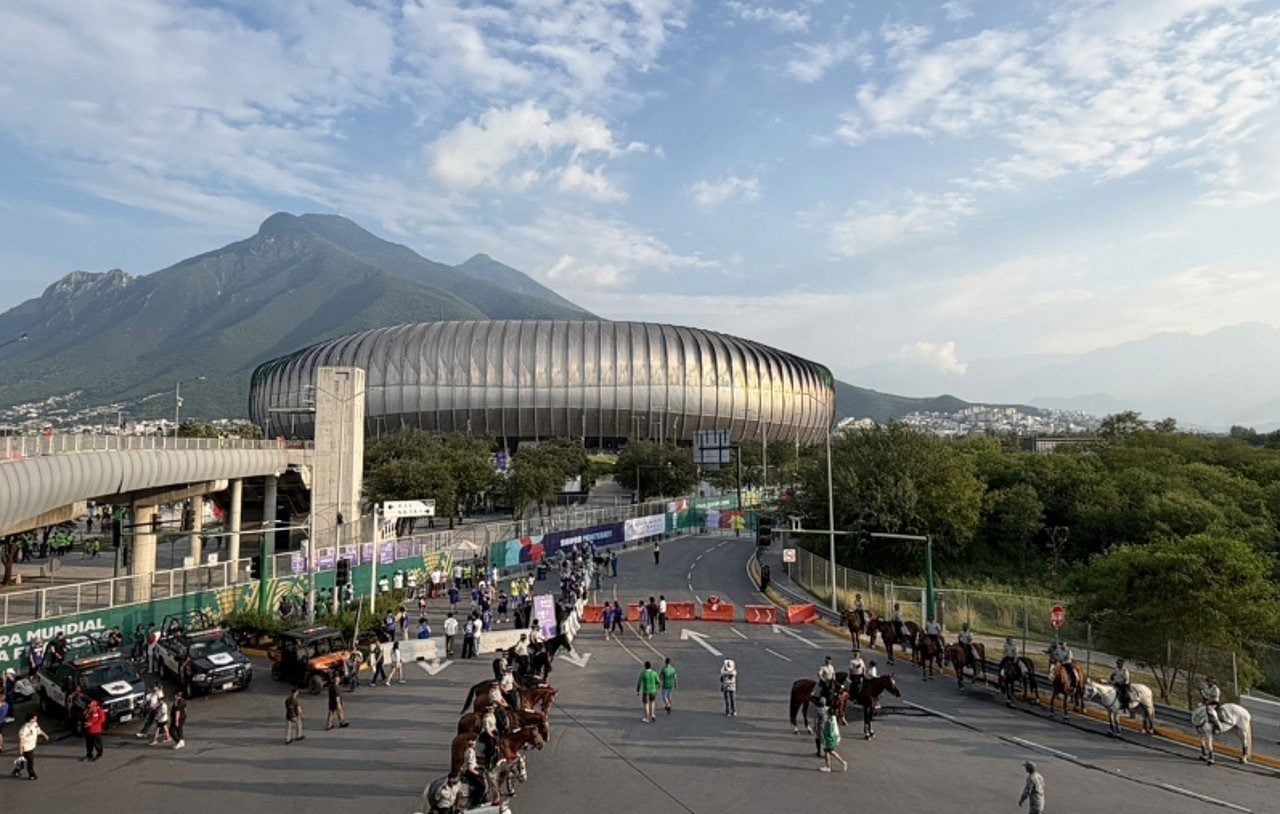
The stage for this decisive duel will be the Estadio BBVA, located in Monterrey, Mexico, one of the multiple venues that host the tournament in the United States, Mexico and Canada. With the lineups already confirmed, the expectation is for a tactically intense game, which could be crucial in defining the future of both teams in Group F.
This clash carries significant weight, especially since both Tunisia and Japan entered the field in the first round and did not win points, according to the pre-game classification. A defeat here could mean an early goodbye to the knockout dream, while a victory revitalizes the campaign towards the round of 16.
The decisive clash in Group F of the 2026 FIFA World Cup
The group stage of any World Cup is a relentless test of consistency and strategy, and for Tunisia and Japan, the second round presents a watershed moment. Starting the competition with a stumble puts additional pressure on the teams, who now need to demonstrate resilience and responsiveness. Victory is not just a desire, but an imperative necessity for anyone who dreams of continuing among the world’s football elite.
Group F, in which they are inserted, requires full attention. With four teams competing for just two places in the next phase, each point is disputed with maximum intensity. For the teams facing Japan and Tunisia, this is a time to calculate risks and make tactical adjustments that could dictate the success or failure of a campaign that took years of preparation and dedication.
Tactical analysis: The 4-2-3-1 formation of the Tunisian team
Under the command of renowned coach Hervé Renard, the Tunisian team should enter the field with a 4-2-3-1 formation, seeking defensive solidity and speed in offensive transitions. This tactical structure is known for balancing defense with the ability to create plays through the sides and center, using a combative midfield to regain possession and initiate attacks. The presence of two midfielders offers protection to the defensive line, while the attacking midfielders and center forward have the freedom to explore spaces.
Tunisia is expected to use the speed of its wingers and the skill of its midfielders to disorganize the opponent’s defense. The formation also allows for variations during the match, with players being able to adapt to different game scenarios, whether controlling possession or seeking quick counterattacks. Tactical discipline will be fundamental for the “Eagles of Cartago” in this highly important clash.
Tunisia’s starting eleven
Tunisia confirmed its starting lineup for the clash, with a mix of experience and youth. Goalkeeper Aymen Dahmen will be responsible for closing the Tunisian goal, counting on the protection of a robust defense.
- Goalkeeper:16. A. Dahmen
- Defenders:20. Y. Valery, 4. O. Rekik, 3. M. Talbi, 2. A. Abdi
- Midfield:17(c). E. Skhiri, 6. D. Bronn, 25. A. B. Slimane, 10. H. Mejbri, 26. S. Tounekti
- Attacker:8. E. Saad
Among the names, captain Ellyes Skhiri stands out, a midfield pillar who offers protection to the defense and initiates plays, as well as Hannibal Mejbri, a young promise who plays as an attacking midfielder and is seen as one of the team’s main creative weapons. His dribbling ability and game vision could be decisive for Tunisia.
Japanese strategy: Hajime Moriyasu’s 3-4-2-1
The Japan team, led by Hajime Moriyasu, will feature a 3-4-2-1 formation, indicating a more offensive approach and a focus on creating plays in the center of the field. This scheme allows Japan to have numerical superiority in midfield, facilitating ball possession and the quick transition to attack. The full-backs play a crucial role, acting as wingers and offering width, both in defense and attack.
The strategy aims to exploit the speed and technique of the attacking midfielders, who play behind a single center forward. The defense of three defenders, although it may appear vulnerable at times, seeks to compensate with the coverage of the wingers and tactical organization. Japan’s ability to maintain possession and dictate the pace of the game will be an important difference, seeking to create chances through quick passes and infiltrations.
Japan’s starting team
The “Blue Samurai” also released their complete lineup, with players known on the European and Asian scene. Goalkeeper Zion Suzuki will have the mission of defending the Japanese goal, with a defensive line of three defenders in front of him.
- Goalkeeper:1. Z. Suzuki
- Defenders:4(c). K. Itakura, 22. T. Tomiyasu, 21. H. Itō
- Midfield:10. R. Doan, 15. D. Kamada, 24. K. Sano, 13. K. Nakamura
- Attackers:7. A. Tanaka, 14. J. Ito, 18. A. Ueda
Among the highlights are captain Ko Itakura in defense, the versatile Ritsu Doan and the creative Daichi Kamada in midfield, and Keito Nakamura, one of the players in focus due to his recent performance. The combination of technique and tactical discipline makes Japan a fearsome opponent.
Head-to-head history between Tunisia and Japan
The record of direct confrontations between Tunisia and Japan on the international football scene is not extensive, especially in World Cups. The teams have met mainly in friendlies and smaller tournaments, offering a limited overview to predict the outcome of this important game. Historically, duels between teams from different continents are often unpredictable, with each side bringing its own style of play and cultural adaptations.
In previous matches, Japan generally performed with slight favoritism due to their consistency and experience on big stages. However, Tunisia, with its determination and tactical organization, has always represented a considerable challenge. The lack of a recent, regular head-to-head history at the 2026 FIFA World Cup adds a layer of uncertainty and excitement to the duel, making each play even more valuable.
Tunisia’s journey to the World Cup
Tunisia has a history of intermittent participation in the FIFA World Cup, having made its debut in 1978. Since then, the African team has been present in several editions, although it has never managed to advance beyond the group stage. The team is known for its resilience and ability to compete against more traditional opponents, often making life difficult for football powerhouses.
Tunisia’s best performance in World Cups was notable for important wins and draws, such as the 3-1 win over Mexico in 1978, their first victory in a World Cup. Despite not having reached the knockout stages, each participation strengthened the identity of Tunisian football on the global stage. The accumulated experience and passion of their fans are elements that always drive the “Eagles of Cartago” in search of a historic campaign.
Japan’s journey in the FIFA World Cup
In contrast to Tunisia, Japan is a relatively newer and rising force in world football. His first participation in a FIFA World Cup was in 1998, and since then he has become a regular at the tournament. The “Blue Samurai” have already reached the round of 16 on a few occasions, demonstrating the evolution of Asian football and its ability to surprise.
Japan’s best campaigns include the round of 16 in 2002 (as co-host), 2010, 2018 and 2022. These appearances were marked by memorable displays and the revelation of talents that have excelled in European football. The Japanese style of play, which combines tactical discipline, speed and high technique, has won admirers around the world, and the team is now looking to go even further in the 2026 FIFA World Cup.
Individual duels that can define the game
In the confrontation between Tunisia and Japan, several individual duels could be crucial to the final result of the match. In midfield, the battle between Tunisian captain Ellyes Skhiri and Japanese creatives Daichi Kamada and Ritsu Doan will be a spectacle in itself. Skhiri’s ability to disarm and distribute the game will be tested by the movement and precise passing of the Japanese players.
Another interesting clash will be between young Hannibal Mejbri, from Tunisia, known for his ability to dribble and create opportunities, against Japan’s three-back defensive line, led by Ko Itakura and Takehiro Tomiyasu. The efficiency of the Tunisian attackers against the Japanese defensive solidity, and vice versa, will determine who will have the advantage in creating and finishing plays.
The coaches’ experience: Renard and Moriyasu
Coaches Hervé Renard, from Tunisia, and Hajime Moriyasu, from Japan, bring with them a wealth of experience and distinct philosophies that promise an intriguing tactical clash. Renard is a tactician known for his success with African teams, having won the African Cup of Nations with Zambia and Ivory Coast. His approach emphasizes defensive organization and tactical discipline, seeking to exploit the opponent’s weaknesses.
Moriyasu, in turn, is a coach who has shaped the identity of the Japanese team in recent years, prioritizing ball possession, constant movement and quick transition. His experience in World Cups as a coach and his ability to extract the best from his most technical players place him in a prominent position. The clash of styles between these two commanders will be one of the highlights of the match.
The stage of the confrontation: Estadio BBVA in Monterrey, Mexico
Estadio BBVA, located in Monterrey, Mexico, will be the setting for this important clash. Opened in 2015, the stadium is one of the most modern and impressive arenas in North America, with a capacity for more than 50 thousand spectators. Famous for its bold design and state-of-the-art facilities, the venue promises a vibrant atmosphere for the 2026 FIFA World Cup.
Monterrey, one of the largest cities in Mexico, is known for its passion for football and world-class infrastructure. Hosting World Cup games not only raises the city’s profile, but also offers fans an unforgettable experience. Quality grass and local weather conditions will be factors that players will need to consider to deliver the best performance.
Arbitration under the command of Istvan Kovacs
The match between Tunisia and Japan will be refereed by Romanian referee Istvan Kovacs. Kovacs is a well-known name on the international scene, having played in several high-level UEFA and FIFA competitions. His average number of cards, according to available data, is 0.30 yellow cards and 5.32 red cards per game, which suggests a strict but fair profile.
The performance of referees is always a sensitive point in World Cup games. Kovacs’ experience will be key to maintaining control of the match and ensuring the game flows cleanly and within the rules. Your decisions could have a significant impact on the course of the match, especially in such a crucial game for both teams.
Injury and absence situation in the Japanese national team
The Japanese team faces some challenges in relation to injuries and absences that could impact their performance. Talented midfielder Takefusa Kubo is injured with a sprained knee, which prevents him from participating in the clash. Kubo is an important piece in the Japanese scheme, and his absence will certainly be felt in the creation of plays and the team’s offensive capacity.
Additionally, player Shuto Machino had his status listed as “unconfirmed” due to a virus, creating uncertainty about his availability. These absences force coach Hajime Moriyasu to make adjustments to the lineup and strategy, testing the depth of the Japanese squad. Moriyasu’s ability to find suitable replacements will be a crucial factor in Japan’s performance.
Expectations and betting odds for the match
Bookmakers have already revealed their projections for the clash, indicating clear favoritism for the Japanese team. The odds for Japan to win are around 1.50, while a draw pays 4.40. A victory for Tunisia, considered the upset of the match, has odds of 7.80. These numbers reflect the market’s perception of the strength of the teams and their chances of success.
Although Japan is seen as the likely winner, Tunisia has demonstrated on other occasions that it is capable of surprising. In a World Cup, where the pressure is enormous and details make the difference, favoritism does not always translate into victory. The expectation is for a disputed game, where strategy and determination can overcome the odds.
Next steps in Group F
Regardless of the outcome of this match, Tunisia and Japan will have other important challenges in Group F of the 2026 FIFA World Cup. A victory for either side will give a significant boost and increase their chances of qualifying for the round of 16. On the other hand, a defeat will leave the team in an extremely delicate position, requiring an almost perfect performance in the last game of the group stage.
The Group F scenario is still open, with all teams looking for the best possible position. The competition promises to be fierce until the last round, and the performance in this clash between Tunisia and Japan will be a determining factor for the ambitions of both countries in one of the biggest football tournaments on the planet.





