Ranking of the 10 latest official World Cup songs: from worst to best
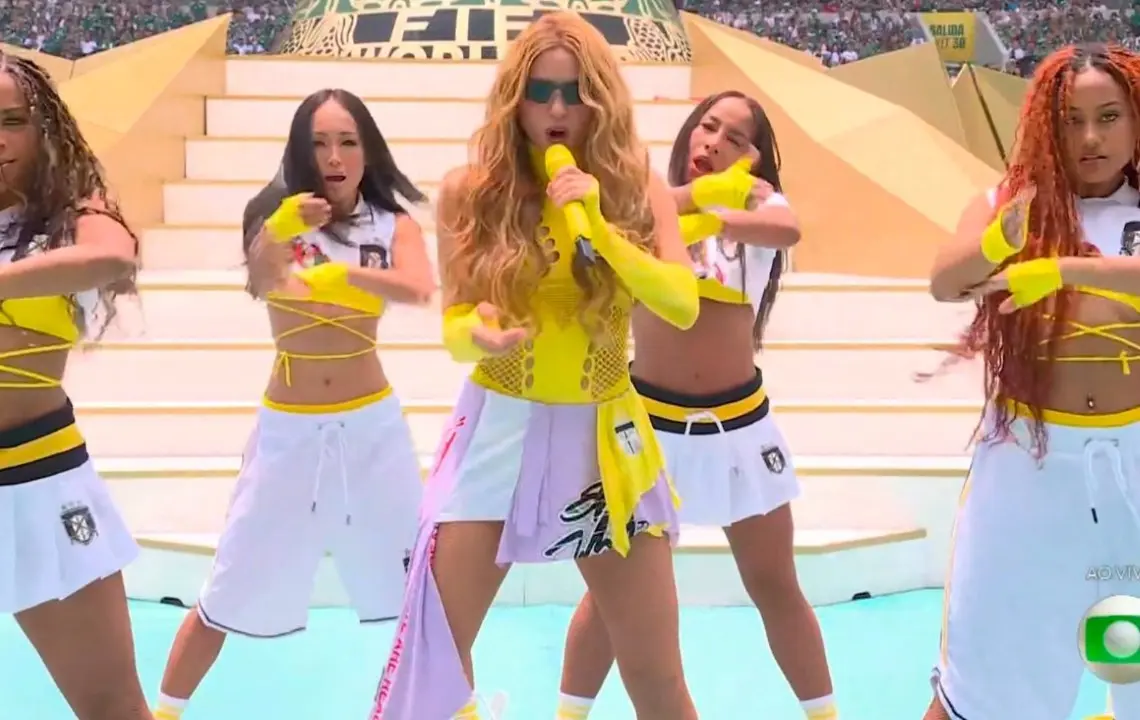
There is a long history of official songs that accompany each edition of the World Cup, a traditional FIFA release with the collaboration of artists of different nationalities. The repertoire over the years has proven to be quite varied, ranging from opera and afrobeats to reggae, gospel and samba.
FIFA’s search for memorable songs and the list from worst to best
On some occasions, football’s highest governing body got the right tone, delivering true anthems that have become timeless in the football world. However, at other times, the choices resulted in tracks that were little remembered or that did not achieve much repercussion. Below, we present the classification of the last ten official songs from the World Cups, in an order that goes from least impactful to most striking.
10. The pop partnership of Nicky Jam, Will Smith and Era Istrefi for the 2018 World Cup in Russia
The 2018 song “Live It Up”, performed by Nicky Jam, Will Smith and Era Istrefi, is often ranked as one of the least memorable among FIFA selections. Despite being upbeat, the pop track seems to lack depth and is quickly forgotten after listening. Will Smith’s rap, in particular, is perceived as a decontextualized element, and the music fails to establish any significant connection with Russia, the host country of that edition.
9. The touch of reggae and Arabic in “Hayya Hayya (Better Together)” for the 2022 World Cup
The official song of the 2022 World Cup, “Hayya Hayya (Better Together)”, featuring Trinidad Cardona, Davido and Aisha, incorporates a reggae base that may even inspire dance moves. The sections that evoke the Arabic sound, with agile percussion, fast fingerings and the chorus “hayya hayya ha”, are considered the strongest points of the composition. However, the track lacks enthusiasm or an atmosphere of overcoming, failing to consolidate itself as a signature anthem of the tournament.
8. Il Divo’s soulful ballad “The Time of Our Lives” with Toni Braxton in 2006
“The Time of Our Lives”, released for the 2006 World Cup in Germany, stands out as one of the few ballads on the list. With an emotional and powerful feel, the song features the beautiful operatic vocals of the group Il Divo, complemented by the unmistakable voice of Toni Braxton. Although it is a beautiful melody, the song is not widely remembered and also does not establish a strong connection with German culture.
7. Anastacia’s pop-rock with Y2K aesthetic in “Boom” at the 2002 World Cup
With a pop-rock arrangement characteristic of the early 2000s, “Boom”, by Anastacia, for the 2002 World Cup (South Korea/Japan), displays an aesthetic that harks back to the Y2K era. This is one of the few tracks that sounds like a genuine pop song rather than a FIFA commission. Anastacia’s powerful vocals are impressive, even if the choice of an American singer for a World Cup hosted in Asia was peculiar. For the Brazilian public, the song still brings back memories of the fifth championship.
6. The afrobeats formula in “Dai Dai” with Shakira and Burna Boy for the 2026 World Cup
For the 2026 World Cup, which will be held in the United States, Canada and Mexico, FIFA opted for the Afrobeats sound of “Dai Dai”, featuring Colombian Shakira and Nigerian Burna Boy. The composition seems to draw inspiration from the successful “Waka Waka” formula, demonstrating FIFA’s tendency to replicate successes. Despite the lack of originality, the song is considered good, has notable radio potential and has grown in the charts, with the ability to stay in the public’s mind.
Leia Também
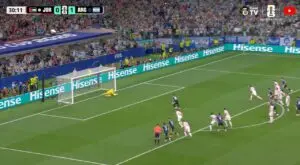
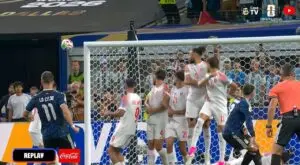
Messi reaches 19 goals in FIFA World Cups with great free kick for Argentina in clash with Jordan

Cristiano Ronaldo shines beyond the pitch at the 2026 World Cup with business empire and family luxury

At 41, Cristiano Ronaldo reaffirms his historic legacy and prepares to shine in the 2026 World Cup
5. The mix of samba and electronics in “We Are One (Ole Ola)” for the Copa do Brasil
“We Are One (Ole Ola)”, the theme of the 2014 World Cup in Brazil, with Pitbull, Claudia Leitte and Jennifer Lopez, already had an advantage due to its samba base and Olodum’s percussion. However, the track also incorporates acoustic guitars and electronic beats with a Eurodance feel, which makes it a bit of a hybrid. Although signed by the American Pitbull, the song features Brazilian elements in the instrumentation and in the participation of Claudia Leitte. One of the common criticisms is that, after the success of “Waka Waka”, the songs started to sound clearly like commissioned productions, seeking an immediate hit, which reflects FIFA’s growing commercialization and search for a globalizing formula.
4. The authentic Italian atmosphere of “Un’Estate Italiana” in 1990
The song “Un’Estate Italiana”, performed by Gianna Nannini and Edoardo Bennato for the 1990 World Cup in Italy, achieves what many others have not achieved: immersing the listener in the spirit of the host country. With Italian lyrics, title and artists, the song leaves no doubt about its origins. In addition to being pop rock with epic nuances, it has the merit of sounding like an authentic pop song that could be heard on any radio at the time, with great local cultural resonance.
3. The epic gospel anthem “Gloryland” with Daryl Hall and Sounds of Blackness from 1994
Just listen to the opening chorus of “Gloryland”, the theme of the 1994 World Cup in the United States, to understand its epic intention. With a sound reminiscent of American gospel, the track, performed by Daryl Hall (from Hall & Oates) and the group Sounds of Blackness, elevates football to an almost divine level. The grandiose vocals, the typical arrangement of ballads from the early 90s and the charm of the saxophone contribute significantly to its quality. In terms of anthem, the song hits the nail on the head.
2. The controversy and resounding success of Shakira’s “Waka Waka” in 2010
Shakira’s “Waka Waka”, for the 2010 World Cup in South Africa, was surrounded by controversy, including accusations of plagiarism and criticism for the choice of a Colombian singer for a South African song. However, none of this stopped the song from becoming one of the most iconic anthems in the history of World Cups and a milestone in the career of the great Shakira. So much so that, to this day, FIFA has not been able to match its impact, and in subsequent years, it has tried to replicate the same formula, demonstrating the search for similar global success.
1. “La Copa de la Vida” by Ricky Martin: the watershed moment that defined the World Cup’s hits
It is important to recognize that although “Waka Waka” is undeniably one of the biggest hits of the World Cups, its existence and format were paved by Ricky Martin’s “La Copa de la Vida” (The Cup of Life) for the 1998 World Cup in France. The Puerto Rican singer’s resounding success, with his grand and swinging sound, strongly anchored in samba, set the standard for what would be a true World Cup hit. The song boosted Ricky Martin’s career and is seen as a watershed moment in the global recognition of the potential of Latin artists by the music industry and the public, transforming FIFA’s strategy for the following years.