Steam Machine price surprises analysts and raises expectations for the cost of consoles like PlayStation 6
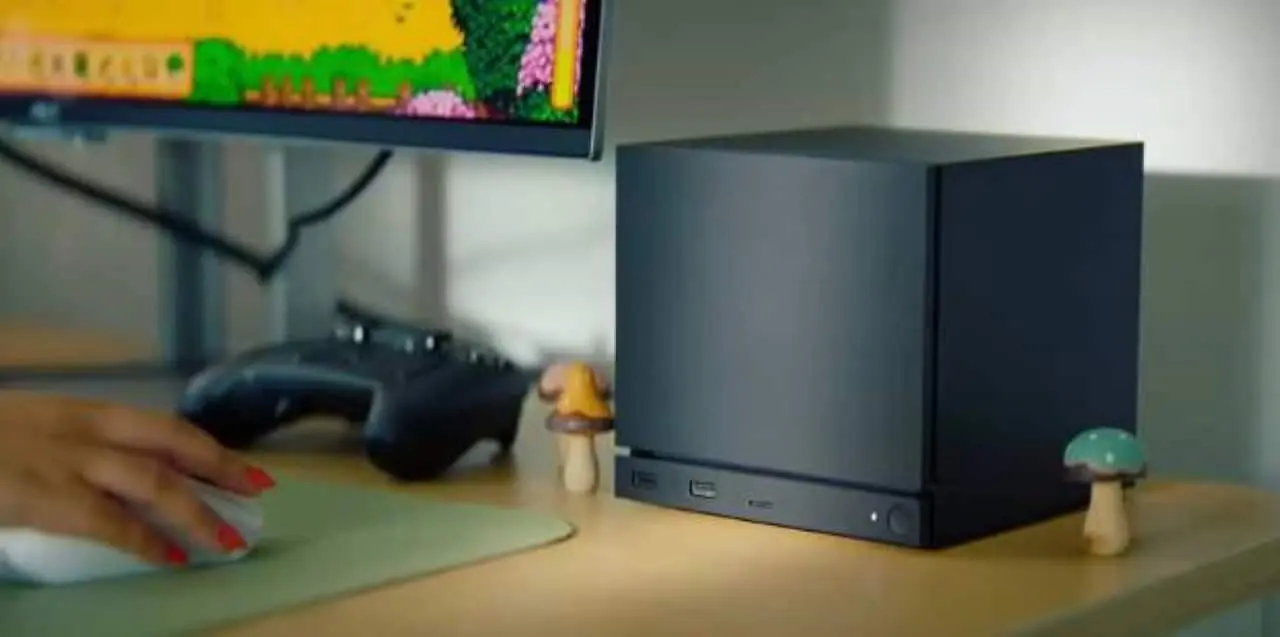
Valve surprised the technology market by announcing the price of the Steam Machine, establishing a level that analysts predict will directly impact the pricing of future next-generation consoles, such as the long-awaited PlayStation 6 and Project Helix. Starting at US$1,049 for the basic version, and reaching US$1,428 for the complete configuration, the new machine generated intense debates about the feasibility of more affordable prices in the current industry scenario. Industry experts assess that this launch not only reflects the high costs of components, but also signals a new reality for gaming consumers.
Analysts react to pricing and its developments
The revelation of the Steam Machine’s cost sparked a flurry of comments among the video game industry’s top analysts. Many expressed surprise that the price was not even higher, considering the turbulence in the components market, while others expressed disappointment that the price was so high. Mat Piscatella, senior director at Circana, commented that the price seemed “pretty reasonable, all things considered”, pointing out that the machine works like a complete mini PC. However, the consensus is that the price of Valve’s device sets a worrying new floor for upcoming consoles.
Projections for PlayStation 6 and Project Helix exceed one thousand dollars
Concerns intensify when looking to the future, with analysts’ projections pointing to an initial cost of over a thousand dollars for the next consoles. Joost Van Dreunen, CEO of Aldora and author of SuperJoost Playlist, warned that “north of a thousand dollars is the floor” for the next generation, which may not launch until 2028. That estimate is based on growing demand for components and shifting priorities from manufacturers. Xbox CEO Asha Sharma herself has already admitted that the next generation of consoles will require a new business model and hardware partnerships to be viable.
Leia Também

Messi reaches 19 goals in FIFA World Cups with great free kick for Argentina in clash with Jordan

Cristiano Ronaldo shines beyond the pitch at the 2026 World Cup with business empire and family luxury

At 41, Cristiano Ronaldo reaffirms his historic legacy and prepares to shine in the 2026 World Cup
Exponential growth in memory and storage costs
The main driver behind this price escalation lies in the drastically rising costs of essential components, especially memory and storage. Emmanuel ‘Manu’ Rosier, director of market intelligence at Newzoo, highlighted that the Steam Machine’s price reflects the current component market, and not Valve’s positioning strategy. Memory manufacturers such as Samsung, SK Hynix and Micron have redirected their focus to “hyperscalers”, which are large-scale companies that demand huge quantities of components for their data centers, such as those used in artificial intelligence. This leads to a direct consequence for the game consumer:
- Priority for data centers:The memory industry now prioritizes high-volume enterprise customers, who pay a premium to expand their data infrastructures.
- Increased prices for consumers:With lower priority and higher corporate demand, costs for the consumer market, including consoles and PCs, skyrocket.
- Forecast of five-fold increase:The Xbox CEO predicted that storage and memory costs could be five times higher by the end of 2027 compared to 2024.
Challenges and strategies of console manufacturers in the face of rising prices
While the Steam Machine operates like a full PC, offering more versatility, the situation for dedicated consoles like the PlayStation 6 and Project Helix is more complex. The PlayStation 5 Pro, for example, has already reached US$899 after two price increases in one year, highlighting the proximity of the thousand-dollar barrier. Piers-Harding Rolls, head of gaming research at Ampere Analysis, highlighted that platform makers like Sony have more resources and established relationships in the supply chain to try to mitigate these costs, unlike Valve. However, the unpredictability of the global components market, driven by demand for artificial intelligence, makes the future “beyond nebulous”, in Piscatella’s words. Console companies expect stabilization in component stocks and prices to occur closer to launch, which could extend until the end of 2028.