Vinicius Júnior reaches his peak in the Brazilian team with extra care and Ancelotti’s tactics before the duel against Scotland
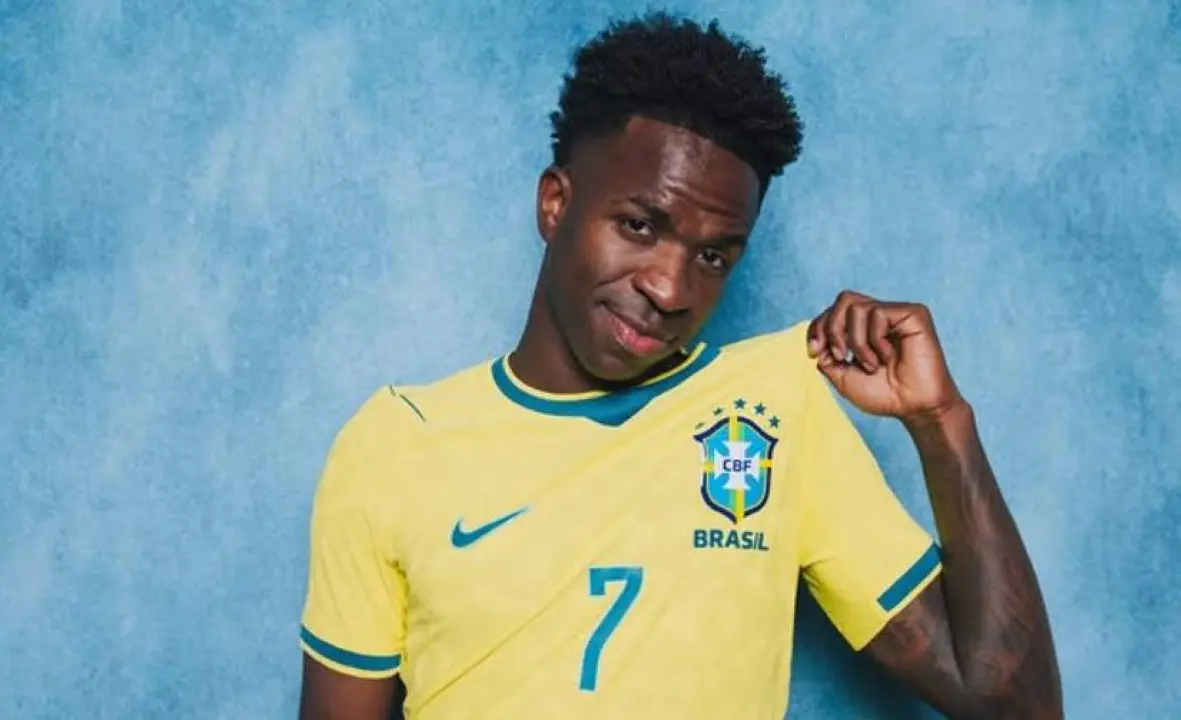
A peculiar moment caught attention last week: Vinicius Júnior consuming pineapple shortly before entering the field in the match against Haiti, where Brazil emerged victorious. This image, although unusual, symbolizes the rigorous personal dedication that drove the striker to reach his peak form with the national team. Ahead of the clash with Scotland tonight, at 7pm (Brasília time), a match that could see the return of Neymar, the team’s expectations focus on the number 7, whose qualities Carlo Ancelotti strategically adapted the team to optimize its performance. Under the coach’s command, Vinicius’ promising talent became a concrete reality on the pitch.
Além dos esforços em campo, o camisa 7 demonstra um empenho considerável fora dele, o que o levou a este Mundial com uma maturidade notável e na melhor forma física que almejava desde suas primeiras convocações para a seleção brasileira. Personal discipline is a pillar of his routine: the 26-year-old striker abstains from alcoholic drinks and soft drinks, adhering to an uncomplicated and strictly monitored diet, while at the same time prioritizing physical conditioning, one of his most striking attributes.
“I avoid alcoholic beverages because it is something that causes me more difficulties,” declared the player during a post-match press conference, organized by a World Cup sponsor, which is a brewery. He added: “When I’m with my friends, my favorite dish is always rice, beans, meat and French fries. Currently, I feel at the peak of my physical, technical and mental condition.”
Since his move from Flamengo to Real Madrid in 2018, Vinicius Junior has established a dedicated team to manage his health and physical well-being, an investment that proves crucial for the longevity and high performance of elite athletes. This team includes a physiotherapist responsible for the integral coordination of your health and a chef who prepares and meticulously controls each meal, weighing the food and excluding harmful items. The attacker’s diet is adapted according to his level of physical exhaustion, prioritizing red meat, fish and chicken, as well as carbohydrates to provide energy, reproducing, in part, the flavors he enjoyed since his childhood in Rio de Janeiro, when he lived with his uncle Ulysses Leão, near Ninho do Urubu.
Having lived in Spain for almost eight years, Vinicius also pays attention to his mental health through recreational activities, always connected to the sporting world. He enjoys video games, trick games and has developed a great appreciation for paddle tennis, a sport he plays in his leisure time. Sua habilidade com as raquetes se tornou notória, a ponto de sua ex-namorada, Virginia Fonseca, ter adquirido em um leilão de caridade uma oportunidade exclusiva de jogar padel na quadra particular do atleta em Madri. This practice directly contributes to improving your concentration and agility, qualities clearly noticeable in your performances on the field.
Analysis of physical performance and comparisons with global stars
FIFA’s physical performance reports offer a deeper understanding of the impact of this meticulous preparation. Among the most outstanding talents in the World Cup, Vinicius Jr. reached the highest maximum speed of the Brazilian team in the tournament, recording 35.1 km/h. Additionally, he demonstrated the greatest volume of high-intensity movements, covering approximately 810 meters in starts and accelerations.
Leia Também
Messi reaches 19 goals in FIFA World Cups with great free kick for Argentina in clash with Jordan

Cristiano Ronaldo shines beyond the pitch at the 2026 World Cup with business empire and family luxury
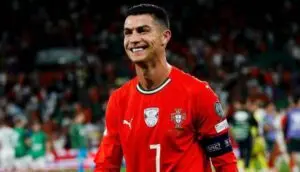
At 41, Cristiano Ronaldo reaffirms his historic legacy and prepares to shine in the 2026 World Cup
In contrast, Argentina’s Lionel Messi adopts an approach to the game focused on economy of movement, covering shorter distances and managing his efforts to accelerate at key moments. Kylian Mbappé, from France, combines great physical volume with explosiveness, alternating rest phases with vigorous sprints. Vinicius, however, follows a different path: his playing style is characterized by the continuous execution of sprints, quick changes of direction and forays into space. To maintain this intensity throughout the 90 minutes, your physical preparation has become as fundamental as your technical ability.
The last time Vinicius Junior suffered an injury was in May 2025. In the current season, he accumulated the most minutes on the field for Real Madrid. The striker arrived at the World Cup with the most playing time among the 26 athletes called up and, in the national team, he occupies fifth place in minutes played, behind only goalkeeper Alisson, the defense duo Marquinhos and Gabriel Magalhães, and full-back Douglas Santos. This exceptional physical condition was the starting point for Carlo Ancelotti to structure the Brazilian team around Vini’s qualities. The Italian coach, who made him a protagonist at Real Madrid and one of the best in the world, deeply understands the striker’s characteristics and, in the selection, chose not to try to change him, but rather to adapt the team to optimize his skills.
Ancelotti’s strategic adjustments to enhance the attacker
Most of the team’s offensive articulations and most powerful combinations originate on the left side of the field. The dynamics of exchanges and approaches between Gabriel Magalhães, Douglas Santos, Paquetá and Vinicius Júnior define the essence of the Brazilian team’s game construction. A recent development in this arrangement was the insertion of Douglas Augusto in the sector. His improved ability to build and cover the sideline provided the necessary support for Vinicius to operate in a more advanced position, receiving the ball in favorable situations to use his speed. The repositioning of Lucas Paquetá to the left side also represents a significant tactical change.
This synergy resulted in a technical collaboration that maximizes Vinicius Júnior’s offensive potential. Paquetá, with his more precise and faster passes, manages to place Vini in advantageous positions to face his opponents. Further on, the presence of Igor Thiago and then Matheus Cunha plays a strategic role when competing for possession with the defenders, distracting the defense and creating spaces on the flanks for Vinicius to explore the rearguard at high speed. The set of these actions sets up a team meticulously designed to provide the perfect environment for the number 7 to demonstrate his acceleration. The effectiveness of this strategy is proven by results on the field.
In the first two rounds of the World Cup, the striker was directly involved in the four goals scored by the Brazilian team. Considering the 2022 and 2026 World Cups, he has already accumulated six direct participations in goals in a total of six games. This feat equals Romário’s record in World Cups, who registered six appearances in eight matches in the 1994 tournament, and surpasses Ronaldinho Gaúcho, who had five appearances in ten games in the 2002 and 2006 editions. Among the Brazilian players who played in World Cups this century, only Ronaldo, Rivaldo and Neymar surpass Vinicius in terms of offensive production. Despite this, Vini already boasts a higher average than Neymar: the number 10 directly participated in 13 goals in 15 World Cup games, with an average of 0.87 per game, while Vinicius reached an average of one direct contribution per game.
The combination of physical, technical and mental maturity, mentioned by Vinicius Júnior himself, manifests itself concretely in his performance indicators, in his contributions to the team’s goals and in the significant influence he exerts on the course of matches. The team led by Ancelotti demonstrated that they understood that the key to maximizing Vinicius Júnior’s potential lies not in trying to transform him, but in establishing the ideal circumstances so that he can fully express his authentic talent.
“I have always aimed to reach this level 100%. Having the ability to score goals, provide assists and deliver great performances gives me enormous confidence. My goal is to continue improving my game, seeking even more impactful performances to lead Brazil to the top of world football”, declared the star of the Brazilian national team.