
El Niño phenomenon brings a complex scenario of intense heat, storms and drought to the capital of São Paulo

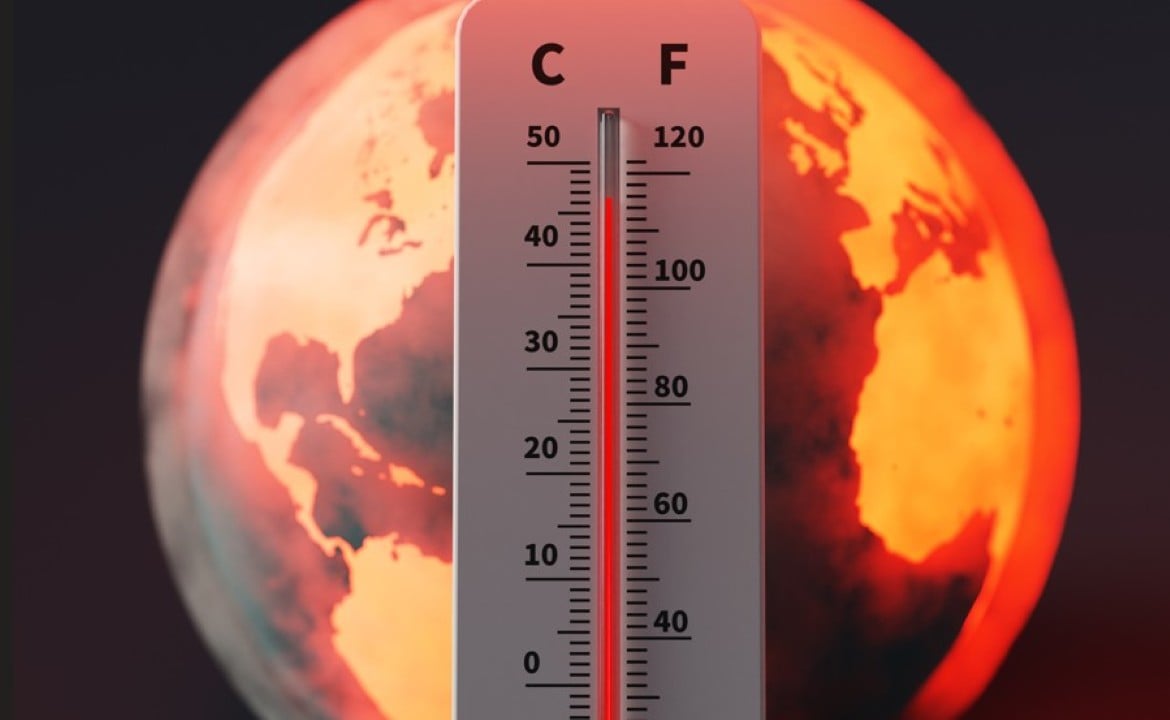
The city of São Paulo is already showing signs of the complex climate reality expected for the coming months. The unusual start of winter, with precipitation exceeding projections for a dry, warm period, serves as a prelude to the variability brought by El Niño.
While nationally the climate phenomenon El Niño tends to intensify rainfall in the South of Brazil and drought in the North and Northeast regions, the capital of São Paulo is in an area of geographic transition. This unique location leaves it susceptible to experiencing both meteorological extremes.
The intensity of El Niño, capable of amplifying high-level jets, was recently highlighted. Almost one hundred millimeters of rain fell in just 24 hours, between the afternoon of last Tuesday (23) and the morning of Wednesday (24), representing more than half of the rainfall forecast for the entire month of June.
Enver Ramirez, head of the Weather and Climate Forecast Division at Inpe (National Institute for Space Research), explained the mechanism behind this. According to him, this powerful wind current at high altitudes, when strengthened, directs a greater volume of rain to both the South and Southeast of the country.
However, this intensification will not necessarily translate into an increase in the total volume of annual rainfall in the city, which is generally around 1,400 millimeters. El Niño, in this scenario, causes a significant change in the precipitation pattern, not in the total amount.
A decrease in the frequency of light and prolonged rains over multiple days is observed. Instead, the tendency is for strong and more localized storms to increase, hitting specific areas with great intensity.
Michael Pantera, meteorologist at the CGE (Climate Emergency Management Center) at São Paulo City Hall, highlights that this model of heavy rain is the main factor for flooding and overflows. Such events are particularly dangerous in urban regions with high population density.
The most critical phase of this phenomenon is projected for the end of spring. During this period, the city’s infrastructure will be severely challenged by successive heat waves and intense storms, often accompanied by strong winds.
In response to this forecast, the city hall mobilized 13 of its areas dedicated to rain prevention. Isabel Silveira Camargo, forestry engineer and coordinator of the municipality’s Climate Change Secretariat group, informed that these teams should present their strategies for El Niño in August, before the peak of the phenomenon, expected in September.
Cleaning watercourses and pruning trees are crucial actions to mitigate floods and accidents, as highlighted by the coordinator of the preventive plan. These measures are seen as essential to reduce the impacts of storms.
Before the arrival of the season of intense winds and rain, however, residents of the capital and other locations in São Paulo must prepare for days of excessive heat, reduced air humidity and air quality problems. Smoke generated by fires in forest and agricultural areas, such as those recorded in 2024 in the interior of the state under the influence of the last El Niño, could worsen this scenario.
Impacts of El Niño on public health
The degradation of air quality has serious consequences for the health of the population, as warned by doctor Evangelina Araújo, director of Instituto Ar. Even distant fires, such as in the Amazon and the Pantanal, generate pollutants with tiny particles.
This particulate material has the ability to cross the human respiratory barrier and reach the bloodstream. Its presence increases the risk of heart attacks and strokes, especially among the elderly.
The doctor also highlights pregnant women, children and the elderly as the groups most susceptible to the harmful effects of air pollution at extreme levels.
In an attempt to prevent the spread of fires, the Government of the State of São Paulo announced that it will adopt an artificial intelligence system. This technology will be used to analyze meteorological data and use cameras installed on highways, aiming to identify early fire hotspots in forested regions.
Challenges for water supply in the metropolitan region
In addition to the heat waves expected for the winter, El Niño may also delay the start of the rainy season. Generally, the most consistent rainfall begins in October, a scenario that can be changed.
The combination of high temperatures and a lack of rain, in a more unfavorable projection, could lead to a drastic decrease in the levels of the main reservoirs. These are responsible for the water supply of Greater São Paulo.
The Cantareira system, considered the most crucial dam complex for supplying Greater São Paulo, was recently defined by the São Paulo government as a new criterion for imposing stricter water saving measures.
If the volume of Cantareira is disproportionately lower than that of other reservoirs, the period of pressure reduction during nighttime pumping may be extended. Currently, this saving measure is implemented for a period of ten hours during the early hours of the morning.
Additionally, the São Paulo government declared that it had allocated R$25 billion to its water resilience plan. This investment encompasses flood prevention initiatives, including the construction of swimming pools and the desilting of relevant rivers, such as the Tietê.
Despite the cautious scenario, Fernando Dornelles, professor at the Hydraulic Research Institute at the Federal University of Rio Grande do Sul, makes an important reservation. He highlights that the intensity of El Niño, in itself, does not guarantee that the country will suffer major catastrophes, such as the unprecedented floods that recently devastated Porto Alegre and several cities in Rio Grande do Sul.
The expert explains that, although the phenomenon increases the probability of flooding, the chance of an event of catastrophic proportions is still statistically reduced.
Dornelles suggests that authorities’ main attention should be directed towards strengthening disaster response capacity. This would be achieved through training and simulations, aiming to improve Civil Defense performance.





