
New analysis of Homo naledi fossils in South Africa shows that all specimens from the Cradle of Humankind are females


Dental proteins from 20 individuals of the species *Homo naledi* showed no male markers, suggesting that the Rising Star cave system may have accumulated only females of the species.
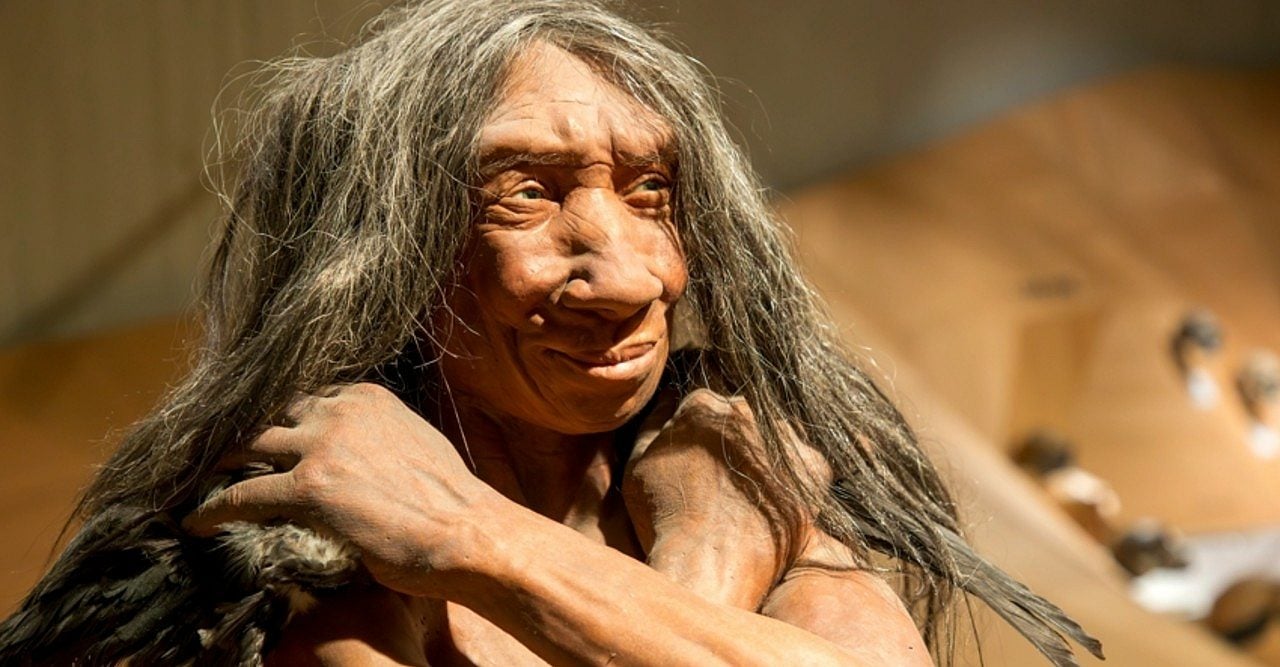
A global team of scientists examined the dental remains of 20 *Homo naledi*, concluding that they were all female. The study, published in the magazine *Cell*, used advanced proteomic techniques to analyze enamel proteins and determine the biological sex of these ancient hominids, which lived between 236,000 and 335,000 years ago in South Africa.
The researchers, under the coordination of Palesa P. Madupe and Enrico Cappellini, from the University of Copenhagen, analyzed 23 dental samples from at least 20 different *Homo naledi* individuals. The materials were recovered in the Rising Star cave complex, located in the “Cradle of Humankind” region in South Africa. The fundamental technique focused on identifying specific proteins in tooth enamel, such as amelogenins X (AMELX) and Y (AMELY).
The proteins present in tooth enamel have exceptional resistance to degradation, making them excellent indicators for the study of very old fossils, as detailed by the team in their publication. The AMELX protein is found in both male and female individuals, while AMELY is exclusive to biologically male individuals.
To determine the sex of the individuals, the scientists looked for specific peptides from the AMELY protein, which is a characteristic of the Y chromosome. The absence of these markers in all the samples analyzed led to the conclusion that the hominins studied were female.
Innovative approach to researching ancient remains
One of the most notable aspects of the study lies in the methodology used. The researchers used a minimally invasive technique known as “acid etching,” which involves briefly applying a trifluoroacetic acid solution to the surface of tooth enamel. This avoids the need to cut out or damage significant parts of the valuable fossils.
The authors highlight that superficial acid etching of enamel can extract a slightly greater amount of peptides compared to cutting fragments. As the portion of enamel extracted by cutting decreases, recovery by both strategies becomes increasingly similar.
This method allows the analysis of extremely rare and precious specimens without compromising their physical integrity. In this way, new opportunities are opened for paleoproteomic research on fossils that, previously, could not be studied with more destructive approaches.
Analysis of the 20 samples did not reveal consistent evidence to support the reliable identification of male individuals, according to the study. In fact, 19 of the 20 individuals were classified as female with greater than 95% probability, and the last individual presented a profile consistent with female assignment, with a probability between 50% and 95%.
The presence of homozygosity for AMELX reinforces the absence of AMELY, as explained by the scientists. Together with the low morphological variation already documented in *Homo naledi*, these two independent pieces of evidence suggest that specimens of this species, known from the Rising Star cave system, are predominantly, or even exclusively, female.
The study also investigated and ruled out the possibility that the lack of male markers could be attributed to technical limitations. The researchers compared their findings with previous analyzes of other hominids where males had been identified, such as *Homo predecessor* and *Paranthropus robustus*, confirming that the sensitivity of the method was sufficient to detect Y chromosome proteins, if they were present.
Understand genetic uniformity and evolutionary variations
Another important revelation from the study is the complete absence of variation in the protein sequences collected among all 20 individuals examined. The researchers found that partial protein sequences obtained from specimens of *H. naledi* did not present any distinction within the set of samples.
This genetic uniformity is unusual and has led researchers to consider several hypotheses. One is that the individuals studied could have come from a population with low genetic diversity, perhaps resulting from prolonged isolation or inbreeding. Another theory is that the group of specimens discovered in the Rising Star system does not represent the entire diversity of the species.
The complete similarity of the recovered proteomic sequences does not seem to match a sample originating from a vast and diverse population, as noted by the authors. A population with less diversity could corroborate this result, although even so, the probability of not finding variation in contemporary human populations is low (ranging from 1% to 12%, depending on the population).
What the discovery changes for understanding human evolution
The consequences of this discovery are varied and profound. On the one hand, it offers crucial insights into the biology and evolutionary path of *Homo naledi*, a species that, since its discovery in 2013, has aroused great interest in the scientific community due to its combination of archaic and modern characteristics.
The possibility that the remains found at the Rising Star cave complex are exclusively female raises provocative questions about the behavior of this species. Scientists consider that there may have been an intentional accumulation of individuals, perhaps linked to funeral rituals, although this theory continues to be the subject of debate among experts.
When considering a sample of 20 distinct individuals and a 1:1 ratio between the sexes in the population, the chances of finding only females are extraordinarily low, estimated at 0.0000954%, according to the authors’ calculations. However, the hypothesis of an accumulation of same-sex individuals in *H. naledi* in Rising Star is strengthened by a recent study that, based on the size of the teeth, suggests that the known fossil record of this species could have a ratio of 9:1 or even 1:0.
The preference for access to caves by individuals of smaller physical build, something common among female primates, could offer a partial explanation for this bias. However, the researchers point out that the sample includes ten juvenile individuals in pre- or post-eruption stages of the second molar, an age at which the body size of both sexes would not exceed that of an adult female.
The research represents a notable advance in the application of proteomic techniques to the study of ancient fossils, especially in warm climate areas where ancestral DNA tends to degrade. Scientists are optimistic about the potential of these methodologies for future discoveries.
The acid etching technique has proven to be a promising microdestructive sampling strategy to estimate the sex of Pliopleistocene tooth enamel specimens, or for a preliminary assessment of protein recovery before adopting more invasive methods, the authors conclude. Its use could make paleoproteomic research viable on particularly rare or valuable specimens, previously considered incompatible with conventional sampling practices.
The research team plans to extend their analysis to other fossils and regions, hoping this methodology can be applied to other rare specimens. The aim is to answer fundamental questions about human evolution without compromising the integrity of the global paleontological heritage.





