
Reappearance of mosses and ferns on Nishinoshima Island signals the formation of an unprecedented ecosystem


A significant discovery was announced for Nishinoshima Island, where vegetation had been completely destroyed by intense volcanic eruptions that occurred between 2013 and 2020. For the first time since the catastrophic events, researchers confirmed the emergence of land plants, marking a new chapter in the site’s natural recovery.
The studies identified a species of moss, known as *Trematon longicollis*, and two species of ferns, belonging to the genera *Dryopteris* and *Nephrolepis*. These discoveries represent the first signs of plant life on the island after the period of devastation.
All plant species located are categorized as pioneers, having the remarkable ability to disperse over long distances using spores. This characteristic is crucial for the colonization of isolated and newly formed environments.
Nishinoshima Island, as an extremely isolated oceanic territory, approximately 130 kilometers from the nearest inhabited island, Chichijima, is considered an object of study of inestimable value globally. It serves as a rare “natural laboratory” to closely observe the complex process of formation of oceanic island ecosystems. Confirming the presence of these plants establishes a fundamental milestone, indicating the beginning of primary succession at the site.
Scientific team reveals details of discovery
A vast team of researchers, which included Masayuki Murakami and Professor Koji Takayama, from Tokyo Metropolitan University, as well as other experts from several Japanese institutions, conducted the crucial survey. They were responsible for confirming the development of mosses and ferns in the Ogasawara archipelago, in Nishinoshima, after the complete eradication of pre-existing flora by volcanic eruptions from 2013 to 2020.
During an expedition in July 2025, scientists collected samples of young mosses and ferns from deposits of gravel and volcanic ash near the coastal area. Subsequent morphological and DNA analyzes allowed the precise identification of the species, reiterating that these are pioneer plants with a high dispersal capacity. The research highlights the importance of this initial data for understanding the formation of ecosystems on oceanic islands.
Nishinoshima as a natural laboratory for ecology
Nishinoshima is part of the Ogasawara archipelago, located within the jurisdiction of Tokyo, approximately 130 kilometers west of Chichijima. The volcanic eruptions that occurred between 2013 and 2020 caused a significant expansion of the island’s surface, but, in return, annihilated all its vegetation.
This scenario has transformed Nishinoshima into a unique and extremely rare study site in the world, offering an unprecedented opportunity for scientists to observe how species colonize, establish themselves and build new biological communities in a completely reshaped environment. Its condition of extreme isolation, with virtually no neighboring land, makes the arrival of new organisms a challenge, and the beginning of plant recovery was an open question.
Details of the scientific survey on the island
As part of an extensive academic study promoted by the Ministry of the Environment on Nishinoshima, the team of researchers landed on the island in July 2025. Despite the limited time window for the research, several plant organisms were located in the northeast coastal area, from where samples were carefully collected.
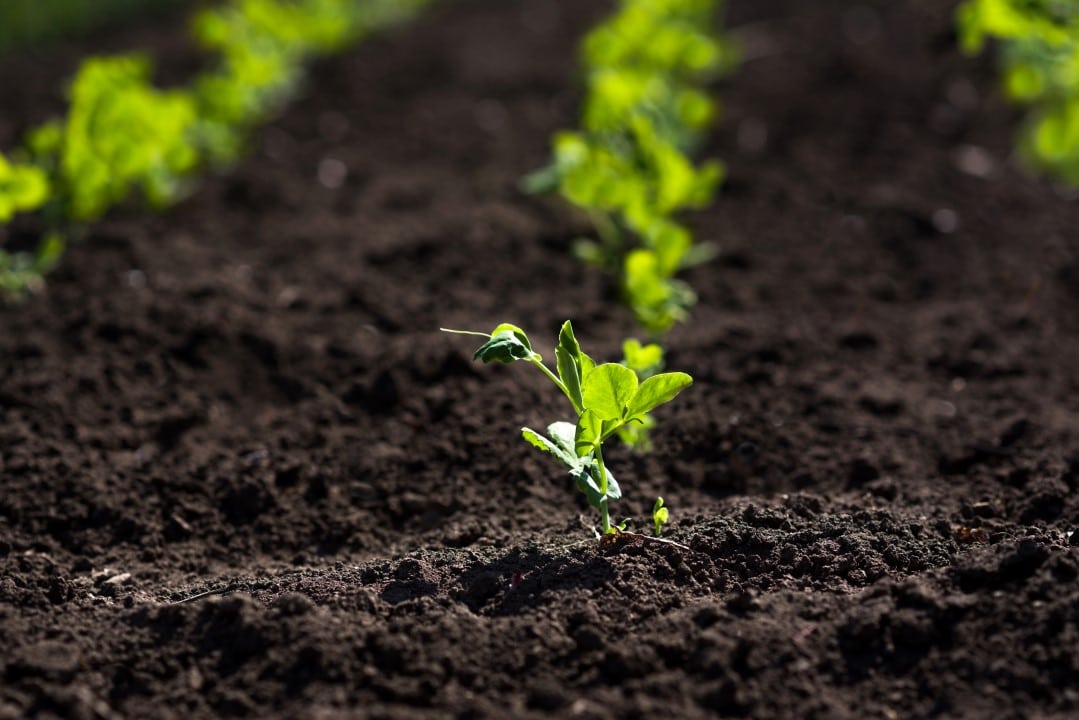
Morphological observations and genetic analyzes of the plants revealed the presence of the moss *Trematon longicollis* and ferns of the genera *Dryopteris* and *Nephrolepis*. The ferns were young sporophytes, about one centimeter long, indicating recent colonization. The moss was found in a small geological formation, created by the erosion of volcanic ash, while ferns grew on nearby slag slopes. The presence of traces of seabird nests was also noted in the area, suggesting a potential aid in the dispersal of seeds and spores.
All of these plant species are recognized for their ability to disperse spores over great distances and to survive in arid, sunny and nutrient-poor environments. Such characteristics were essential for its establishment in the island’s new volcanic structure.
Implications of research for the formation of ecosystems
In territories that were newly created by volcanic eruptions, primary succession begins with the invasion and settlement of organisms, giving rise to new ecosystems. The presence of mosses and ferns in Nishinoshima, confirmed by this study, signals the initial phases of the constitution of terrestrial communities on the island.
Although islands such as Surtsey, in Iceland, and Krakatoa, in Indonesia, recorded relatively rapid plant colonization after their eruptions, Nishinoshima has a distinct rhythm. More than five years after the intense volcanic activity between 2013 and 2020, only a small number of plants have been identified, which suggests that the extreme geographic isolation of the island, soil salinization and the scarcity of freshwater sources may be crucial limiting factors for the development of the flora. This comparative difference highlights the importance of Nishinoshima for understanding the barriers and facilitators of ecological succession in extreme environments, contributing to more comprehensive models of environmental recovery on a global scale.
Continued investigation into the permanence, reproduction and development of these plants into new plant communities is expected to significantly deepen understanding of the mechanisms of primary succession and the formation of ecosystems on oceanic islands.
Essential concepts to understand the island
What are oceanic islands and primary succession
An oceanic island is defined as a territory that has never been connected to a continent, having been formed in the ocean through volcanic activity or other geological processes.
In turn, primary succession describes the process by which biological communities arise and develop from scratch on lands that have been newly formed, such as those resulting from volcanic eruptions or the retreat of glaciers.
Publication and support for the project
Details of the published study and its funders
The results of this research were published in an article entitled “Initial colonization by bryophytes and ferns during primary succession in Nishinoshima, Japan”, published in the journal *Nordic Journal of Botany* in 2026. The study was authored by Shoki Murakami and the entire research team involved.
The research project that made these discoveries possible received funding from JSPS KAKENHI grants, a partnership between the Tokyo Metropolitan Government and Tokyo Metropolitan University, and the Joint Use Program of the University of Tokyo Earthquake Research Institute.





