
Study with bacteria from a hypersaline lagoon in Rio de Janeiro may reveal conditions for the existence of life on Mars

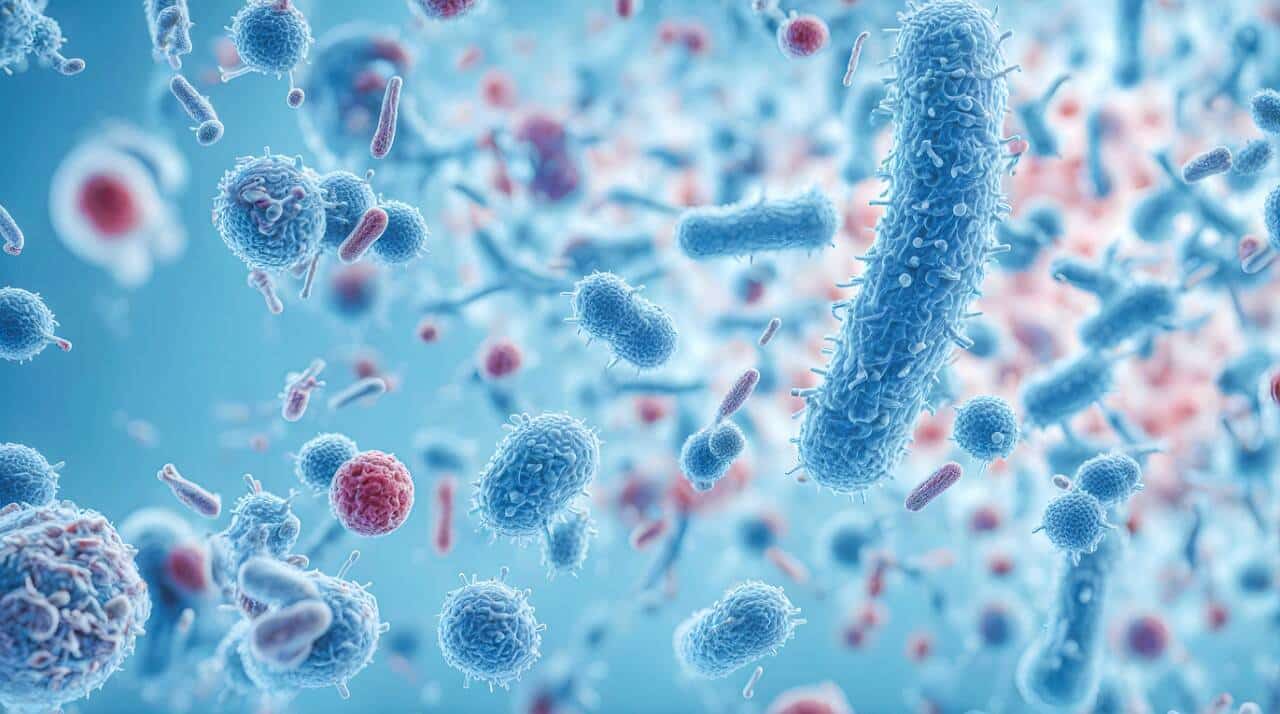
Scientists from the Astrobiology Laboratory (AstroLab) at the University of São Paulo (USP) are using microorganisms found in Laguna Brejo do Espinho, located in Restinga de Massambaba, in Rio de Janeiro, to investigate the possibility of life on the planet Mars. The research focuses on analyzing the adaptation capacity of these bacteria to extreme environments.
This investigation is crucial because the waters of the Rio de Janeiro lagoon have extremely high salinity, characteristics that may be similar to the intermittent “brines” identified on the surface of Mars. These conditions are considered essential for the search for life on the neighboring planet.
Discovery of a resilient bacterium: Staphylococcus nepalensis
The central bacterium in this study is Staphylococcus nepalensis (S. nepalensis), which has attracted the attention of USP researchers due to its unique properties. This microorganism demonstrates a remarkable ability to survive abrupt fluctuations and extreme saline concentrations, serving as a biological model for understanding how life can thrive in hostile conditions.
S. nepalensis was isolated in Laguna Brejo do Espinho, in Araruama, a place with a naturally adverse environment and extreme salinity. With an average depth that varies between 2 centimeters and 2 meters, the lagoon experiences large variations in salinity throughout the year, creating a peculiar ecosystem that challenges most forms of life.
For this reason, scientists are using this bacteria in experiments conducted in the laboratory, where they simulate some of the most severe conditions found on Mars. The focus is on so-called intermittent brines, small flows of extremely salty water that appear briefly on the surface of the red planet.

The Araruama Laguna is recognized as one of the largest permanent hypersaline water formations in the world, surpassing the salt concentration found in seawater. In the laboratory, these experiments replicate the Martian super-salt water cycle to evaluate the bacteria’s response, offering clues about past or present habitability on Mars.
The main objective of the research is to determine whether these Martian brines could offer the minimum conditions necessary for the subsistence of extremophile microorganisms — living beings that develop in extreme environmental scenarios. Understanding this is fundamental to astrobiology.
The possible formation of these hypersaline brines on Mars during the planet’s summer, even if in reduced volumes, is encouraging data for the hypothesis that some form of life could survive there. This is a crucial element in the search for life not only in the past, but also today.
Thus, researchers seek to understand how S. nepalensis would react to the intermittent brine cycles that occur in the Martian summer, characterized by freezing at night and returning to a liquid state during the day.
Throughout the day, as the temperature rises, the water freezes and helps to dilute the salt accumulated in the brines. At night, the process reverses: the solutions freeze again, reducing the availability of liquid water, causing desiccation and increasing the salt concentration.
Brines on Mars are compositions of liquid water with high concentrations of salts, such as perchlorates, and represent the most likely mechanism for the existence of liquid water on the planet today.
Such marked variation in water availability and salt concentration in Martian brines poses significant biological challenges for life as we know it.
Future results from these investigations will be essential to understanding whether the adaptive capacity of the bacterium Staphylococcus nepalensis could be a way for life to adjust to the environmental stressors present on Mars.



