
Chinese scientists announce discovery of unique blue hole in coral reef in South China Sea


Chinese authorities have revealed a study of an exceptional underwater formation called the “Blue Hole in Huangyan Dao in the South China Sea.” The document, released this Thursday by the country’s Ministry of Ecology and Environment, describes the discovery of an extremely rare marine blue hole on a global scale, uniquely originating in a coral reef. This is the first occurrence of its kind identified in China, with preliminary geochronological analyzes indicating its formation at least 3,200 years ago.
The natural geological formation was initially located in August 2025, within the Huangyan Dao lagoon. Its discovery marks the second marine blue hole detected in areas under Chinese control, following the exploration of Yongle Atoll, which is home to the Limestone Dissolution Type Marine Blue Hole, popularly known as “Dragon’s Cave” in the Sansha region.
Hu Guolin, director of the Ecological Environment Department of Sansha City in Hainan, highlighted the importance of the discovery. “Detailed studies show that this habitat constitutes a globally rare marine blue hole, formed specifically by a coral reef, and the first of its kind to be recorded in China to date,” Guolin said.
The entrance to this remarkable underwater formation occupies a surface area of approximately 1,491.7 square meters.
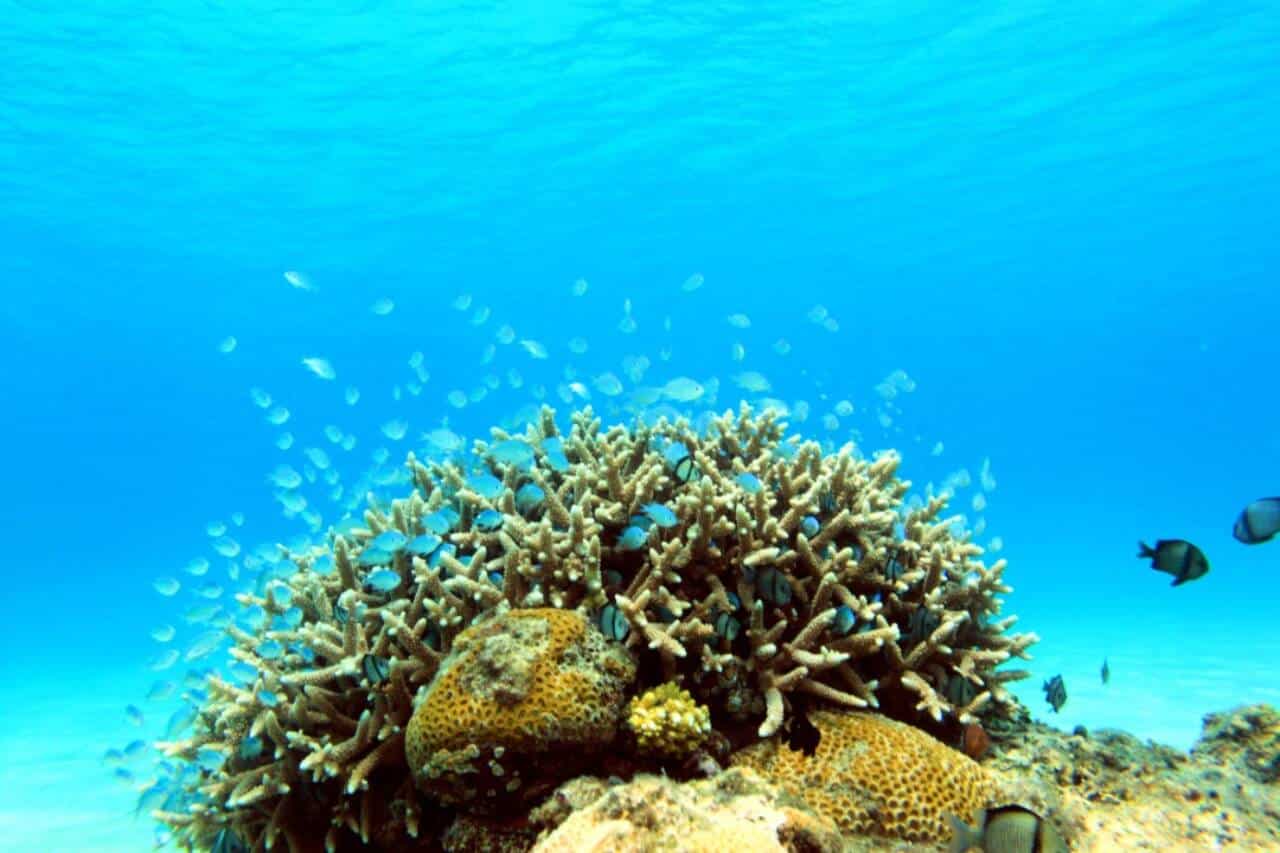
Both the blue hole and the waters adjacent to Huangyan Dao display rich biological diversity. There, organisms characteristic of coral reef ecosystems thrive, including a wide range of corals, clams, several species of fish, sponges and sea anemones.
Species of wildlife with national protection, such as green turtles, were observed inhabiting the interior of the hole.
During two years of non-stop scientific surveys, researchers cataloged 165 types of reef-building corals and 184 varieties of fish in the surrounding water areas. Furthermore, the application of environmental DNA technology has allowed the identification of more than 2,700 distinct marine species.
Director Hu Guolin also emphasized the ecological relevance of the find. “The Huangyan Dao Blue Hole has an intrinsic connection with the surrounding marine ecosystem, demonstrating excellent connectivity. It functions as a vital sanctuary for the reproduction and protection of typical coral reef organisms and large emblematic species against natural disturbances,” he explained. “The formation also provides crucial data for studies of biodiversity and environmental evolution in the South China Sea, as well as for understanding the evolution of coral reef biota in the Indo-Pacific Convergence Area.”
As early as September 2025, the Chinese government established the Huangyan Dao National Nature Reserve. The findings of this recent research substantiate the beneficial effects of ecological preservation initiatives implemented in the waters surrounding Huangyan Dao.



