
Pristine Mayan ruins revealed in Mexico’s jungle, offering unprecedented insights into the decline of civilization


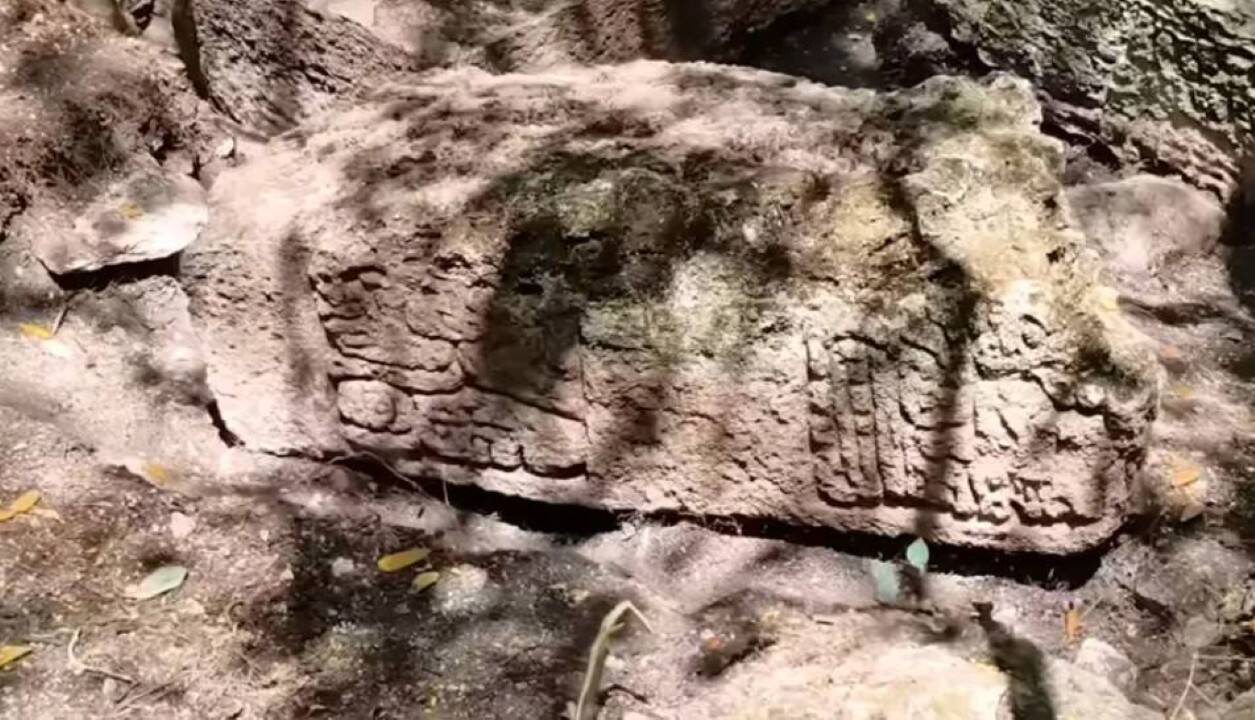
An ancient Mayan metropolis, hidden for centuries in the dense forest of Mexico, has recently been located by archaeologists. The discovery, considered a landmark, promises to shed light on the events that preceded the decline of civilization. Research teams advanced more than five kilometers through the forest to reach the site, which was not accessible via conventional trails. Monuments and altars with unique engravings were found at the site.
The archaeological community has announced the revelation of a Mayan urban center that remained untouched for more than a thousand years in the Mexican jungle. This find is located in the Calakmul Biosphere Reserve, in Campeche, at the base of the Yucatán Peninsula, and stands out for its remarkable state of preservation.
Archaeologist Ivan Šprajc, responsible for leading the excavation and a specialist in ancient Mayan sites, detailed that, unlike other areas of the forest, this site did not have pre-existing logging routes. According to a translated statement from the National Institute of Anthropology and History of Mexico (INAH), the difficulty of access was extreme. The site was named “Minanbé,” a Yucatec Mayan term that translates to “there is no road,” reflecting its isolation.
For experts, this seclusion of the city of Minanbé represented a crucial benefit. Šprajc emphasized that this is the first ancient city that his team has encountered in three years that appears intact and with no signs of having been looted.
The archaeological site area is entirely located within the Calakmul Biosphere Reserve, in the Campeche region, according to information released by INAH.
The Yucatán Peninsula is the cradle of the Central Mayan Lowlands, a region that was the scene of indigenous civilization renowned for its monumental constructions, such as Chichén Itzá, Palenque and Tulum. The Mayan trajectory began around 1500 BC, with communities living in villages dedicated to the cultivation of foods such as beans, corn and pumpkin. From the 3rd century AD, the Mayans began to build cities in stone, incorporating courts for games, pyramidal temples, large squares and palace complexes.
This civilization flourished with a system of independent city-states, each under the rule of a monarch. Most of the buildings in Minanbé were built during the Late Classic period, which lasted from 600 to 900 A.D. At that time, the Lowlands had a population estimated at between 9 and 11 million inhabitants, according to the official report.
Before the ground exploration, researchers thoroughly analyzed an aerial scan of the Minanbé area, carried out with lidar technology, according to INAH.
After evaluating a lidar scan that covered approximately 16 hectares of Minanbé, archaeologists Atasta Flores Esquivel, Israel Chato López, Quintín Hernández Gómez and Vitan Vujanović began ground exploration. Using machetes, they braved around five kilometers of dense jungle to reach the location. The team found a complex city, characterized by central squares surrounded by palaces, imposing religious structures and terraces integrated with water channels.
The ruins of the city do not show any signs of having been looted, reinforcing its historical value, according to data from INAH.
The most prominent building in Minanbé consisted of a pyramid-temple that exceeded 12 meters in height, equivalent to three or four floors. Vujanović explained, through a statement, that the construction followed the Río Bec style, a Mayan architectural style distinctive for its masonry and refined details, widespread in the Late Classic.
Inside the temple, there is a stele, a free-standing carved stone monument. Vujanović reported that this is the first stele found by his team that preserves the symbols intact. In total, 14 stelae and altars were located at the site, an indication that the city had great relevance during the Late Classic, according to the statement.
The historical richness of Mayan monuments and stelae
Throughout the first millennium of the Christian era, talented Mayan artisans created countless stelae, on which they carved detailed hieroglyphic texts and life-size representations of their rulers.
Hundreds of images of the altars and stelae were captured by the researchers and sent to epigrapher Octavio Esparza Olguín for in-depth analysis. Olguín revealed, in a statement, that one of the stelae illustrates a figure decapitating another with a bladed weapon, possibly a knife or axe, and is dated 849 A.D. He suggests that this indicates that most of the carved monuments were created in this period, close to the collapse of the Mayan civilization in the Lowlands.
Among the finds, the researchers identified altars with round and rectangular shapes. One of these altars features an elaborate sculpture of a ruler, adorned with a feathered headdress, an ornate breastplate, bracelets, and necklaces. The presence of a carved Mayan calendar marker indicates that this specific altar was carved in the late 7th century, establishing it as the oldest monument discovered in Minanbé.



