
Reports of healthcare incidents in 2025 shock experts and highlight unusual risks of everyday life


The year 2025 was marked by a series of particularly peculiar medical situations. Several surprising events were recorded and became the subject of studies and debates among professionals in the field.
These unique narratives, shared by clinicians and researchers, satisfy human curiosity about the body and its anomalies. Furthermore, they often provide crucial insights into real, yet rare, health hazards and sometimes drive new scientific discoveries.
It is important to highlight that the reports presented are based on publications in scientific journals or on cases that gained notoriety in the media during the year 2025. Some of the events described can be quite impactful.
Man develops yellow nodules on hands due to high-fat diet
In January, a Florida medical team described the case of a man in his 40s who presented with the appearance of “yellowish nodules” on his hands and elbows. The condition was a result of extreme dietary choices.
It was found that the change in skin color was a consequence of extremely high levels of cholesterol in the bloodstream. The amount was such that lipid deposits were literally being expelled through the skin, a condition formally known as xanthelasma. The condition was attributed to the adoption, eight months ago, of a carnivorous diet, where the patient routinely consumed three to four kilos of cheese, a large amount of butter and daily hamburgers filled with even more fat.
Perhaps the most intriguing aspect of the situation was that, despite skin problems, the individual claimed to have lost weight and felt in great shape during the diet period. Doctors did not detail whether he changed his butter-rich eating habits after his diagnosis.
Although the condition of xanthelasma itself is benign, the presence of cholesterol at such high levels in the blood can significantly increase the risk of developing future cardiovascular problems, recommending a dietary reevaluation.
Rabies death recorded after kidney transplant in rare case
In March, health officials in Michigan and Ohio documented one of the most unusual cases of rabies death, linked to an organ transplant — a procedure that is generally designed to save lives.
The victim had received a kidney from a deceased donor in December of the previous year, dying from rabies a month later. Although the surgical procedure was performed in Ohio, the patient died in Michigan, his home state, marking the first report of rabies in the region in approximately 15 years.
Rabies is an exceptionally rare disease in the United States, with most cases associated with bites from wild animals. However, this mode of transmission is even more uncommon. A CDC report on the incident revealed that this was only the fourth outbreak of transplant-transmitted rabies documented in the US since 1978.
Fortunately, this narrative had a relatively more positive outcome for others involved. It turned out that three other people had received cornea transplants from the same donor. Immediately after the cause of death was discovered, the recipients had their transplants removed and began post-exposure prophylaxis. To everyone’s relief, none of the three contracted rabies, a disease that is almost always fatal once symptoms appear.
Brain-eating amoeba infection causes death in Texas
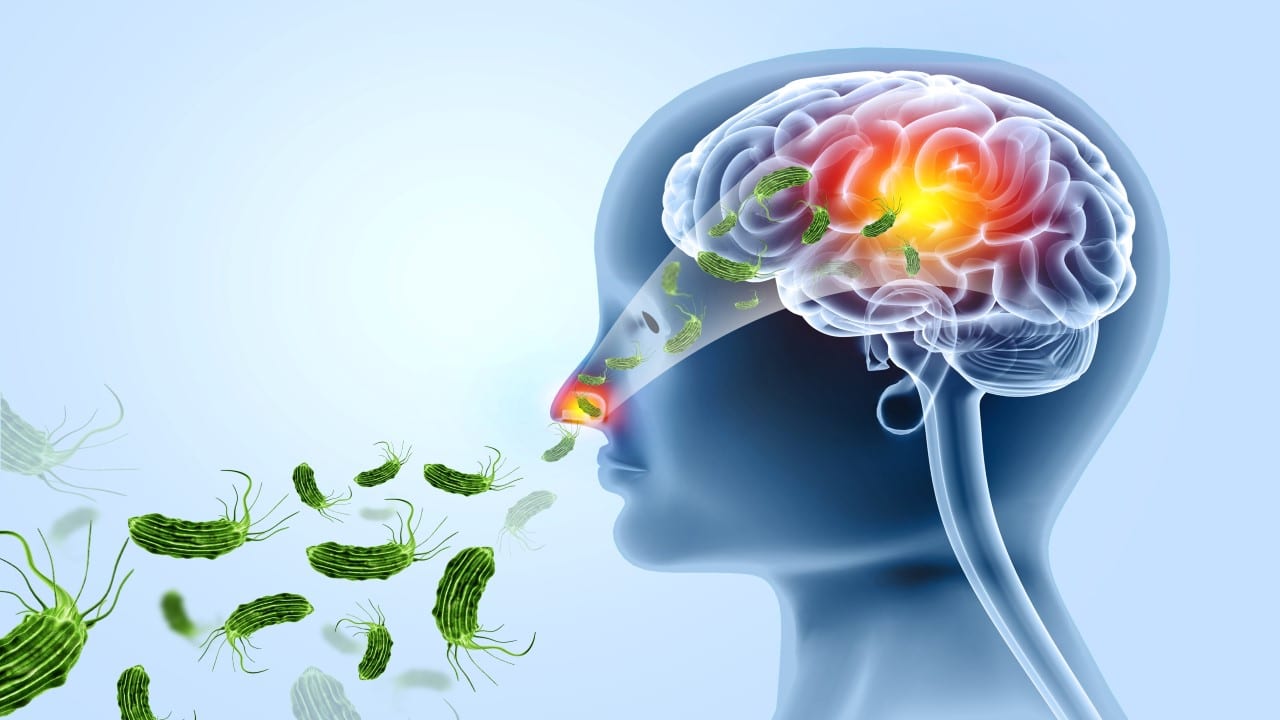
In June, federal and local health agencies in Texas released details of the case of a woman who died from an infection with Naegleria fowleri, popularly known as the brain-eating amoeba.
These tiny microorganisms typically feed on bacteria present in freshwater environments. Ingestion of water containing N. fowleri, in itself, does not cause harm. However, if these amoebas reach the brain, usually through water entering the nose, they can begin to consume brain tissue, causing severe inflammation. This infection, called primary amoebic meningoencephalitis, has a mortality rate close to 100%.
Since its identification in the 1960s, only about 150 cases of PAM have been reported in the US, but the present case turned out to be even more peculiar. The woman likely contracted the infection by performing a nasal irrigation with water from the tap in her trailer. Although authorities found no direct traces of the amoeba near the camp she attended, it was determined that the vehicle’s water system had not been adequately disinfected, allowing contamination.This incident highlights the critical importance of using only distilled, sterilized, or boiled and cooled water for nasal hygiene procedures., a fundamental precaution to avoid such severe risks.
Pizzeria customers accidentally consume food contaminated with THC
Many people have tried the combination of cannabis and pizza in an intentional and pleasurable way. However, this was not the expectation of customers at the renowned Famous Yeti’s Pizza, located in Stoughton, Wisconsin.
In July, local health officials reported that approximately 100 patrons of the Famous Yeti restaurant inadvertently consumed food prepared with THC oil over a three-day period in October 2024 (the official report did not name the establishment, but other reports did). Seven clients needed to be taken to a local hospital with symptoms including dizziness, drowsiness and anxiety, while eight children were also poisoned, with one experiencing hallucinations for a brief period.
Official investigations determined that the incident was an unfortunate mix-up. The restaurant, when running out of its usual cooking oil, began using oil from a shared kitchen, which the owner assumed was canola oil, to prepare pizza dough, sandwiches and other baked goods. In fact, the oil was used by a neighboring company in the production of its THC edibles.
Ultimately, none of the people involved suffered serious injuries. Apparently, Famous Yeti’s continues to operate without any major problems.
Toothbrushing ends in fainting and throat injury
One can imagine that brushing your teeth is an activity that would be unlikely to cause any type of injury. However, this assumption proved to be wrong in a recent case.
In July, doctors in Tokyo, Japan, reported the case of a 50-year-old man who had the extreme misfortune of fainting while performing oral hygiene. As experts later discovered, the fainting caused the brush to hit the back of the throat with such force that it caused air to be trapped, raising the risk of a potentially serious infection. Although the man remained hospitalized for a week to treat the injury, he recovered completely, with no consequences.
The situation, as alarming as it may seem, could have been even worse. In 2023, a different medical team, also in Japan, recorded the case of a man who fell while brushing and had the brush literally lodged in his throat, demonstrating the unusual risks associated with this daily habit.
Ovarian cancer mimics pregnancy symptoms in Indian woman
In October, a team of doctors in India described the case of a 38-year-old woman who developed a rare and bizarre form of ovarian cancer, whose symptoms accurately mimicked those of pregnancy.
The woman sought medical assistance after a urine pregnancy test returned a positive result. Initially, the diagnosis indicated an ectopic pregnancy, a condition in which the embryo forms outside the uterus and is not viable. However, more detailed imaging tests revealed the true cause: cancer in the right ovary, specifically non-gestational ovarian choriocarcinoma (NONG). CONGs are extremely rare tumors, representing only 0.6% of all reported ovarian germ cell tumors. Furthermore, her case was pure CONG, an “extremely rare” subtype composed entirely of germ cells, with no other tissue types present.
Despite the diagnostic confusion, the woman’s cancer was apparently detected at an early stage. She demonstrated a complete response to surgical treatment and chemotherapy, although she requires continued follow-up to monitor any future risk of recurrence.
Man suffers chronic nosebleeds caused by leech
This case serves as a reminder of the importance of precautions while hiking, or at least to avoid immersing your face in mountain spring waters.
In October last year, doctors in China reported the case of a 38-year-old man who had been suffering from chronic nosebleeds for the past few days. The unusual cause was a leech lodged in his right nostril. The man probably contracted the parasite twenty days earlier, while climbing and washing his face with spring water, at which point the leech must have settled in his nose.
Surprisingly, the leech was still alive when it was located by doctors, although details about what happened to it after removal with a suction catheter were not provided. The patient himself had no lingering symptoms after the parasite was removed, at least not physical scars.
Woman in the Philippines shows lactation capacity in her armpits
In early fall, a medical team in the Philippines described the case of a 35-year-old Filipino woman with a surprisingly common but little-known ability: the ability to produce milk through her armpits.
The woman noticed something different about her armpits 15 years ago, during her first pregnancy. However, it was only at a recent appointment that doctors formally confirmed that she had ectopic breast tissue in her armpits. Although the tissue had always been present, it is likely that the hormonal changes triggered by pregnancy were the catalyst for the beginning of lactation in this region.
Doctors advised her to remain vigilant, as extra breast tissue carries the same health risks as normal breast tissue, including the development of breast cancer. However, as her armpits returned to their normal state after each breastfeeding period, she chose not to remove the tissue.
Investigation reveals first confirmed death linked to red meat allergy
At the end of November, researchers at the University of Virginia released a tragic discovery: the first death proven to be associated with alpha-gal syndrome, also known as red meat allergy.
In the summer of 2024, a 47-year-old New Jersey man passed away inexplicably a few hours after consuming a hamburger at a neighbors’ barbecue. Although the coroner initially classified the death as an undetermined cause, the man’s family contacted researchers at the University of Virginia (UVA) and requested a second evaluation. Laboratory tests revealed that he had developed a serious allergic reaction to alpha-gal sugar on the day of his death, a reaction that, with high probability, led to his death.
The syndrome is triggered by the bite of certain ticks, notably the lone star tick. For reasons that scientists are still trying to understand, this bite may, in some people, trigger a new sensitivity to alpha-gal. Because alpha-gal is found abundantly in the muscles of all mammals except humans and primates, the syndrome causes people to develop allergies to beef and other common farmed animals.
Although this is the first death categorically linked to red meat allergy, the number of cases overall has grown steadily over time, driven by expanding tick populations. About 450,000 Americans are estimated to have developed alpha-gal syndrome since 2010, raising awareness of a growing public health problem.
Man suffers stroke due to excessive energy consumption
If ever there was a case that illustrates the importance of moderation, this is a striking example.
In December, doctors in the United Kingdom detailed how a previously healthy and physically fit 50-year-old man suffered a stroke, probably caused by excessive consumption of energy drinks. The amount consumed was approximately eight drinks per day, which equates to about 1.3 grams of caffeine daily — more than three times the maximum recommended dose (400 milligrams) for a typical adult. This habit raised his blood pressure to dangerously high levels, which in turn was the likely trigger for the stroke (no other risk factors were identified) and his subsequent hospital admission.The patient’s story highlights the need to raise awareness about the serious risks that excessive caffeine consumption can pose to the cardiovascular system.
The man was not aware of the harm of his daily routine and, to his credit, he stopped drinking as soon as the doctors advised him. His blood pressure began to return to normal levels within a week, and he has not had another stroke in the last eight years; however, he still experiences slight numbness on the left side of his body as a result of the event.
Given this case, doctors reinforced the need for greater public awareness about the cardiovascular risks associated with energy drinks and suggested the possibility of stricter regulation of these products in general.



