
Voyager 1 probe approaches unprecedented milestone by reaching distance of one light day from Earth in 2026

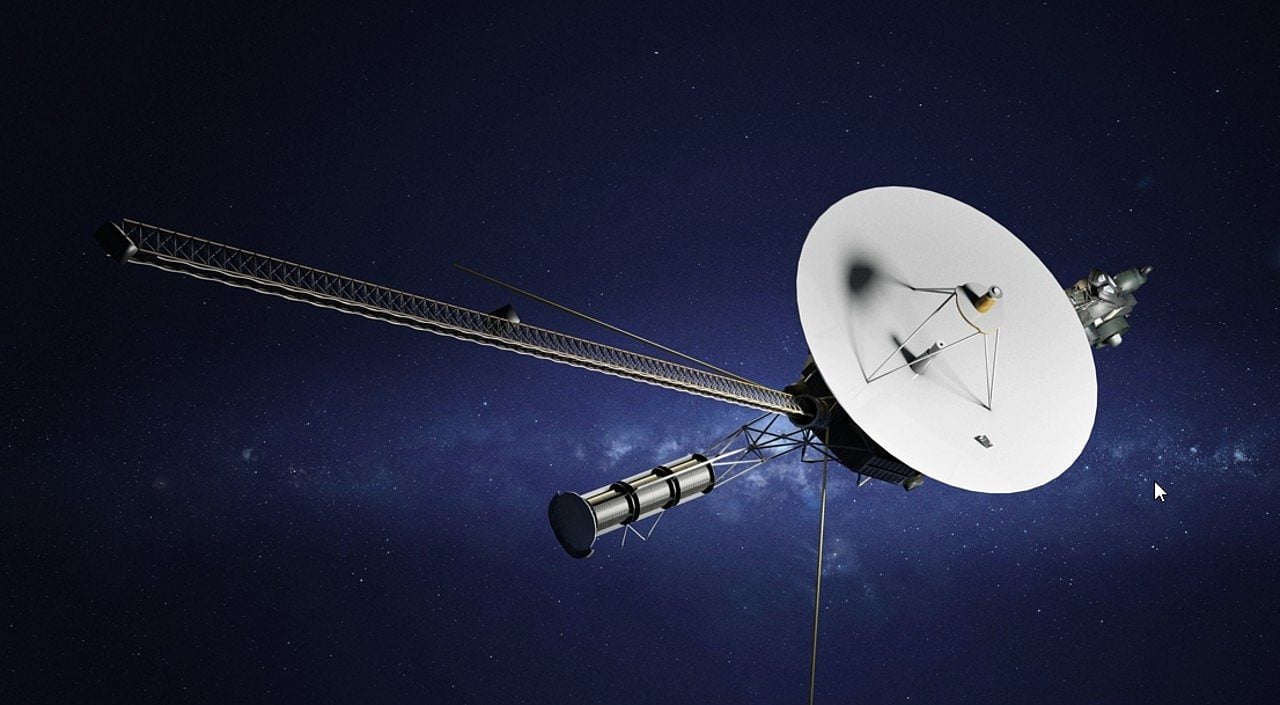
The Voyager 1 spacecraft, one of the most distant human-made objects from Earth, is set to reach a remarkable new milestone in its historic journey. Around November 17th and 18th, 2026, the spacecraft will reach the incredible distance of one light day from our planet. This feat symbolizes not only the resilience of space engineering, but also the deepening of human exploration into the far reaches of the universe.
Voyager 1’s enduring journey into the unknown
Launched in September 1977, the Voyager 1 probe has provided crucial information about the giant planets of the solar system and, more recently, about interstellar space. Its original mission was to explore Jupiter and Saturn, and it exceeded all expectations by continuing to operate for decades after these encounters. Currently, the probe sends data that reveals the nature of the interstellar medium, an environment never before explored directly by a spacecraft.
The meaning of the daylight mark for communication
The distance of one light day, equivalent to approximately 25.9 billion kilometers, represents the time it takes for light to travel from the probe to Earth. For NASA engineers, this translates into a full day’s communications delay for each signal sent or received. If an instruction is sent to Voyager 1, confirmation that it was received and executed will take two days to reach back to mission control, a notable challenge for the ground team. This impressive distance puts into perspective the vastness of space and the feat of maintaining contact with such a remote artifact.
Overcoming technical failures to maintain contact with Earth
Voyager 1’s longevity is a testament to its robustness, but the mission is not without its challenges. Recently, the probe faced a communication failure that prevented it from sending understandable data. NASA engineers, with a mix of genius and persistence, managed to diagnose and fix the problem, despite the significant delay in communications. They identified a corrupt memory chip and developed a creative solution to bypass it, reestablishing the flow of scientific information to Earth.
Voyager 1’s invaluable legacy to humanity
The Voyager 1 probe is more than a piece of technology; it represents the human ambition to explore and understand the cosmos. On board, the famous “Golden Record” carries sounds and images of life on Earth, a message to possible extraterrestrial civilizations.
- Pioneer in interstellar space:The first spacecraft to cross the heliopause, the boundary where the Sun’s influence ends and interstellar space begins.
- Discoveries on giant planets:It provided detailed images of Jupiter, Saturn and their moons, revolutionizing the understanding of these worlds.
- Message for the future:Loads the Golden Record, a phonograph record containing sounds and images selected to portray the diversity of life and culture on Earth.
- Continuous data source:Even after decades, it continues to provide valuable information about conditions in deep space.
The Voyager project has transformed our view of the solar system and continues to expand the horizons of knowledge for planet Earth, even as the probe moves further and further from its home. Although Voyager 1’s radioisotope thermoelectric generators (RTGs) will eventually fail, it will continue its silent journey through interstellar space for millions of years, carrying with it humanity’s message.





