
Astronomers discover an unprecedented volume of methanol in the structure of the interstellar comet 3I/ATLAS

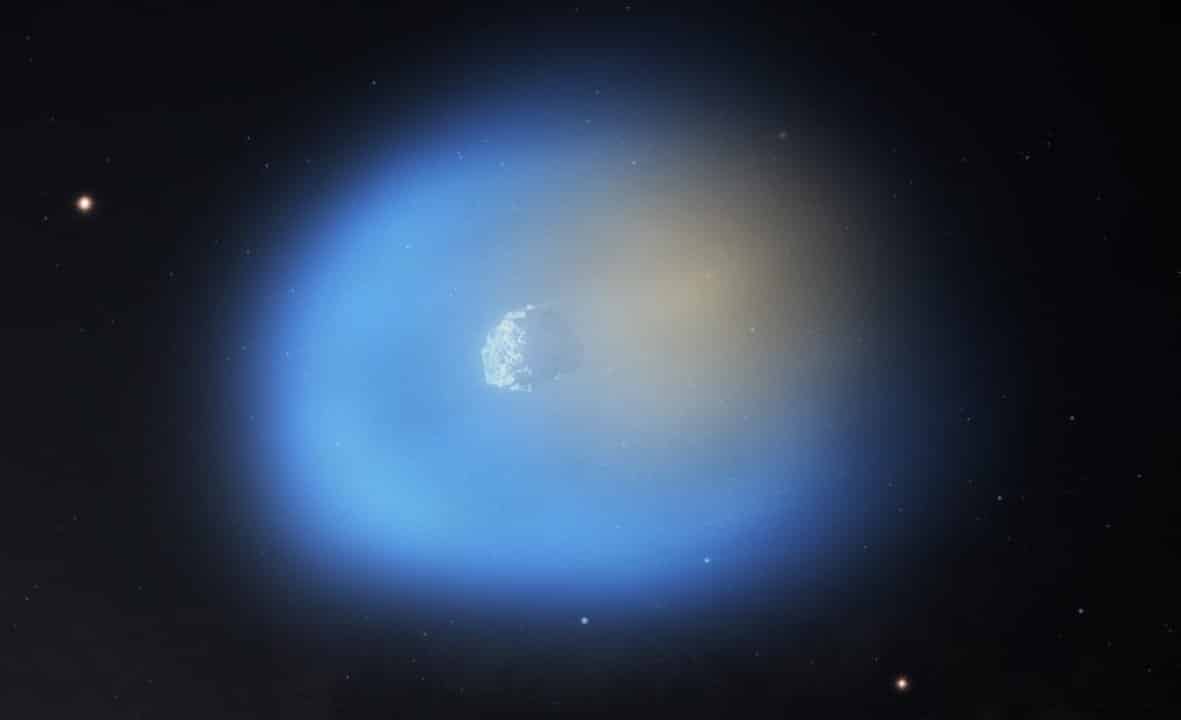
The astronomical community was recently surprised by the chemical characteristics of 3I/ATLAS, a wandering celestial body that travels beyond our planetary system and carries extremely high volumes of methyl alcohol.
Analyzing rocks and ice blocks that were born in other galactic neighborhoods provides fundamental clues about the evolution of the cosmos. During the most recent observations, experts mapped very specific compounds in the cloud surrounding the star, highlighting the massive presence of this type of alcohol.
What the arrival of the third cosmic visitor to our neighborhood means
Officially recognized as the third interstellar traveler to cross Earth’s orbit, 3I/ATLAS follows in the footsteps of famous precursors. Before him, the passage of asteroid 1I/Oumuamua and comet 2I/Borisov had already redefined the theoretical models of astrophysics due to their exotic natures.
This frozen mass, ejected from an unknown star, serves as an intact time capsule for modern science. Studying the materials preserved inside is equivalent to collecting direct samples of the stardust that orbits suns located light years away from Earth.
How Chilean radio telescopes captured the star’s chemical signature
To carry out the reading, the scientific teams used the power of the Atacama Large Millimeter/submillimeter Array (ALMA), an astronomical complex installed in the Chilean desert, with data captured at the end of 2025. As the object approached the heat of our Sun, its frozen crust underwent immediate sublimation, creating a vast glowing atmosphere around it.
This thick layer of illuminated gas allowed astronomers to make a complete scan of the elements present, saving them the need to send space probes to meet the target. Very high-precision sensors captured the radio frequencies emitted by organic molecules as they floated in a vacuum.
Why the Abundance of Organic Compounds Defies Current Theories
The focus of the research was on the comparison between hydrogen cyanide and methanol, the latter being a crucial ingredient for the formation of building blocks of life, such as amino acids. The alcohol content found exceeded any metric seen in comets formed in the Solar System, showing that the stellar nursery of 3I/ATLAS had chemical dynamics completely different from those that shaped Earth and its neighbors.
Exact proportions reveal the molecular complexity of the celestial body
During monitoring sessions on different days, the ratio of methyl alcohol to cyanide fluctuated drastically, recording marks that ranged from 70 to 120 times greater abundance.
Such indices elevate 3I/ATLAS to the level of one of the most chemically rich space artifacts ever documented by contemporary astronomical catalogs.
These superlative numbers prove that the ice block took shape in a spatial zone with temperatures radically different from our standard. Previously, analyzes carried out by the James Webb Space Telescope had already detected a dense cloud of carbon dioxide around the object, even when it was still navigating the coldest and most distant borders of the Sun.
- Methyl alcohol concentration far above known astronomical standards.
- Detection of surprisingly low levels of hydrogen cyanide.
- Variation in the proportion between the two gases reaching peaks of up to 120 times.
Gas release dynamics reveal fragmented internal structure
Thanks to the clarity of the images generated by the observatory in Atacama, it was clear that materials evaporate from different places. Hydrogen cyanide springs directly from the central rocky core, a process quite common among comets born in the Oort Cloud or Kuiper Belt.
On the other hand, methanol gushes both from the center and from a multitude of microscopic ice crystals that travel in the star’s wake. When solar radiation hits these tiny pieces, they react as if they were independent comets, ejecting a massive amount of volatile material into space.
- Continuous cyanide leak from central solid block.
- Violent evaporation of ice microcrystals spread throughout the star’s atmosphere.
- Unprecedented mapping of disintegration behavior in a body outside the system.
What this chemical anomaly teaches about the formation of other worlds
Tracking the composition of these galactic nomads gives scientists a direct window into how exoplanetary systems come to life. Each new molecule identified helps piece together the puzzle of how dust, ice and rock coalesce around young stars scattered across the Milky Way.
With the accelerated evolution of optical and radio capture instruments, the expectation is that the detection of interstellar intruders will become routine in the coming years. Translating the chemical signature of these travelers is the definitive step for humanity to understand the true plurality of environments that exist in the deep universe.





