
Aurora season in 2026: discover the best places and months to witness the spectacle in the sky

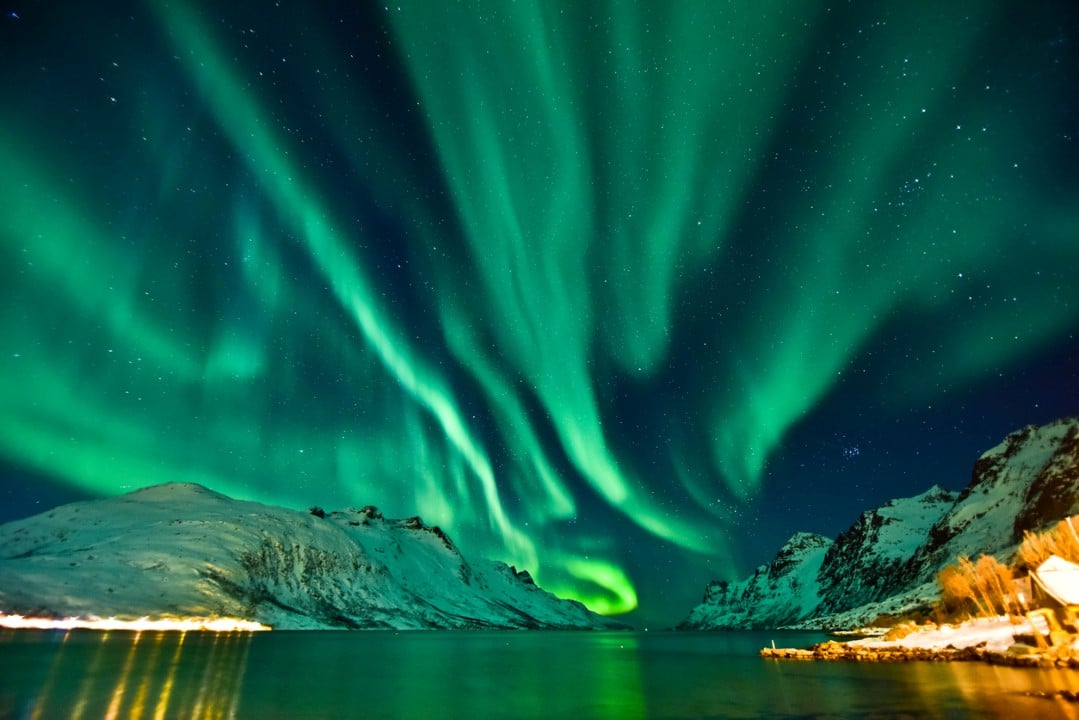
Experiencing the grandeur of the aurora borealis, also known as the northern lights, dancing under a starry sky is a wish for many travelers. However, the search for this natural phenomenon requires careful planning regarding the best destinations and times of year to ensure a successful observation.
Even after the peak of the 11-year solar cycle, the years following solar maximum often prove to be the most promising for aurora hunting. During the phase of declining solar activity, the Sun is still capable of generating disturbances in space that intensify the auroras and project them to lower latitudes.
For this reason, the year 2026 is an excellent opportunity to organize an expedition in search of the Northern Lights. Whether you’re dreaming of lights over frozen fjords, snow-covered forests, or even in your own neighborhood, this guide offers details on the ideal locations, best times, and essential conditions to maximize your chances of witnessing one of nature’s most stunning spectacles.
Northern lights outlook for 2026
- Period of greatest visibility:From the end of September to the end of March.
- Best time slot:Between 10pm and 2am local time.
- Main destinations:Northern Norway, Sweden, Finland, Iceland, Alaska and northern Canada.
- Solar activity forecast:Post-solar maximum, with still turbulent space weather driving intense auroras.
- Occasional southern range:Occasionally visible in the northern United States, United Kingdom and Europe during large geomagnetic storms.
- Basic requirements:Cloudless skies, good weather conditions, patience and luck.
- Forecast sources:NOAA Space Weather Prediction Center, Spaceweather.com, Aurorasaurus.
We spoke to Tom Kerss, a renowned astronomer, author, and northern lights expert, to get his top three recommendations for anyone planning to see the phenomenon. Kerss, author of several books about the night sky, including “Aurora Borealis” and “Diamonds Everywhere,” shared his vast experience.
Expert tips for those looking to spot the Northern Lights
Unless luck smiles and the lights appear in your location, observing the northern lights requires being in the right spot at the right time. Fortunately, it is now possible to predict where and when they are likely to appear, which considerably increases your chances. Being in Norway between the end of September and mid-March, during the darkest, moonless nights, and being mobile, significantly amplifies the probability of success.
It is essential to maintain persistence during the search. Nights in the Arctic can be bitterly cold, but you have to work hard and stay up late to make the most of the auroral zone. On favorable nights, the lights can be seen just after dark, but the advice is to try to stay awake until after midnight.
Capturing the Northern Lights through photography on your own can be a fascinating and very rewarding experience. Modern cameras, including those on smartphones, are capable of recording incredibly colorful and sharp images. However, it is important not to get carried away just by catching. Be sure to immerse yourself in the luminosity, colors and subtle movements of the aurora with your own eyes. You will create mental memories that, although they cannot be shared, will be felt intensely.
A universal fascination: auroras on other worlds
One of the aspects that intrigues him most about auroras is that they are not restricted to our planet, but appear on many other celestial bodies. All the planets in the Solar System, except Mercury, have auroras, as do several moons and even a comet. Additionally, scientists have recorded auroras on other stars and possibly on exoplanets, which could provide valuable information about the environments and interiors of these distant worlds.
Best European destinations to observe the Northern Lights in 2026
For those visiting Europe, the most effective way to witness the Northern Lights is to travel to the northernmost regions of Norway, Sweden, Iceland or Finland. These areas have a well-developed tourist infrastructure for aurora viewing, offering numerous excursions and English is widely spoken by local residents.
Regardless of your chosen destination, it’s crucial to remember that cloud cover can prevent views of the Northern Lights on any night. To maximize your chances of a sighting, consider adding extra days to your itinerary to account for possible unforeseen weather.
Below we present some suggestions for excursions and providers for observing the Northern Lights in Europe.
Bright adventures in Norway
Norway is one of the most popular destinations for observing the northern lights, with several tour options.
- Exclusive sea voyages for observation
The Hurtigruten Coastal Express offers an “Astronomical Journey” that runs along the Bergen-Kirkenes-Bergen route. The package costs from £2457 per person, including breakfast, lunch and dinner, plus an exclusive tour of the Tromsø planetarium, lasting 12 days.
The company offers a “Northern Lights Promise”: if there are no recorded sightings during the trip, Hurtigruten will provide guests with a free 6 or 7 day Classic Trip for use in the following season, subject to specific terms and conditions.
For those looking for a complete skywatching and cultural immersion experience in Norway, the Hurtigruten Coastal Express train ride along the stunning Norwegian coastline is a recommendation. There are a range of travel options, including specialist ‘Astronomical Trips’, which include additional onboard astronomy lectures and a visit to Tromsø’s impressive planetarium and science centre.
- Complete expeditions in Vesterålen
The Northern Lights Company, based in picturesque Vesterålen, Norway, organizes several 4, 5 or 7 night trips dedicated to viewing the Northern Lights, available between September and April.
All packages include transportation, accommodation and nighttime observations, as well as daytime activities that allow guests to explore and experience the beauty of Norway. Options range from eagle-watching safaris and visits to Sami reindeer farms to northern lights research at Andøy Space Center and photography expeditions, catering to a wide range of interests.
- Exploring Tromsø: the northern lights capital of the Arctic
Visit Tromsø offers northern lights viewing tours around the city of Tromsø, Norway. As the largest urban area in northern Norway and the third largest city in the world above the Arctic Circle, Tromsø is located within the Northern Lights Oval, the region above Earth’s geomagnetic North Pole where auroras are most likely to occur.
Visit Tromsø markets “aurora hunts”, which are dynamic nighttime expeditions in search of the northern lights during the season, from September to April. It also offers calmer “experiences” such as dog sled rides, boat trips and overnight stays in prime northern lights viewing spots. Tromsø is accessible by air from Oslo, the capital of Norway; and, sometimes, adventurers are treated to the sight of an aurora borealis during their arrival flight.
Swedish landscapes illuminated by the northern lights
Sweden, especially its northern region, is a privileged location for those seeking the auroras.
- Memorable experiences in Swedish Lapland
Lights over Lapland offers several packages for observing the Northern Lights, taking visitors to Lapland, the northernmost region of Sweden. This area, which borders Finland, offers excellent opportunities to observe the northern lights in the winter months and the midnight sun in the summer.
Lights over Lapland operates on the Swedish side of the border, with most of its tours heading to Abisko National Park. This site, not far from the Esrange Space Center, which carries out rocket tests for ESA and prepares for continental Europe’s first satellite launches, is a key point. According to photographer Chad Blakley, co-founder of Lights over Lapland, Abisko has gained the reputation of being the planet’s top destination for observing the aurora borealis, due to a very particular microclimate, which results in less precipitation than any other location located within the auroral zone.
Iceland’s Arctic spectacle
Iceland combines volcanic and glacial landscapes with the beauty of the auroras.
- Complete packages for the Icelandic experience
The Guide to Iceland offers a variety of Northern Lights viewing packages on the North Atlantic island, ranging from bus and boat tours to dedicated viewing expeditions. Located just below the Arctic Circle, Iceland offers a good chance of spotting the Northern Lights during the winter months. If the phenomenon doesn’t appear, visitors can relax in the island’s powerful natural hot springs and outdoor pools.
- Evening tours departing from the capital, Reykjavik
Viatour organizes nighttime Northern Lights viewing tours departing from Reykjavik, the capital of Iceland. The bus tour takes tourists across the island to the most popular aurora viewing spots. The operator informs that those who are unable to see the phenomenon during the tour can participate again at no additional cost.

- Immerse yourself in Icelandic nature with Arctic Adventures
Arctic Adventures offers a wide range of tours, from day trips to multi-day excursions, so visitors can experience the best of Iceland. There are several tour options to observe the Northern Lights, whether by bus, boat or on multi-day trails. With Arctic Adventures, you can witness the majestic Northern Lights and create lasting memories.
Top Viewing Spots in North America for 2026
North America features many excellent places to view the Northern Lights. Although eastern Canada often experiences cloudy conditions, regions such as the shores of Hudson Bay, the northern Canadian cities of Yellowknife and Whitehorse, and the west coast of Alaska often offer great sighting opportunities.
For those looking for a more accessible destination, the city of Fairbanks, Alaska, is an excellent choice for viewing the Northern Lights without needing to venture into remote areas of the wilderness.
Discovering Alaska and its lights
Alaska Tours offers a variety of packages, ranging from day trips to weeklong excursions, taking visitors beyond the Arctic Circle into the heart of the Alaskan wilderness. In these places, the chance to observe the brilliant northern lights is among the best in the world.
Natural beauty of the Yukon, Canada
Aurora Borealis Yukon organizes one- to five-day trips to observe the Northern Lights in the Yukon Territory, located in northwestern Canada. Neighboring Alaska, Yukon offers similar and equally favorable conditions for observing the phenomenon during the winter months.
Unique Experience in Churchill, Manitoba
In the eastern region, Churchill Arctic Adventures offers trips to Churchill, Manitoba, situated on the west shore of Hudson Bay. The company operates “northern lights,” which are heated cabins, and other outposts in the boreal forest, allowing visitors to view the magnificent lights in comfort. If the Northern Lights don’t appear, perhaps some of the polar bears that inhabit the region might emerge for a sighting.
Is it possible to see the Northern Lights from home?
The “standard” aurora borealis, which is observable in Arctic regions, is generated by the solar wind continually flowing toward Earth. It manifests as a large “ring” above our planet’s geomagnetic North Pole, known as the auroral oval.
During periods of intense solar activity, the auroral oval can expand to more southern latitudes. The National Oceanic and Atmospheric Administration’s (NOAA) Space Weather Prediction Center maintains a detailed aurora forecast updated every 30 minutes, where you can check the projected extent of the auroral oval and the likelihood of the lights occurring. The aurora borealis is visible most nights, weather permitting, within a band several hundred kilometers wide, centered at approximately 66 degrees north latitude – a latitude similar to the Arctic Circle.
However, geomagnetic storms, resulting from coronal mass ejections (CME), have the power to considerably intensify the aurora borealis and make them visible over much wider areas. In May 2024, for example, a powerful geomagnetic storm allowed the phenomenon to be observed as far south as Florida in the United States and northern India, and even in Nottingham in the United Kingdom, far beyond its usual range. Research indicates that these were some of the most intense auroras recorded in the last 500 years.
With the intensification of the solar cycle, these events may become more frequent, or less rare, in the coming years. It is recommended to monitor Spaceweather.com for warnings about possible geomagnetic storms, as well as information from NOAA’s Space Weather Prediction Center.
Even the strongest geomagnetic storm does not guarantee a complete observation experience if other factors do not cooperate: a cloudless sky, little moonlight at night and the absence of light pollution are essential. City dwellers need to move to rural areas to have a chance of seeing an aurora borealis, no matter how intense the geomagnetic storm lighting up the sky.
Alternatively, it is possible to have an experience with the Northern Lights without leaving home, if you wish. Specialist articles on northern lights webcams offer live views of some of the most iconic locations in Europe and North America, all in one place.
Understanding the Origin of the Northern Lights
To understand why some nights are more suitable than others for observing the aurora borealis, it is useful to know their formation mechanism.
The northern lights appear when energized particles emitted by the Sun collide with Earth’s upper atmosphere, traveling at speeds that can reach 72 million kilometers per hour. Our planet’s magnetic field, however, protects us from this intense energetic attack.
As Earth’s magnetic field redirects these particles toward the poles, the dramatic process turns into a cinematic atmospheric phenomenon that fascinates scientists and skywatchers alike. The southern lights, or aurora australis, are produced by the same process.
The Ideal Time to Plan Your Northern Lights Hunt
If you are planning a trip to see the Northern Lights, choosing the moment is essential. Generally speaking, the best time to observe the phenomenon is during the long, dark winter nights in the Northern Hemisphere.
The Northern Lights are visible throughout the year, but darkness is an essential factor. O período mais propício para observá-las geralmente se estende do final de setembro ao final de março, quando as noites são mais longas e densas.
Moonlight can also influence visibility, which is why many aurora hunters organize their trips during periods of new moon, when the sky is at its darkest. However, it is possible to witness spectacular auroras even during a full moon, when the landscape below is dramatically illuminated.
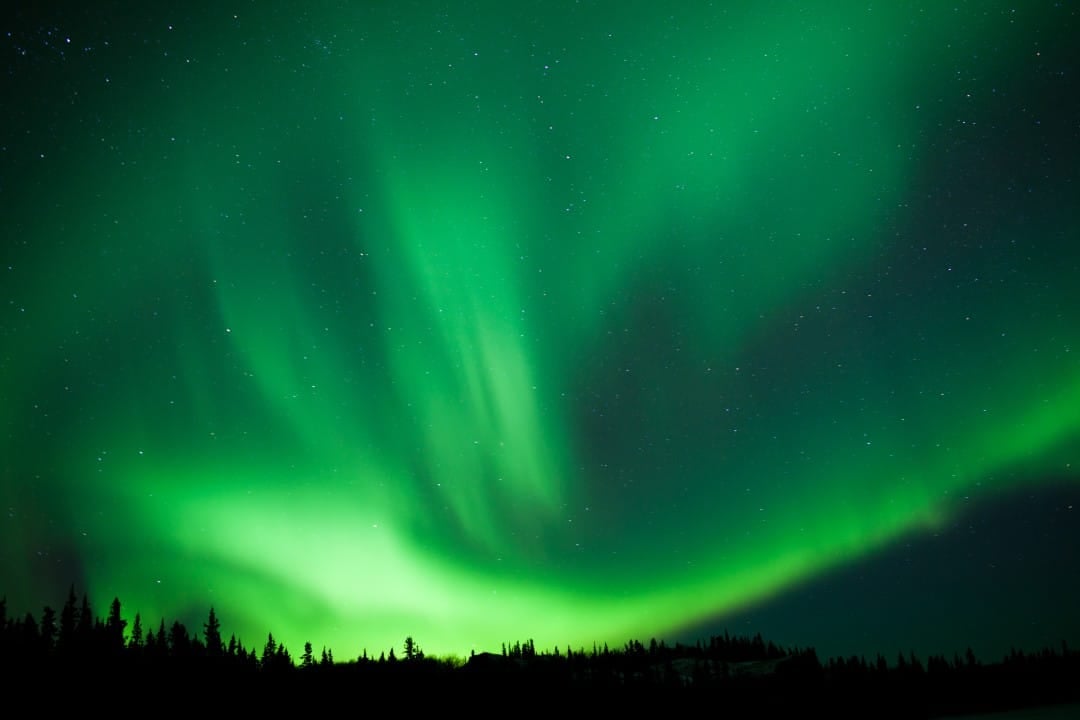
Are the chances of seeing the Northern Lights high in 2026?
Yes, the projections for 2026 are quite favorable. Although the Sun has already passed the peak of its solar activity cycle, which lasts approximately 11 years, the years following solar maximum tend to be the most active and unpredictable for the occurrence of auroras.
As Pål Brekke, a solar physicist at the Norwegian Space Agency, explained to Space.com, this is great news for aurora enthusiasts, since the peak of auroral activity occurs a few years after solar maximum. Therefore, we will still have several years with very high auroral activity.
What is the best time of night to observe the phenomenon?
On nights of intense activity, auroras may begin to appear soon after dark, but they are most often seen between 10pm and 2am local time, a period when geomagnetic activity tends to reach its highest point. The shows can last just a few minutes or go on for hours, which reinforces the importance of patience.
Many northern lights hunts have revealed the sudden and unexpected appearance of the lights. Staying outdoors, well warmed up, and allowing enough time significantly increases the chances of spotting the phenomenon, often making the experience even more memorable.
Resources for Monitoring the Northern Lights Forecast
It is possible to obtain an estimate of the probability of the Northern Lights occurring in your region by following short-term forecasts, such as those offered by the Geophysical Institute. An updated forecast for the next 30 minutes is available on NOAA’s Space Weather Forecast website. Additionally, the Aurorasaurus citizen science platform provides instant, direct location information shared by Northern Lights enthusiasts who want to alert the community about new celestial phenomena.





