
Confirmed line-up: France x Sweden in the knockout stages of the 2026 FIFA World Cup


One of the most anticipated matches in the knockout phase of the 2026 FIFA World Cup takes on definitive shape with the release of the official lineups. France and Sweden are preparing for a decisive clash that will take place this Tuesday, June 30, 2026, at 6 pm, official Brasília time, at the emblematic MetLife Stadium, in the United States. Fans’ anxiety reaches its peak, just hours before kick-off.
The duel between the European giants promises intense emotions, worth a place in the quarter-finals of the tournament. The world of football turns its eyes to the strategy of Didier Deschamps, coach of France, and Graham Potter, at the helm of Sweden, who have already defined their starting eleven.
The official formations revealed for the crucial clash
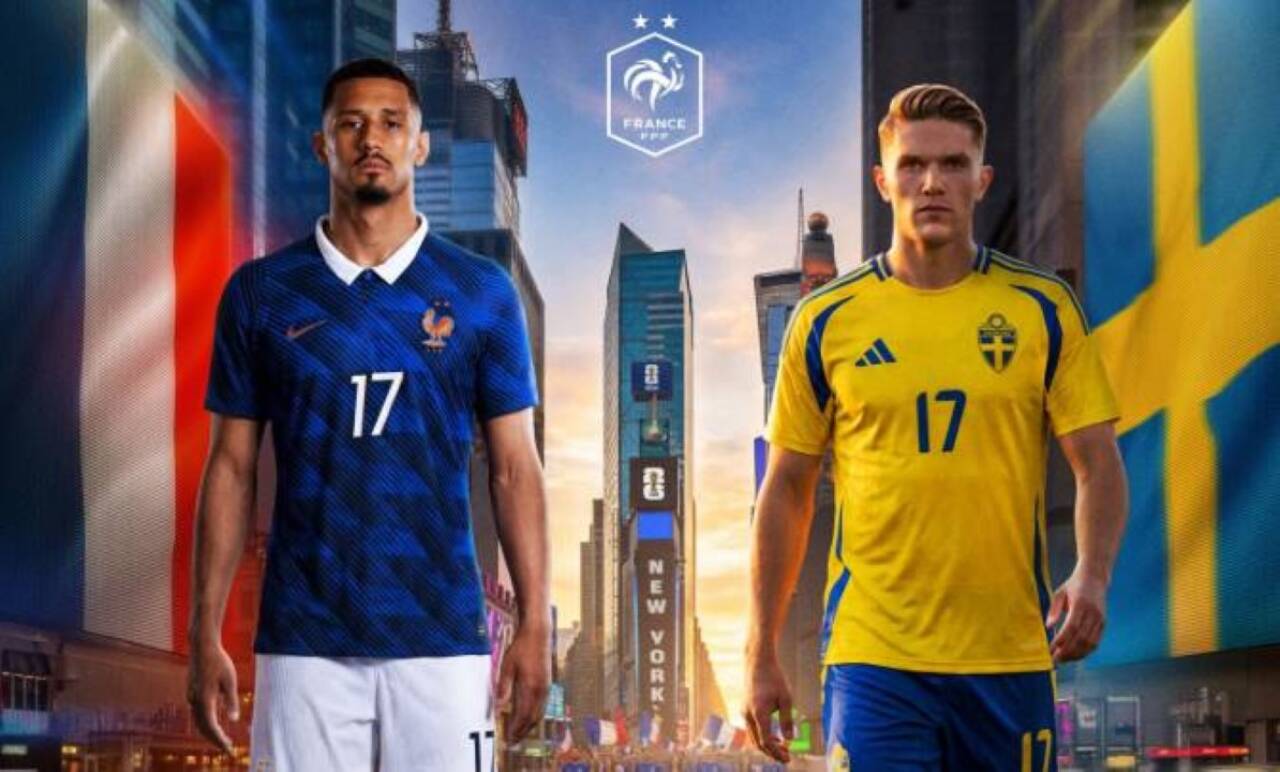
The wait is over for fans of both teams, with the confirmation of the players who will start the match. France, with its constellation of talent, and Sweden, known for its solidity and tactical organization, present their weapons for the knockout clash. The announcement comes at a time of high tension, with the last adjustments being made by the teams.
Didier Deschamps opted for a 4-2-3-1 formation for the French team, seeking balance between defense and attack. The front line has fast and decisive players, while the midfield seeks to dictate the pace of the game and protect the defense. The expectation is that this structure will allow France to exploit the speed of its wingers and the finishing ability of its center forward.
Sweden, under the command of Graham Potter, enters the field with a 3-4-2-1 formation, indicating a strategy focused on defensive robustness and quick transitions. The Swedish team relies on physical strength and tactical discipline to contain the French momentum and surprise on counterattacks. The solidity of the defense trio will be fundamental to the team’s performance.
Check out the confirmed lineups:
France (4-2-3-1)
- Goalkeeper: M. Maignan (16)
- Defenders: J. Koundé (5), D. Upamecano (4), W. Saliba (17), L. Digne (3)
- Midfielders: A. Tchouaméni (8), A. Rabiot (14)
- Forwards: O. Dembélé (7), M. Olise (11), B. Barcola (12)
- Center forward: K. Mbappé (10 – Captain)
- Coach: Didier Deschamps
Sweden (3-4-2-1)
- Goalkeeper: J. W. Zetterström (1)
- Defenders: G. Lagerbielke (2), V. Lindelöf (3 – Captain), G. Gudmundsson (5)
- Midfielders: D. Svensson (8), Y. Ayari (18), L. Bergvall (7), E. Stroud (24)
- Forwards: A. Elanga (11), A. Isak (9)
- Center forward: V. Gyökeres (17)
- Coach: Graham Potter
The stage of the decision and the broadcast of the great confrontation
The grand MetLife Stadium, located in East Rutherford, in the United States, will be the setting for this high-level clash. With capacity for tens of thousands of fans, the stadium promises an electrifying atmosphere, worthy of a World Cup round of 16. The choice of location reflects the grandeur and importance of the match in the competition calendar.
The start of the match is scheduled for 6pm, Brasília time, with live broadcast on Disney+. Brazilian fans will have the opportunity to follow every step of this crucial clash, which will determine one of the teams classified for the next phase. The time difference has been carefully considered to ensure that audiences can watch live without any major complications.
Tactical strategies and individual battle on the field
Analysis of the formations suggests a clash of styles. France, with its 4-2-3-1 formation, will seek possession of the ball and create plays on the flanks, exploiting the speed of Ousmane Dembélé and the genius of Kylian Mbappé, who is the captain and the main offensive reference. The presence of Aurélien Tchouaméni and Adrien Rabiot in midfield aims to provide solidity and construction capacity.
Sweden, on the other hand, with its 3-4-2-1 formation, must prioritize defensive organization and compactness. The line of three defenders, led by Victor Lindelöf, will have the mission of neutralizing the French attacks. The Swedish attack, with Anthony Elanga, Alexander Isak and Viktor Gyökeres, will depend on quick and efficient counterattacks to surprise the opposing defense. The ability to transition will be key for the Scandinavians.
Players such as Ousmane Dembélé, from France, and Anthony Elanga, from Sweden, were highlighted for their performance in previous games. Dembélé is known for his dribbling ability and speed, while Elanga stands out for his explosion and finishing ability. The contribution of these athletes will be fundamental to the final result of the match. The expectation is that both coaches will use substitutions to change the pace and dynamics of the game, if necessary.
The teams’ journey to the round of 16
Both teams reach this knockout stage after consistent campaigns in the group stage of the 2026 FIFA World Cup. France, considered one of the favorites for the title, demonstrated their strength by topping their group, with dominant performances and a prolific attack. The French team managed to combine the experience of its veterans with the vigor of young talents, building a solid trajectory.
Sweden, in turn, exceeded expectations in their group, showing resilience and a well-defined tactical system. The Swedish team advanced, demonstrating solid defense and the ability to be lethal in crucial moments. The journey to the round of 16 served to consolidate the team’s confidence and show that they are ready to face greater challenges. The journey of both teams to this point demonstrates the preparation and strategic planning of their respective coaches.
Perspectives for the next phase of the 2026 World Cup
The winner of the clash between France and Sweden will advance to the quarterfinals, where they will face an equally strong opponent. The 2026 FIFA World Cup is at its most exciting, with each match becoming a true final. The competition schedule already foresees other important duels, which will also define the next steps of the tournament.
Also this Tuesday, June 30th, Mexico will face Ecuador at 10pm. Tomorrow, July 1st, England plays against the Democratic Republic of Congo at 1pm, and Belgium duels with Senegal at 5pm. Later, the United States faces Bosnia and Herzegovina at 9 pm. These games highlight the intensity of the knockout stage and each team’s quest for ultimate football glory.
History and rivalry between French and Swedes in international competitions
Although it is not one of the oldest and most heated rivalries in world football, France and Sweden have a history of clashes in various competitions. The two European nations frequently meet in European Championship and World Cup qualifiers, as well as in friendlies. In general, games between France and Sweden tend to be balanced, with moments of dominance for each side. France, with its tradition of great teams and titles, has a slight historical favoritism, but Sweden has always shown itself to be a difficult opponent to beat, especially in decisive games.
Sweden has a history of notable participation in World Cups, with a runner-up finish in 1958 at home and other good campaigns. France, in turn, is two-time world champion and is constantly among the football powers. This context raises the level of the confrontation, transforming it into another important chapter in the sporting history between the two countries. The memory of past duels and the search for a place in the sun on the world stage add an extra layer of emotion to this encounter.
The probabilities of the confrontation and the expectations of the fans
Bookmakers indicate France as favorites to win the match, with significantly lower odds for a French victory compared to a Swedish triumph or a draw. This evaluation reflects the team’s recent performance, the individual quality of its players and their experience in the knockout stages of major tournaments. However, in a World Cup, the upset can appear at any time, and Sweden has the potential to surprise.
Fans of both teams are mobilized, creating an atmosphere of expectation and fervent support. On social media and around MetLife Stadium, the atmosphere is effervescent, with flags and chants celebrating the passion for football. The healthy rivalry promises to translate into a grand spectacle in the stands, boosting the players on the field. The confidence in their respective teams is palpable, and everyone expects a performance that matches the importance of the game.
The refereeing and details of the crucial match
The refereeing command for the duel between France and Sweden will be in charge of Danny Makkelie, from the Netherlands. The referee, known for his experience in high-level matches, will be responsible for maintaining discipline and the fluidity of the game. The average number of cards applied by Makkelie (0.20 yellow cards and 3.41 red cards on average per game, according to the source’s statistics) suggests a refereeing style that allows the game to continue, but does not hesitate to punish unsportsmanlike conduct.
The performance of the refereeing team will be a key element in the match, ensuring that the rules are followed and that the game runs fairly. In a match with so much at stake, every decision can have a significant impact on the final result. The presence of an internationally recognized referee reinforces FIFA’s care in appointing qualified professionals for the more advanced stages of the tournament.
Other exciting clashes that mark the 2026 FIFA World Cup
The knockout phase of the 2026 FIFA World Cup is full of great clashes that promise to excite football fans around the world. In addition to the eagerly awaited duel between France and Sweden, the schedule for the next few days has other unmissable matches, each with its own dose of expectation and rivalry. The competition narrows, and each victory means another step towards the dream of the title.
On Wednesday 2 July, Spain will face Austria at 4pm, followed by Portugal against Croatia at 8pm. On July 3rd, Switzerland will play Algeria at midnight, and Australia will duel Egypt at 3pm. Argentina will take the field against Cape Verde at 7pm, and Colombia will face Ghana at 10:30pm. Finally, on July 4th, Canada will play Morocco at 2pm, and on July 5th, Brazil will face Norway at 5pm. This sequence of games demonstrates the grandeur of the competition and the diversity of styles that face each other in search of the cup.





