
Deadline for Americans to Claim COVID-19 Tax Return Approaches Amid Court Appeal

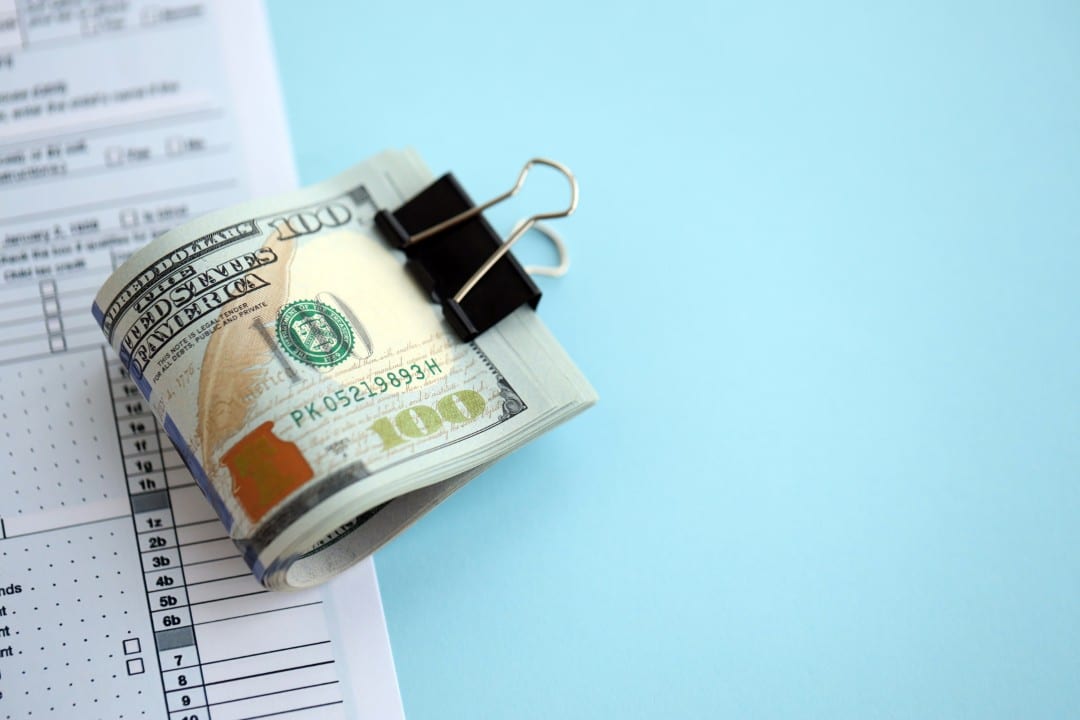
United States citizens have a crucial deadline, July 10, 2026, to submit a safeguard request that could secure a tax refund tied to the COVID-19 pandemic. This window of opportunity arises due to the decision in the Kwong v. United States, and inaction will result in the permanent loss of the right.
It is imperative to act now; otherwise, the chance of recovering these amounts will be irretrievable.
The July 10th date represents the decisive threshold for millions of North American taxpayers who wish to claim a potential tax refund linked to the impacts of COVID-19 with the Internal Revenue Service (IRS). If this demand is not presented by the stipulated deadline to ensure the possibility of a refund or rebate, the chance will be irretrievably lost.
The possibility of tax refund originates from a sentence handed down by a federal magistrate in the Kwong legal dispute against the United States, issued at the end of the previous year. This deliberation pointed to an automatic suspension of federal tax delivery and payment deadlines during the COVID-19 public emergency period, which extended from January 20, 2020 to May 11, 2023. Although the executive is appealing the determination, its confirmation could benefit millions of citizens who suffered from fines or interest due to delay in this three and a half year period.
However, a crucial issue arises: citizens cannot delay requesting a refund or rebate pending the final outcome of the judicial process. Current legislation imposes a time limit on these requests, and calculations by taxation experts indicate July 10, 2026 as the final date. The IRS, in turn, chose not to widely disseminate these details, possibly due to the prospect of having to refund billion-dollar sums to individuals, companies, funds and estates. However, legal professionals, accountants and the National Taxpayer Advocate, an independent entity, have been struggling to disseminate this information for months.
Glen Frost, one of the founding partners of Frost Law, emphasized that urgency is a determining factor for anyone considering bringing a compensation claim.
Find out how to check eligibility and the steps to apply
Erin Collins, the independent taxpayer rights advocate, together with law firms and accounting professionals, has released detailed guidance and a clear roadmap for Americans to resolve this issue.
Aiming to simplify the procedure, certain companies have developed agile and easy-to-use platforms. However, as the deadline approaches, some of these operations have already been discontinued. The firm Frost Law, for example, reported having provided assistance to hundreds of taxpayers through its tool before taking it offline on June 24.
The covidtaxrefunds.com portal remains operational and has already processed thousands of requests, according to Alyssa Maloof Whatley, representative of EasAlyAI and Frost Law.

However, some jurists have issued a warning about the risk that this opportunity will close quickly, given the imminent deadline. If a taxpayer requires support from a return preparer or other party who needs access to their data to support a claim based on the Kwong case, the IRS requires a Form 8821 authorization. Approval of this document by the body usually takes around 14 days.
Despite this, it is important to highlight that taxpayers have the option of filing the request independently. The National Taxpayer Advocate (NTA) offers detailed information on the procedures that can be adopted.
To make the request, the taxpayer can use IRS Form 843, which is used for both refund and deduction requests, using data available in their online tax return, as explained by Jon Wasser, partner at Fox Rothschild specializing in tax law.
Taxpayer Advocate Erin Collins indicated that in most situations, a separate Form 843 must be filed for each tax period and tax category.
Legal professionals advise that the taxpayer must explicitly indicate on the form that the demand qualifies as a ‘protection claim’, based on the Kwong v. United States, and which refers to Section 7508A(d) and the COVID-19 disaster period.
Jon Wasser clarified that, by taking this action, ‘basically, you communicate to the IRS: ‘There is a refund request here, please keep it on hold for now’, until the process reaches a definitive resolution. If, after the end of all litigation, the IRS is compelled to issue refunds, your right to claim them will be assured.’





