Earth may survive the death of the Sun: new models suggest escape, contradicting previous predictions of annihilation


Recent research, based on advanced simulations, indicates the possibility that the Earth will not be completely consumed by the death of the Sun, even if the star swallows the closest planets in its final process.
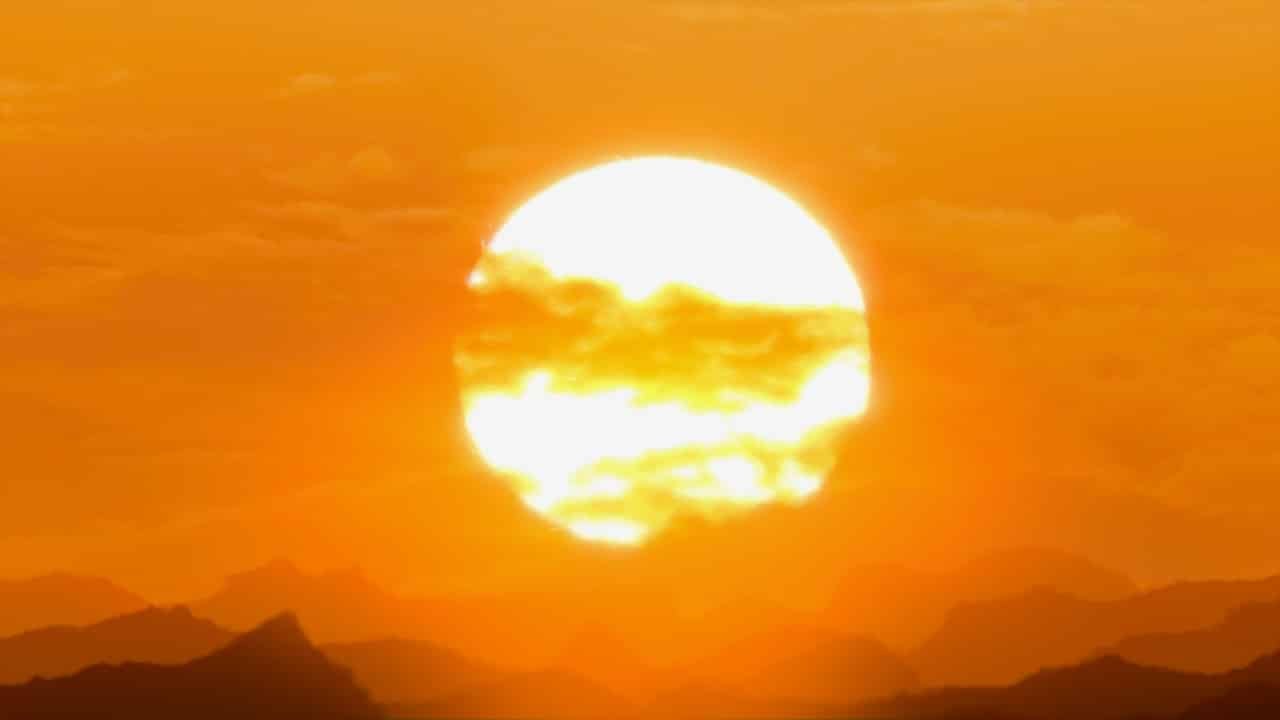
The results present a different panorama for the future of our planet, which for a long time was considered doomed to complete destruction when the Sun reached its final stage, a few billion years from now. Currently classified as a yellow dwarf, the Sun has a projected stable existence of 10 billion years. However, in approximately 5 billion years, it will exhaust its central hydrogen and begin fusion in its outer layer, progressively transforming into a red giant and then into an AGB star, until culminating as a white dwarf.
In a correspondence published June 19 in the journal Astronomy & Astrophysics, astronomy experts employed models of stellar evolution and analyzed a nearby terminal star to recalibrate the likely outcome of our planet, which was thought to be fatal.
How Earth can escape the Sun’s expansion
As the Sun begins the transition to the end of its existence, the Earth will be influenced by a pair of opposing forces, a phenomenon common to countless planetary systems throughout the vast history of the universe.
As the Sun increases in volume, potentially becoming hundreds of times larger than its current size, the intensification of tidal forces will tend to attract the Earth closer to the expanding star. On the other hand, during this dilation, the Sun will also expel its outer layers into space through the stellar wind. This considerable loss of mass will result in a decrease in its gravitational force, which, according to models, could allow our planet to move into a more distant orbit in the solar system.
Mats Esseldeurs, a doctoral student at the Institute of Astronomy at KU Leuven, in Belgium, and lead author of the study, said in a statement that “Earth’s survival is determined by a sensitive balance between these two dynamics.” He detailed that “if gravitational attraction prevails, our planet will be absorbed; if the loss of mass is more pronounced, the Earth will be able to migrate to a more spacious orbit.”
Previous studies only add complexity to the picture. Past analyzes have adopted different assumptions about lost solar mass, tidal influences, and interactions between planets as the inner solar system progressed. For this reason, uncertainty persists regarding the Earth’s real capacity to resist the Sun’s two giant stages, before it contracts and becomes a small, dense white dwarf.
Hope arose when astronomers found unharmed exoplanets orbiting white dwarfs, although other white dwarf systems feature only rocky fragments of disintegrated planets. To get a clearer idea of what awaits our solar system, scientists studied the giant star L2 Puppis, located 200 light-years away in the constellation Puppis. This dying star, which was once similar to the Sun, may be losing up to a millionth of its solar mass annually, releasing a disk of dust that possibly contains a planet 12 to 16 times the mass of Jupiter. This observation in L2 Puppis strengthens the validity of the new models on stellar mass loss.
Additionally, the researchers performed high-precision gravitational calculations, “based on the internal architecture and motion of mature stars.” They simulated the orbital trajectory of the inner solar system and the life path of the Sun, from its earliest phases to its final stage as a “faded” white dwarf.
Mercury and Venus will not be as lucky as Earth
Using information about the mass loss of the star L2 Puppis, together with the most recent models of stellar evolution, the researchers concluded that the Earth will be able to survive by moving to a slightly more distant orbit, beyond the range of the Sun’s expansion.
Esseldeurs clarified, in his statement, that “the main doubt no longer lies in the calculations of tidal forces, but in the amount of mass that the Sun will give off in the future.” He added that “analyses of stellar giants analogous to the Sun currently indicate the persistence of the Earth, but further investigations are needed to confirm this certainty.”
However, even with the possible preservation of Earth, other planets in the solar system will not escape; projections indicate that Mercury and Venus will be completely absorbed by the star’s intense heat in their final stages.
More astronomical observations and improved models will be crucial to understanding the future of our planet. The European Space Agency, for example, plans to launch the PLATO mission next year, a space telescope designed to find Earth-like planets around Sun-like stars. This project could identify planets in aging star systems, offering more accurate data on these worlds that may be at risk.