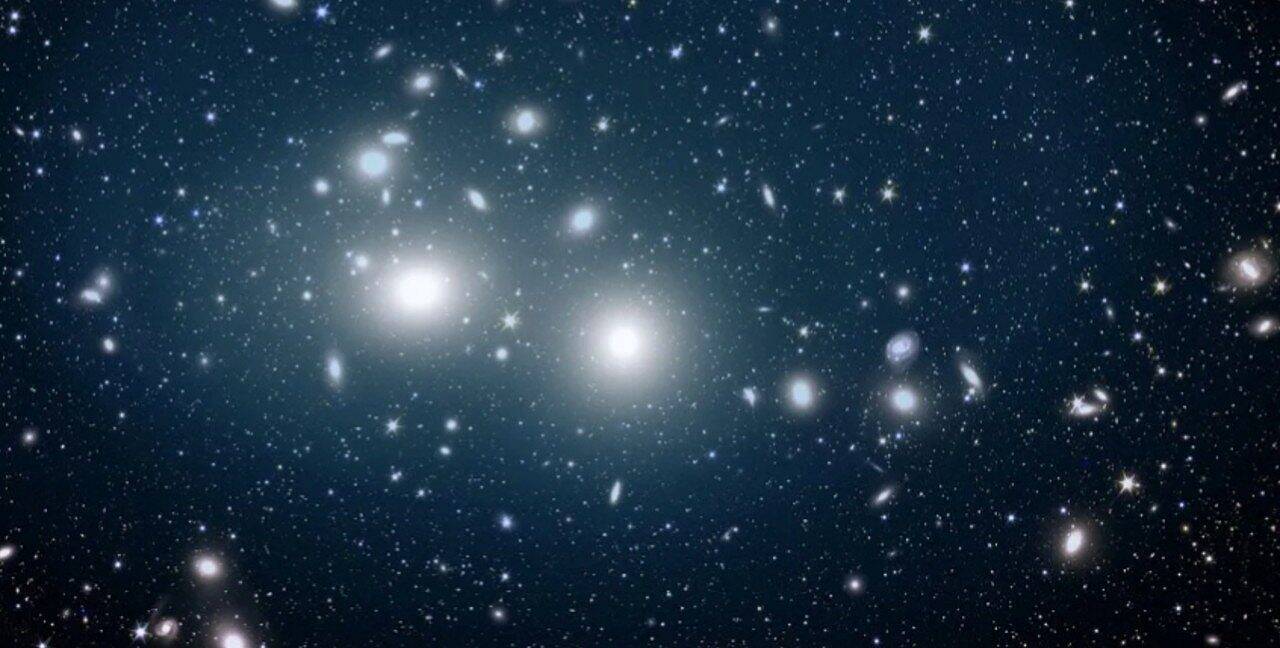
Recently, the Euclid Space Telescope captured a stunning image of the Perseus Cluster. The cosmic scene reveals a delicate blue light, coming from isolated stars that spread across vast regions. They extend a colossal distance of up to 2 million light years from the cluster’s core, according to published data.
Observations of the universe always bring impactful news to science. The image was obtained by the Euclid Space Telescope, a project of the European Space Agency (ESA). Parallel to the dissemination of this information on the 23rd, several scientific publications were launched. They detail fascinating new discoveries based on preliminary data from the mission.
The most surprising revelation among the findings is the identification of around 1.5 trillion “wandering stars”, also known as intergalactic stars. These stars are found outside the limits of galaxies, in a kind of drift through outer space. This phenomenon intrigues scientists, as stars generally originate within galaxies, and not isolated in the cosmos.
Wandering stars unravel mysteries on one of the largest celestial bodies
So-called “wandering stars” have been detected distributed throughout the Perseus Cluster. This cosmic complex is made up of more than a thousand galaxies. Representing one of the largest objects known in the universe, it is approximately 240 million light-years from our Solar System, in the region of the Perseus constellation.
The first time the Perseus Cluster was observed by the Euclid Space Telescope occurred in July 2023. The telescope, launched by a SpaceX Falcon 9 rocket, managed to record an extremely faint light emitted by these lonely wandering stars. Matthias Kluge, do Instituto Max Planck de Física Extraterrestre e um dos autores da pesquisa, esclareceu a magnitude do fenômeno: “Apesar de ter um brilho inferior a 1/100.000 do céu noturno mais escuro da Terra, a vasta extensão dessa luz faz com que ela corresponda a cerca de 20% da luminosidade global do aglomerado quando somada.”
Galaxy merger may explain origin of intergalactic stars
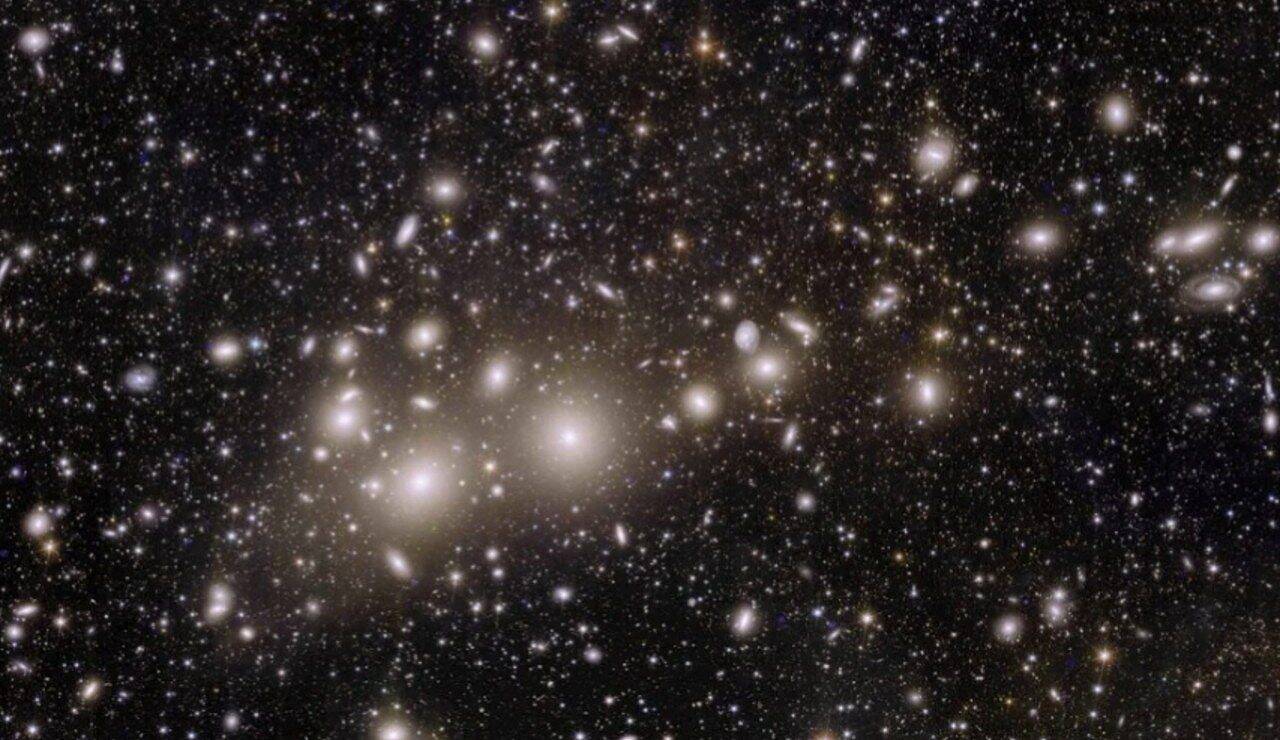
The predominant hypothesis is that these bluish stars, which appear densely clustered, were expelled from the outskirts of larger galaxies or smaller dwarf galaxies. Despite orbiting, their centers of motion do not appear to be in the cluster’s most prominent galaxy. Instead, they lie between the two brightest galaxies.
This arrangement suggests that the Perseus Cluster may have undergone a recent merger with another galactic grouping, as indicated by Jesse Golden-Marx, an astronomer at the University of Nottingham, United Kingdom, involved in the research. Understanding how stars are ejected during these collisions is fundamental to mapping the evolution of large cosmic structures. Golden-Marx detailed that “the strong gravitational perturbation, arising from this recent merger, could have deviated the main galaxy or a set of stray stars from their usual orbital trajectory, leading to the configuration we observe today.”
Euclid Space Telescope Capabilities Boost Cosmic Exploration
Euclid’s equipment has a 1.2-meter mirror and offers image quality similar to that of the Hubble Space Telescope. However, its field of vision is an impressive 175 times greater. As part of a mission that aims to investigate the evolution of the universe, deepen studies on dark matter and identify planets that do not have host stars, the telescope has the task of building a high-resolution map of around a third of the sky, something never achieved before.