
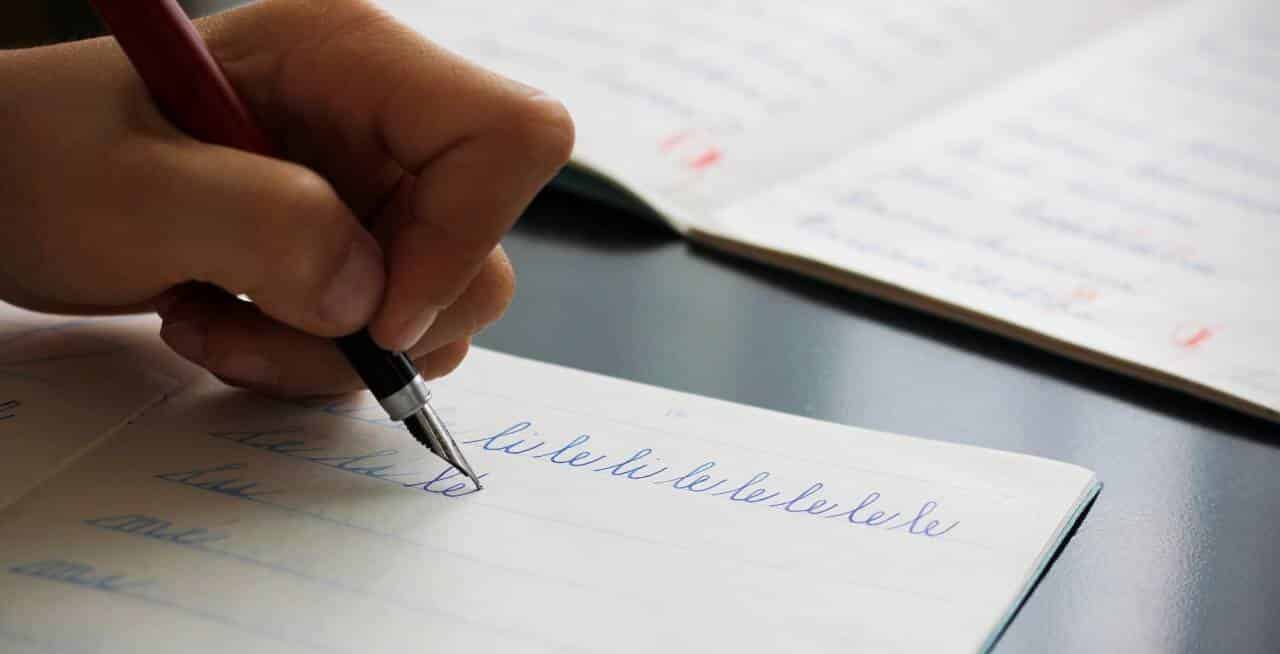
For most people, handwriting itself is rarely a cause for deep reflection. With digital predominance, handwriting has become less frequent, and many people notice their writing is more illegible or their signature has variations. The act of filling out a card, for example, seems like an increasingly unusual experience.
However, handwriting transcends mere personal particularity. It is a daily skill that appears simple due to continuous practice over the years. For a sentence to be written, the brain performs a series of complex operations: it conceives or hears a thought, stores it, selects the appropriate words, converts them into letters, plans the movement of the hand, guides it and ensures that all steps occur in the correct sequence.
This sequence of events highlights the extraordinary synergy between brain and body, even in routine tasks like writing down a shopping list.
For this reason, experts are turning their attention to handwriting as a potential revealer of cognitive health. Early brain transformations do not always manifest as explicit memory losses. In some cases, they arise in more subtle ways, such as a slower processing rate, greater hesitation, or increased effort to complete previously simple activities.
A recent study¹ suggests that handwriting can identify some of these changes, especially when the task requires greater mental effort.
Recent research looks at handwriting as a possible reflection of brain capacity
In a survey published in the publication *Frontiers in Human Neuroscience*, researchers investigated whether certain writing patterns could help differentiate elderly people with cognitive impairment from those without this condition.
The particularity of this study lies in the fact that the scientists did not only evaluate the final result of the writing. They did not focus on determining whether the handwriting was legible or illegible. Instead, participants used a fountain pen on a graphics tablet, allowing researchers to analyze their writing in real time.
This methodology made it possible to measure factors such as the time at which writing began, the duration of the movement, the number of strokes made and the organization or fragmentation of the process. In other words, the focus of the analysis was on execution, not just the final product.
Participants were subjected to different types of tasks. Some involved basic pen control exercises, such as drawing horizontal lines or marking dots at a twenty-second interval. Others required copying sentences presented on a card. The more complex activities included dictations, in which participants needed to listen to a sentence and transcribe it.

Understand which writing activity stood out in detecting cognitive decline
The task that revealed the most information about the decline in cognition was not drawing dots, drawing lines or copying sentences. It was the saying: listen to a sentence and then write it down. The study demonstrated that adults with cognitive impairment tended to start writing more slowly, write at a slower pace and use more fragmented pen strokes, especially when faced with more complex sentences.
It is at this point that the research acquires greater relevance, going beyond handwriting itself. Cognitive health is not restricted solely to the ability to remember a name or the place where the keys were kept. It equally encompasses processing speed, working memory, executive function, language and motor planning. These systems are essential for tracking conversations, cooking, driving, managing medications, learning new skills, and safely performing daily activities.
Handwriting, by its nature, integrates many of these systems simultaneously, which makes it a valuable indicator for understanding brain functioning.
The main reflections on the practice of handwriting and the brain
Writing by hand may seem like an archaic habit with little relevance in an era dominated by text messages, audio and computers. However, this study serves as a reminder that simple tasks can carry a surprising amount of information about complex processes.
The central message is not primarily about monitoring one’s handwriting, but rather about deepening the understanding of what constitutes brain health. A truly resilient brain is not just one that retains facts; It is a brain with the ability to coordinate, adapt, plan, process and offer effective responses.
Therefore, activities that harmonize thought and movement can be particularly beneficial in the aging process. Writing by hand, playing a musical instrument, dancing, playing tennis, preparing a new recipe, learning a language, performing balance exercises or trying out a new movement pattern are actions that require real-time communication between the brain and body.





