
Interstellar comet 3I/ATLAS reveals high abundance of methanol detected by ALMA

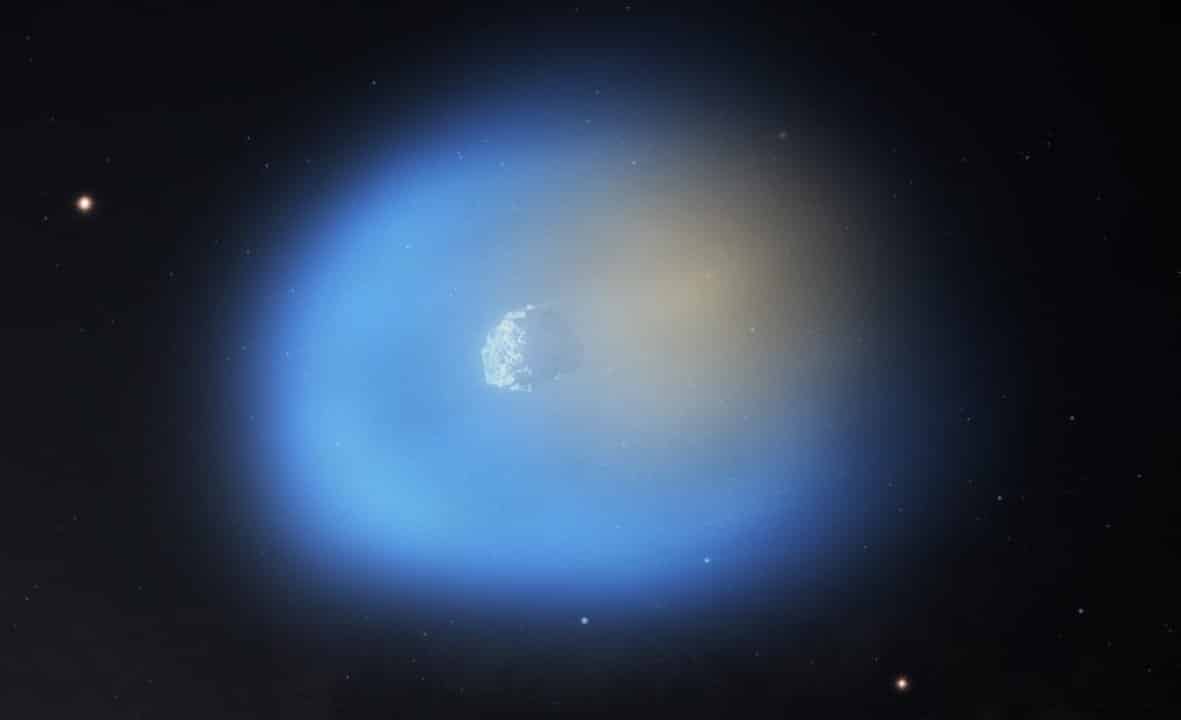
A comet of interstellar origin, called 3I/ATLAS, surprised the scientific community by presenting a notable amount of methanol in its structure.
Traversing celestial objects that originate outside our Solar System often offers valuable insights into the genesis of the universe. Researchers recently identified a peculiar chemical signature in a specific interstellar comet, with a surprising presence of methanol.
Understanding the provenance of the interstellar comet 3I/ATLAS
The celestial body cataloged as 3I/ATLAS represents the third confirmed visitor from interstellar space to enter our Solar System. This event follows the passage of other notable objects, such as 1I/Oumuamua and 2I/Borisov, which equally intrigued researchers with their unique properties.
This icy structure, originating from a distinct star system, provides scientists with a unique opportunity to collect samples of substances that formed around a distant Sun. Investigating these components is similar to obtaining a fingerprint of distant celestial regions.
Methods used to identify gases from the celestial body
The researchers used information obtained at the end of 2025 by the Atacama Large Millimeter/submillimeter Array (ALMA), located in Chile. When approaching the heat emitted by the Sun, the ice layer on its surface transformed directly into gas, generating an extensive and luminous fog.
The dense luminous cloud surrounding the comet’s core enabled in-depth analysis of its chemical signatures, eliminating the requirement for complicated interstellar missions. Cutting-edge equipment has detected subtle electromagnetic signals released by specific organic molecules in the vacuum of space.
Reasons why the high concentration of methanol surprises researchers
The studies focused on data obtained from two chemical compounds: methanol (a type of alcohol) and hydrogen cyanide. Astronomers recorded an unusually high proportion of methanol, an infrequent occurrence in celestial objects originating from our own planetary system. This discrepancy suggests that the conditions for the formation of these bodies in other systems may be fundamentally different from those that prevailed in the genesis of ours.
Details about the high alcohol concentration detected
The comet of interstellar origin presented methanol levels compared to hydrogen cyanide that varied between 70 and 120, observed on different dates.
Such values position the 3I/ATLAS object among the celestial bodies with the most complex chemical composition ever investigated in the field of astronomy.
The impressive measurements demonstrate that the icy comet formed in an environment with thermal characteristics considerably different from those found in our system. Previous observations, carried out with the James Webb telescope, already indicated an atmosphere with a high concentration of carbon dioxide while the star remained far from the Sun.
- Large presence of methanol in very high concentrations.
- Reduced amounts of hydrogen cyanide recorded.
- Molecular ratio between 70 and 120 in the measurements carried out.
The origin of chemical compounds in the interstellar comet
The observatory’s advanced spatial resolution technology indicated that chemical elements are released in different ways. Hydrogen cyanide emanates primarily from the solid core, a typical behavior pattern in comets that developed in our usual planetary environment.
In contrast, methanol in large quantities is emitted both from the nucleus and from tiny ice particles dispersed in the comet’s tail. These small fragments act like mini-comets, releasing volatile gases when intensely exposed to powerful solar radiation.
- Constant emission of cyanide originating from the main nucleus.
- Vaporization of ice particles disseminated by the cometary coma.
- A behavior never before recorded and mapped in detail in an interstellar object.
Implications of the discovery for understanding the cosmos
Investigating these unique cosmic visitors offers an invaluable chance to deepen knowledge about the genesis of planetary systems in distant regions. Each recent find contributes to building a comprehensive picture of how small components of ice and rock aggregate around other stars in the firmament.
With the continuous improvement of monitoring tools, scientists plan to identify and record a greater number of celestial bodies from remote portions of the galaxy. Deciphering these chemical enigmas brings humanity closer to understanding the vast diversity of worlds that exist beyond our already explored planetary horizon.



