
James Webb Telescope identifies new 10km moon of Uranus, bringing known total to 29

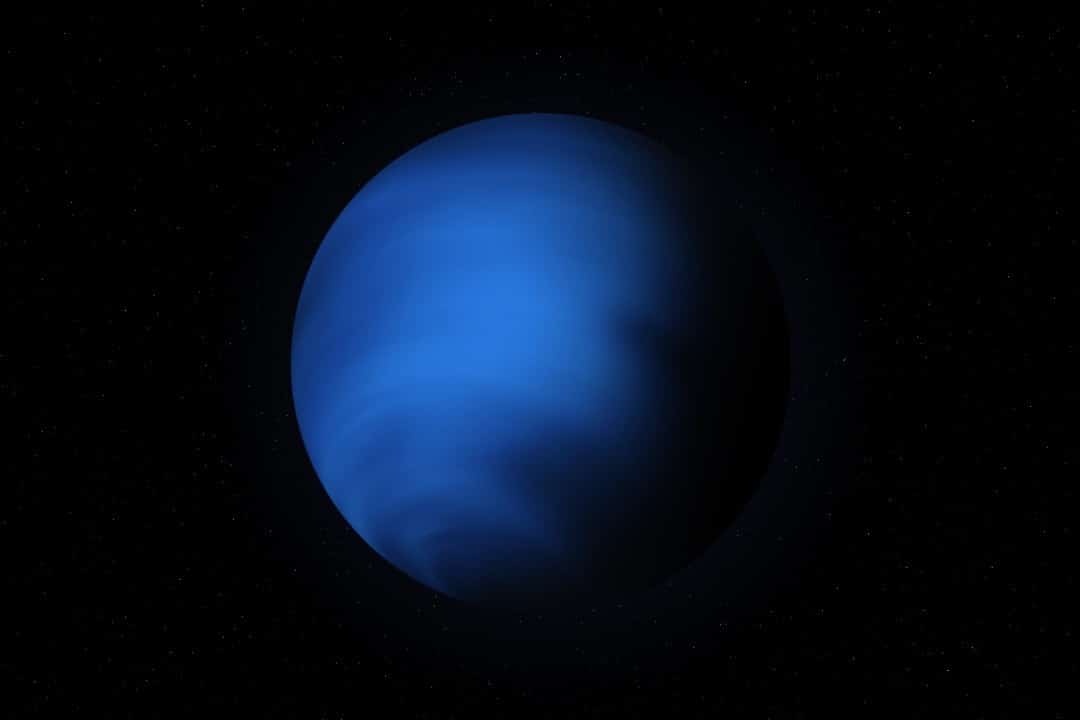
The James Webb Space Telescope detected, in 2025, a small moon approximately 10 kilometers in diameter that had been hidden for decades around Uranus. Neither the Voyager 2 probe nor the Hubble Space Telescope had previously managed to observe the tiny celestial body, which now brings the total number of confirmed natural satellites of the ice giant to 29. The discovery, albeit of a small object, is crucial to understanding the complexity and formation of the planetary system.
Uranus has always represented a challenge for space exploration. Its distance from Earth, low luminosity, extremely low temperatures and pronounced orbital inclination make it difficult to observe its rings and inner moons, which present a unique geometry, different from the Jupiter and Saturn systems. Even with advanced equipment, smaller bodies near the rings can be obscured by the planet’s brightness, distance or darkness.
For this reason, the most recent Uranian moon represents a discreet but highly relevant find. In 2025, astronomers used the James Webb Space Telescope to identify a faint bright spot near Uranus’ inner ring system. The object, provisionally named S/2025 U1, has an estimated diameter of around 10 kilometers, increasing the total number of known moons on the planet to 29.
The SETI Institute announcement details that the team, led by Maryame El Moutamid of the Southwest Research Institute, located the moon in observations made with Webb’s NIRCam instrument on February 2, 2025. A NASA publication about Webb describes the detection as a sequence of ten long-exposure images, each 40 minutes long. The reports also highlight that the moon was too small and faint to have been seen by Voyager 2 or the Hubble Space Telescope.

The natural satellite that remained invisible for decades
Voyager 2 remains the only spacecraft to have visited Uranus, passing by the planet in January 1986. On that occasion, it discovered new moons, analyzed the rings and gave scientists their first up-close glimpse of the ice giant’s system. However, a flyby is a brief mission, offering only a geometric configuration, a single observation campaign, and a limited set of lighting conditions.
The newly discovered moon was already present at that time, assuming its orbit had remained stable over the decades. Voyager simply didn’t have the ideal combination of sensitivity, exposure time, and observation angle needed to detect it. A 10-kilometer object near a bright planet and ring system is a challenging target, even for high-quality instruments.
Hubble was also unable to record it, which does not diminish the importance of this telescope. He revolutionized the astronomy of the outer Solar System and discovered small moons of Uranus in 2003. However, this particular moon is fainter than the inner satellites already known. It took Webb’s infrared sensitivity, its large mirror, and NIRCam’s long exposures to differentiate the small moving dot from the surrounding system.
Where the new moon orbits
The natural satellite circles Uranus at a distance of approximately 56,000 kilometers from the center of the planet, positioning itself between the orbits of Ophelia and Bianca. It completes an orbit in less than half a day. Its trajectory is nearly circular, an important detail because circular orbits of inner moons often suggest that the object formed near its current location, rather than being captured later from a distant region.
This characteristic places it within the inner Uranian system, a dense region of rings and small moons that behave more like a coupled dynamic environment than like isolated objects. Small satellites can influence the edges of rings, provide dust, collide over vast periods of time, or exchange material with surrounding ring structures.
Uranus’ larger moons, such as Miranda, Ariel, Umbriel, Titania and Oberon, are the best-known members of the planetary family. However, the inner satellites are crucial because they help uncover how the ring system is maintained and how unstable the region can be. The discovery of a small new moon isn’t just about adding a name to a list; it changes the body count that needs to be included in any serious model of the system.
Why Webb achieved detection
The Webb telescope was not only designed to observe the early universe, but it also established itself as an extremely powerful observatory for the Solar System. Its infrared instruments allow it to study cold, distant objects in detail, and its NIRCam images are capable of revealing faint material near bright targets when the observation strategy is meticulously planned.
In this specific case, the advantage came in part from long exposures. The SETI Institute summary states that the detection used ten long exposure frames. While long exposures collect more light from faint targets, they also make it harder to manage bright objects and stray light. Observers must deal with the immense contrast in brightness between Uranus, its rings, its known moons, background sources and any new faint objects.
The result of this discovery is a reminder that “unseen” does not mean “forever unseen.” An object may remain undetected for decades within a well-studied planetary system until a different instrument observes it at a different wavelength with a different observing plane.
What the discovery indicates about Uranus
Uranus is often considered a “quieter” outer planet than Jupiter or Saturn, in part because of the little attention it has received from spacecraft. However, its system of moons and rings is not simple. The planet’s small inner moons are grouped together in a relatively compact region. Some occupy positions close to the rings, while others may be involved in stirring, confining, or replenishing ring material on a long-term basis.
Matthew Tiscareno of the SETI Institute, one of the scientists involved, stated in the announcement that no other planet has as many small inner moons as Uranus. He also noted that the relationships between these satellites and the rings point to a chaotic history, blurring the boundary between a ring system and a moon system.
This is the deepest value of discovery. A small moon may seem insignificant compared to a large satellite like Titania, but these smaller bodies act as tracers of a system’s structure. Their locations, sizes and orbital relationships reveal the activity of the rings and how the inner system evolved.
The new moon also suggests that the inventory may still be incomplete. If Webb was able to find a body smaller and fainter than the previously known inner moons, it is likely that more objects remain hidden in the glow and geometry of Uranus’ inner system. The current count of 29 may not be the final number.
A planet awaiting a new mission
The discovery is part of a broader scientific context. Uranus has not received a dedicated space mission since Voyager 2. Most of scientists’ knowledge about its atmosphere, magnetic field, rings and satellites comes from that single flyby in 1986, later telescopic campaigns and remote observations taken from Earth orbit or other locations.
This is a limited dataset for a giant planet. Uranus is one of two ice giants in the Solar System, a class of worlds that may be common around other stars. Understanding its moons and rings is not merely a matter of cataloguing. It helps scientists understand how icy planetary systems form, how ring systems change, and how small bodies survive or are destroyed near large planets.
A future orbital probe on Uranus would transform the field of study. It could map the rings, measure the small moons repeatedly, study their surfaces, refine their masses and orbits, and search for additional bodies. Until then, telescopes like Webb continue to do some of this work at a distance.
The strength of a tenuous point
The new moon is so small that it would be classified as a modest asteroid if it orbited the Sun. Around Uranus, it becomes part of a much larger narrative. It occupies a place close to the rings, moves with the inner moons and could help define the architecture of a system that is not yet fully catalogued.
The discovery also demonstrates how Solar System science often advances. Not always through spectacular, never-before-seen landscapes, but through faint dots, repeated images, careful orbital scans, and the recognition that a dot is moving with a planet rather than just remaining deep in space.
Voyager 2 provided Uranus with its first detailed inspection. Hubble expanded the search. Now, Webb has found what they both missed. A moon only about 10 kilometers across was not absent, new, or intentionally hidden. It was simply too thin for the tools that preceded it.
For Uranus, this little speck is now part of the official family. For astronomers, it is a warning against the idea that the outer Solar System has already been completely mapped. Even around a planet visited by a spacecraft and observed by Hubble, there are still small worlds waiting for the right instrument to be noticed.



