
World Cup: Argentina’s path to the semi-final looks favorable, with no top 10 opponents in the FIFA rankings

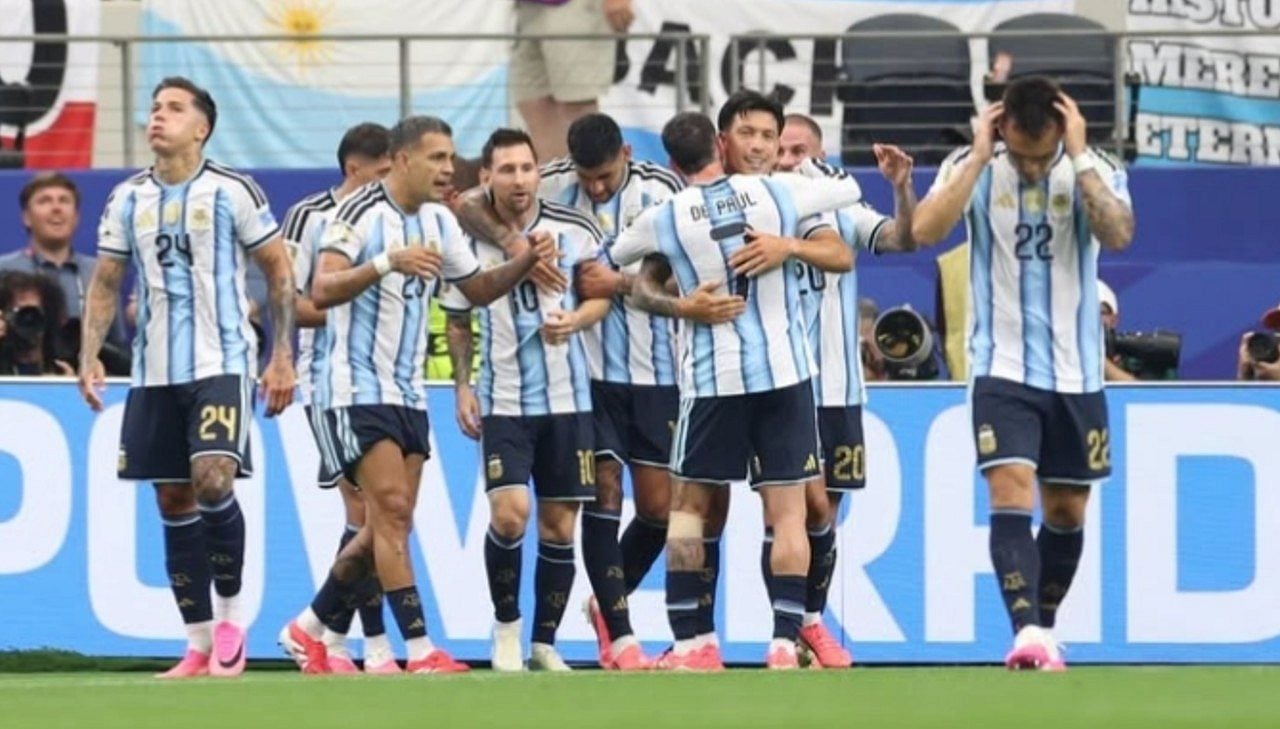
With the end of the group stage and the definition of the 32 teams classified for the World Cup knockout stages, the initial perception that Argentina had an easier path was confirmed. The South American team appears to have a less challenging route towards the final stages of the tournament.
The latest FIFA rankings data validates this analysis, offering a clear perspective on the opponents the team will need to face.
By dividing the 32 qualified teams into four large blocks that chart the route to the semifinals, Argentina, current leader of the FIFA rankings, stands out. It is the only team that will not have to face any team from the world’s top 10 in its trajectory before the semifinal stage.
Cape Verde, Argentina’s next opponent, is among the worst ranked teams
The possibility of Argentina meeting one of the ten best teams in the world would only occur in the semifinals. At this stage, potential clashes include teams such as Brazil (5th), England (4th) or Mexico (9th) in the FIFA rankings.
The current world champion team is also in the only quadrant with two teams that are not among the top 50 in the global rankings. One of them is Cape Verde, led by goalkeeper Vozinha, who occupies 64th position and will be the opponent in the 32nd stage, in a game scheduled for Friday (3), at 7pm, in Miami. Originally, Argentina was expected to face Uruguay (19th) at this stage, but the Uruguayan team’s below-expected performance opened up space for Cape Verde, changing the difficulty profile of the match.
Ghana, ranked 65th by FIFA, is considered the worst team among all those that qualified for this stage of the competition. Interestingly, the Ghanaian team also figures in Argentina’s potential path to the group.
The current advantage situation for Lionel Messi and his teammates cannot be attributed solely to luck in the group draw. The analysis indicates that the supposed ease of the team coached by Lionel Scaloni also results from the lower-than-expected performance of their potential opponents.
In initial planning and theoretical projections, second place in Group H, which would face the leader of Group J (Argentina), was widely expected to be Uruguay, 19th in the FIFA rankings. Teams like Saudi Arabia or Cape Verde were not considered strong candidates for this position.
However, the poor performance of the Uruguayan team, led by Marcelo Bielsa, prevented the expected South American clash. This turnaround in Group H sent the team led by goalkeeper Vozinha, from Cape Verde, towards Argentina.
The team that emerges victorious from the duel between Argentina and Cape Verde would have a possible clash in the round of 16 against the first placed team in Group K. The initial expectation was that Portugal (8th in the ranking), being seeded, would occupy that position, generating the possibility of a clash between Messi and Cristiano Ronaldo. However, Colombia surpassed the Portuguese, guaranteeing the leadership of the group after a draw with the Portuguese.
Consequently, for not having led its group, Portugal was relocated to a quadrant where powers such as Spain (3rd in the FIFA rankings) and Belgium (10th) are already located. Additionally, in the 32nd round, Cristiano Ronaldo’s team will face another strong opponent, Croatia (13th).
The other two quadrants of the bracket also feature a concentration of top 10 teams, with three of them. In these sectors, the Netherlands (6th) and Morocco (7th) have already faced each other in knockout stages, with the Africans advancing after a penalty shootout. France (2nd) is also on this side of the bracket, which initially included Germany, 12th on the list.
Germany, however, were surprisingly eliminated on penalties by Paraguay, which ranks 34th in the global rankings.
In the quadrant that includes Brazil (5th), which advanced after beating Japan (17th) 2-1, there are also the teams from Mexico (9th) and England (4th). The lowest-ranked team on this side of the bracket, under the command of Carlo Ancelotti, is the Democratic Republic of Congo (41st), who will face England.
On the specific Argentina side of the bracket, the two teams with the best rankings are Colombia (11th) and Switzerland (16th).
However, if all teams progress as expected, Lionel Messi would only have to face one of these two teams (Colombia or Switzerland), as they would cross paths at an earlier stage. Overcoming Cape Verde, the current world champion will await the winner of the clash between Egypt (26th) and Australia (28th) in the round of 16.
Details of quadrant 1 clashes
- South Africa (54th in the FIFA rankings) x Canada (30th)
- Netherlands (7th) x Morocco (6th)
- Germany (12th) x Paraguay (34th)
- France (2nd) x Sweden (37th)
Analysis of clashes in quadrant 2
- Belgium (10th in the FIFA rankings) x Senegal (18th)
- United States (15th) x Bosnia (61st)
- Spain (3rd) x Austria (22nd)
- Portugal (8th) x Croatia (13th)
The panorama of quadrant 3, with the presence of Brazil
- Brazil (5th in the FIFA rankings) x Japan (17th)
- Ivory Coast (23rd) x Norway (31st)
- Mexico (9th) x Ecuador (24th)
- England (4th) x Democratic Republic of Congo (41st)
Quadrant 4 opening clashes, including Argentina
- Switzerland (16th in the FIFA rankings) x Algeria (29th)
- Colombia (11th) x Ghana (65th)
- Australia (28th) x Egypt (26th)
- Argentina (1st) x Cape Verde (64th)





