
Artemis II mission: crew reveals details of historic lunar journey and inspires with unique experience

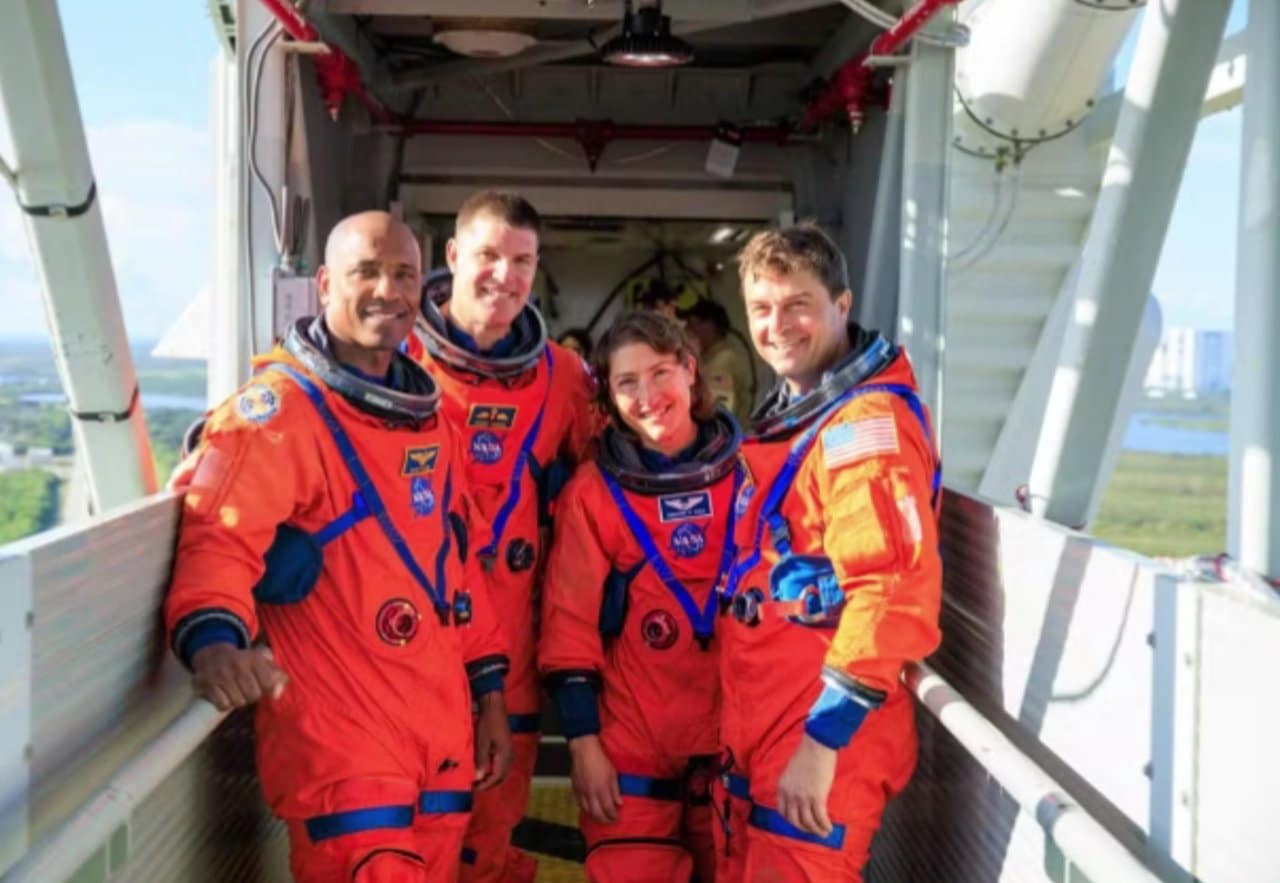
The four astronauts from the Artemis II mission, Reid Wiseman, Victor Glover, Christina Koch and Jeremy Hansen, returned to Earth expressing great satisfaction and surprise with the repercussions of their journey. The crew described the experience as the “adventure of a lifetime”, touched by the deep connection that global audiences have made with lunar exploration. Twenty days after landing, on April 10, 2026, they shared new reflections on the historic journey that circled the Moon, highlighting the excitement of having been part of such a significant milestone for humanity.
Victor Glover, pilot of the mission, emphasized the joy of seeing the great scope of the project. “It’s amazing how people have connected so much with this mission. We really wanted this, and it’s great to see it happen,” he said. This perception reinforces not only technical success, but also public engagement, vital for the future of space initiatives.
The importance of the journey to the future of space exploration
The Artemis II mission represented a fundamental stage in humanity’s ambitious return program to the Moon. During ten days, the astronauts covered an impressive distance of more than 690 thousand miles, performing a complete orbit around Earth’s natural satellite. The main objective was the meticulous testing of the complex systems of the Orion spacecraft, which will be essential for the next steps. This validation is crucial to ensuring the safety and effectiveness of future missions that will take humans beyond low Earth orbit.
This crewed demonstration flight paves the way for Artemis IV, a follow-up mission that aims to land astronauts on the lunar surface in 2028. More specifically, the plan includes exploration of the Moon’s South Pole region, an area of great scientific interest due to the potential presence of water ice in permanently shadowed craters. Such a resource is vital for establishing a sustainable human presence and can be used for drinking water, rocket fuel and oxygen for life support.
“Magnificent” views and the thrill of deep space
The unique perspective of deep space left an indelible mark on the team’s minds and hearts. Jeremy Hansen, the Canadian astronaut who made history as his nation’s first to reach deep space, recounted the stunning beauty of Earth from afar. “We saw everything, you know, the Earth up close, and then it moved away and got smaller. And every time we saw it in the window, one of us would exclaim, ‘Oh, look at that!’. We would all go there, over and over again,” recalled Hansen, who summed up the experience as “magnificent.”
Christina Koch, mission specialist, shared the need for time for reflection upon return. She highlighted her gratitude for all the teams who made the mission possible and for the people who dedicated years of hard work. The journey, according to her, was an opportunity to “bring benefits and show this beautiful world that we all share”, reinforcing the value of exploration not only scientifically, but also as a source of inspiration and unity for humanity.
“Rise”: the mascot that traveled around the Moon
Aboard the Orion spacecraft, the Artemis II crew had an unofficial but deeply symbolic “fifth” member: the plush doll “Rise”. Created by Lucas Ye, an eight-year-old boy from California, the mascot served a crucial practical function, serving as an indicator of zero gravity. The moment “Rise” floated freely signaled to the team that they had reached the weightless environment of space.
Commander Reid Wiseman detailed the special making of the doll. “Our Rise was, I think, stitched together at Goddard, one of the NASA centers, and it was custom made based on Lucas’ design,” he explained. He revealed that the doll was made from flame retardant material and padding, an essential safety measure to prevent fire risks in space environments. Additionally, a small pocket at its base carried a memory card with mission records.
“Our Rise became our mascot. We loved that little guy,” said Wiseman, highlighting the affection and symbolism that the doll represented for the team and the public, especially children. The presence of “Rise” helped connect the next generation to space adventure, making exploration more tangible and inspiring for young dreamers.
Artemis program milestones and objectives
The Artemis II mission is a vital component of NASA’s larger plan to reestablish and expand the human presence on the Moon. Data collected on Orion’s performance and astronauts’ response to the deep space environment is now analyzed by engineers and scientists to refine future steps. This program represents a global effort to advance science and technology, with implications that go beyond lunar exploration, aimed at preparing for future missions to Mars. The program’s main objectives include:
- Validate the critical systems of the Orion spacecraft and Space Launch System (SLS) rocket in a real space environment.
- Collect comprehensive data on the human experience on deep space missions to optimize future long-duration journeys.
- Establish a sustainable human presence on the Moon, including the development of a lunar base for continued technological research and development.
- Explore the lunar surface, with a special focus on the South Pole, to identify and utilize essential natural resources, such as water ice.
- Develop and validate new technologies and operational procedures for future manned missions to Mars, using the Moon as a strategic “testing ground”.
The return and post-mission reflections of the explorers
After their emotional return home, the astronauts have dedicated themselves to processing the magnitude of their experience. The transition back to life on Earth, after ten days in space, requires a period of adaptation and introspection. Victor Glover, for example, mentioned that he still has “a lot to process from those ten days”, indicating the depth of his experiences. The pilot expressed his desire to dedicate quality time to his family and friends, a focus that gained even more importance when he turned 50 on the day of the interview.
Gratitude to the teams on the ground, who worked tirelessly for years for the success of the mission, is a universal feeling among the crew. The Artemis II experience was not only a cutting-edge technical and scientific feat, but also a profound personal journey that redefined perspectives and strengthened bonds, both between the astronauts and with the humanity that followed their “adventure of a lifetime”, marking a new chapter in human exploration of the cosmos.





