
Lionel Messi leads World Cup artillery with the least movement among all outfield players

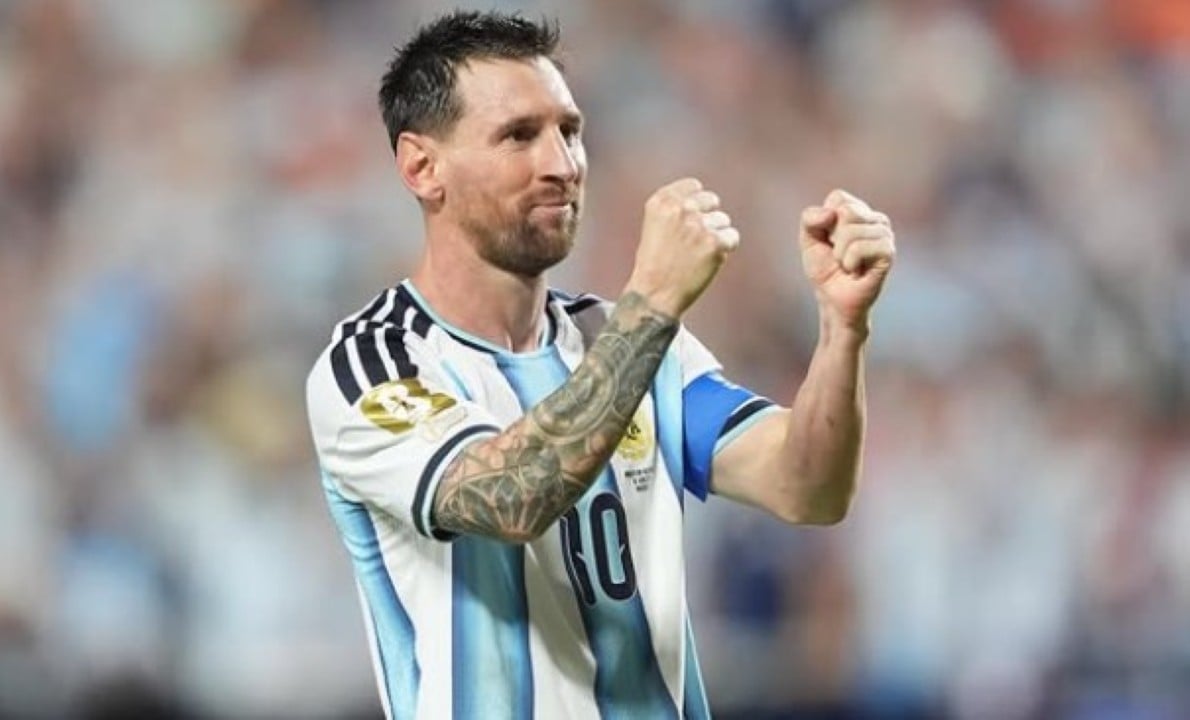
Messi, who recently turned 39, demonstrates at the World Cup that excellence in football does not just depend on speed or physical endurance. Statistical data revealed that the number 10 of the Argentine national team had the least movement on the field among all the outfield athletes analyzed in the initial phase of the tournament.
Information indicates that Messi covered an average of 8.1 kilometers per 90 minutes on the field. This number places him in last place among the 618 players who had at least 90 minutes of participation in the group stage of the competition, according to a detailed evaluation.
Even with the low movement, Messi is among the top scorers of the 2026 World Cup, accumulating six goals in three games in the first phase. French striker Kylian Mbappé equaled that mark, also with six goals, after finding the net twice in the 3-0 victory over Norway. The Argentina team has its next challenge against Cape Verde on Friday, in the second phase.
Impressive performance: one goal every 33 minutes of play
In the opening match of the tournament, the Argentine star was substituted 35 minutes into the second half. He had already scored three goals in Argentina’s 3-0 victory against Algeria, catching Miroslav Klose as the top scorer in World Cup history, with a total of 16 goals.
In the second round, in the 2-0 victory over Austria, Messi remained on the field until the final whistle in another memorable confrontation. By scoring two goals, the second in stoppage time, he became the single record holder for goals in World Cups.
In the match against Jordan, valid for the third round, Messi was initially spared along with other starting players, only entering 15 minutes into the second half. His time on the field was enough to find the net once again, consolidating the 3-1 victory and taking his tally to 19 goals in World Cups.
At the end of the first phase, disregarding the additional minutes, Messi accumulated 200 minutes of play, which is equivalent to an average of 66 minutes per match. With a goal every 33 minutes on the field, his performance shows remarkable efficiency, even with less movement, solidifying the idea that tactical intelligence compensates for the need to chase the ball.





