

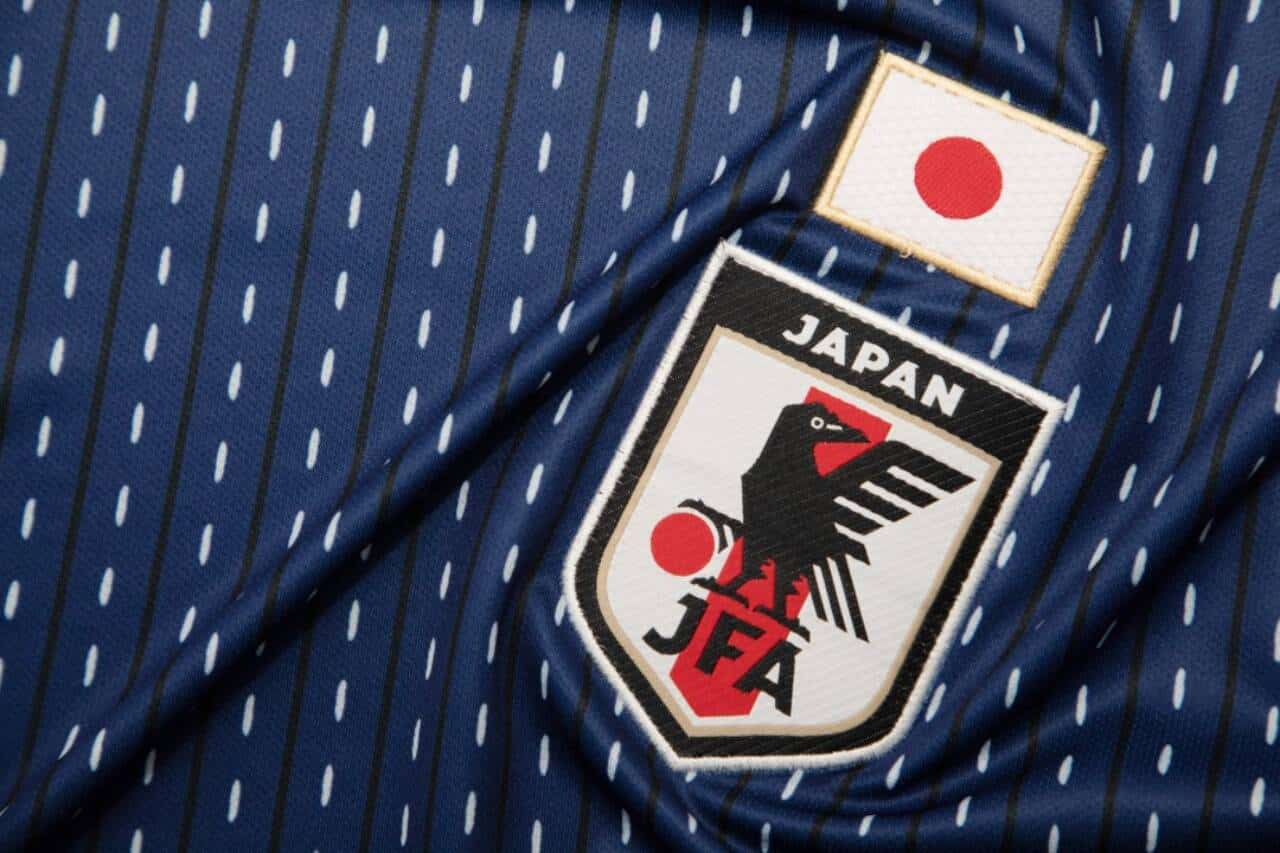
The Japanese national football team’s badge bears a symbol of deep cultural significance: a three-legged raven. This peculiar image, present on the national team’s shield, dates back to ancient Japanese legends, being much more than a simple mascot. It represents a direct connection to the country’s mythical origins and fundamental values.
At the heart of the emblem is the figure of Yatagarasu, a sacred entity in Shintoism, the traditional Japanese religion. This mystical raven is revered as a divine messenger, playing a crucial role in narratives that shaped national identity. His appearance symbolizes guidance and protection, essential elements for the nation’s journey.
The divine origin of Yatagarasu in Japanese mythology
The main legend involving Yatagarasu narrates his role during the journey of Emperor Jimmu, considered the first emperor of Japan. According to ancient records, Jimmu faced severe challenges when trying to unify the lands. It was then that the sun goddess, Amaterasu Omikami, sent Yatagarasu to guide him through the mountains and dense forests of Kumano.
The three-legged raven was essential for the emperor to find his way and, consequently, establish the capital in Yamato. This mythical episode solidifies the image of Yatagarasu as an infallible guide and a symbol of divine intervention for success. The figure of the crow, therefore, transcends mere animal representation.
The profound symbolism of the raven’s three legs
Yatagarasu’s most distinctive feature is its three legs, which carry multiple layers of interpretation in Japanese culture. Traditionally, they are associated with the representation of heaven, earth and humanity, or with wisdom, benevolence and value. For the Japanese Football Federation (JFA), this triple symbolism was adapted to reflect the attributes of intelligence, strength and agility, qualities essential for success in sport and which the team seeks to incorporate on the field.
Furthermore, there is a chain that links the three legs to the three great clans that helped found Japan. This element of unity and mutual support resonates with the idea of teamwork and solidarity, values widely celebrated in football. The depth of symbolism contributes to the Japanese team’s unique identity.
Representation in Japanese football
The incorporation of Yatagarasu into the emblem of the Japanese football team by the JFA, since the 1930s, was not by chance. A symbol was chosen that evokes the history and spirituality of Japan, conveying to players and fans a sense of pride and purpose. The raven is not just a design, but a link to the resilience and spiritual strength of the Japanese people.
In this way, the three-legged raven on the Japanese national team’s shield serves as a constant reminder of the values of leadership, divine protection and the virtues necessary to overcome challenges, both on and off the pitch. It is a tribute to the country’s cultural heritage and an encouragement for the team to always seek victory with honor and determination.





