
Brown University professor reveals AI fraud scheme in exams and raises alarm about higher education

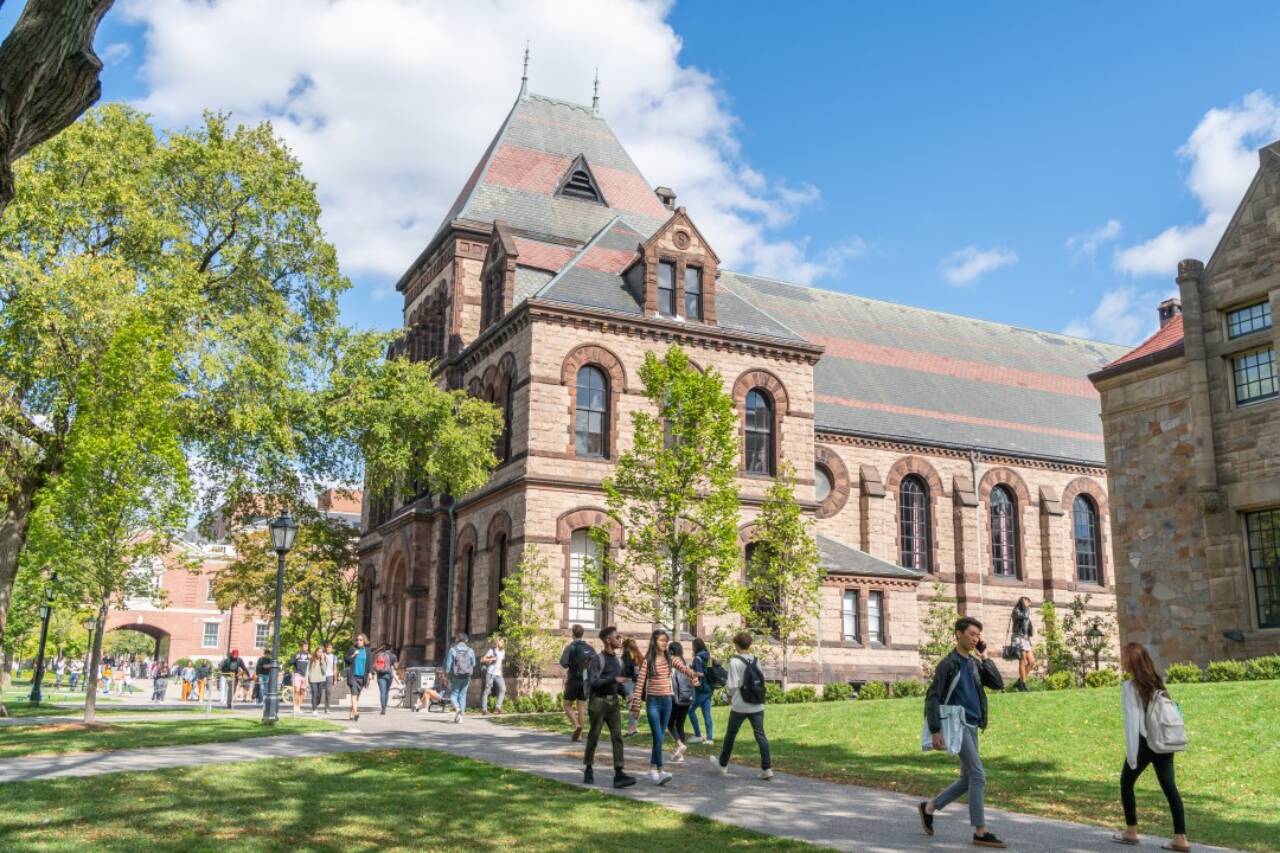
Cases of academic fraud involving artificial intelligence (AI) have challenged the environment at elite universities in the United States. Recently, Professor Roberto Serrano, Professor of Economics at Brown University, identified a massive scam in one of his courses, ECON 1170, an advanced undergraduate course in mathematical economics. He accumulated overwhelming evidence that at least 50 students cheated on the midterm exam held in March, creating the biggest scandal ever recorded at Brown itself and throughout the Ivy League, which encompasses eight of the most prestigious private institutions on the East Coast, such as Princeton, Harvard, Yale, Columbia, Cornell, Dartmouth College and the University of Pennsylvania.
When taking the case to the top brass at Brown University, Professor Serrano faced a cold reception. According to him, the rectory remained completely silent, and the dean only spoke out after Serrano forwarded the complaint to the Academic Code Committee. He then received a note classifying what happened in his classroom as an “alert.” Serrano, a Spanish economist who has taught at Brown for 34 years, considers this response insufficient. “This cannot be the university’s stance in the face of an incident of such magnitude. Academic integrity is a value to be protected. The faculty cannot be abandoned in this crucial fight if we want to guarantee the future of higher education”, declared the 61-year-old professor, in a telephone interview from Providence, Rhode Island. For him, preventing AI from compromising the recognition and function of education requires a different approach: “We need to publicly recognize the seriousness of the situation and start a broad debate about the true dimension of the problem.”
Roberto Serrano is recognized as one of the main experts in the application of game theory, an area that earned John Nash the Nobel Prize in Economics in 1994, to market analysis. After completing his degree in economics at the Universidad Complutense de Madrid, where he received the title of Doctor Honoris Causa in 2019, Serrano continued his studies with a doctorate at Harvard. Upon completing his training, he received several job offers. Determined to dedicate himself to research and teaching, he accepted a position at Brown University, where he remains today. Throughout his career, he has been awarded several distinctions, including the King of Spain Prize for Economics in 2024.
At age 17, Serrano lost his sight. Within a few months, the retinal dystrophy that had accompanied him since childhood, but which still allowed him to read and play football, completely suppressed his visual ability. After an initial period of crisis, he decided that the condition would not stop him. The economist learned Braille, and his notable academic record took him to Harvard. “Of course this affects my life, but it shouldn’t be overdramatized. We economists see reality as a set of individuals responding to optimization challenges under constraints. I see my illness simply as an additional constraint that I need to manage, and I optimize my choices based on that,” he says.
Serrano always has an assistant in the classroom to operate the whiteboard and handle the slides. However, all other activities, from preparing course exercises and tutoring to writing articles and books, he carries out alone. Recently, these tasks have been made easier by technological advances.
This academic year, the economist chose to take both the intermediate exam and the final exam of his discipline in the “take-home” and “closed-book” format, a model with a certain tradition in Ivy League institutions. “It’s a very interesting type of test, because by giving students practically unlimited time to complete it, it allows you to make it more challenging than usual, to test the limits of their knowledge.” For the assessment, Serrano changed some of the assumptions of models discussed in class, requiring students to prove the truth or falsity of certain statements under the new conditions.
The course, which he has taught for several years, is not easy; generally attracts few but high-performing students. Enrollment never exceeded 30, reaching just eight in some classes. This semester, possibly due to the new evaluation system, 86 students signed up. The results of the intermediate test, administered on March 5, were remarkable, with an average of 96 points out of 100. Forty students achieved the maximum score. However, those responsible for correcting the exams alerted Serrano to several anomalies. “Some answers contained unusual excerpts that corresponded to results obtained after submitting the questions to ChatGPT”, reveals the professor.
Serrano decided not to cancel the intermediate exam, but informed the students that the final exam, responsible for 50% of the grade, would be held in person. He also informed that, if the distribution of grades did not resemble that of the intermediate exam, only the result of the final exam would be considered. The class average fell to 48 points out of 100. Of the 89 students who took the intermediate exam, only 59 appeared for the final exam. Among the 27 who did not attend, 22 had obtained the maximum score of 100 in the previous assessment.
“The empirical evidence of fraud is irrefutable”, says the professor, who is already planning changes for the next academic year. Firstly, weekly exercises will no longer contribute to the final grade, as they can be easily carried out with the help of artificial intelligence. Secondly, there will be no more take-home exams, regardless of how appropriate they may seem.
Impact of a previous shooting on university exams policy
On December 13 of last year, Brown University rose to prominence for reasons that were not strictly academic. On that date, Neves Valentes, a 48-year-old former doctoral student, arrived on campus armed and opened fire. The incident resulted in the death of two people and left nine injured, some seriously. “We lived in an apartment in downtown Providence, and that Saturday we started to see a lot of police cars and ambulances heading to the university,” recalls Serrano. Before long, his phone was flooded with messages. The shooting occurred inside a classroom where a review session was taking place for the Introduction to Economics subject, led by his colleague Rachel Friedberg. These sessions are held to clarify doubts before final exams. Two of the nine injured students were enrolled in Serrano’s class. They fought for their lives for weeks and, fortunately, both recovered.
On December 15, two days after the incident, when the names of the fatal victims were released, Serrano learned that one of them was Ella Cook. The young woman had visited his office that same week to introduce herself. She had expressed a desire to take her Intermediate Microeconomics course that semester and asked if he could be her career advisor for her double major in economics and mathematics. “We talked for a long time. She was full of projects, ideas and hope. She showed great interest in her studies. When I heard the news, I couldn’t believe it. I’ve lived in the USA for a long time and I still can’t understand how this country still defends the right to bear arms. Cases like this happen all the time, but you go on with your life because they don’t affect you personally. Until someone takes it. And it hurts, it hurts a lot.”
Professor Serrano was deeply shaken by the event. “I was in a very delicate mental situation for a while. After what happened, I thought that during that semester, which began just over a month after the shooting, the exams could be of the ‘take-home’ type to make life a little easier for the students. Many of them still feel anxiety on campus because of what happened in December.”
Now, however, Serrano is concerned that some of his students have chosen to cheat. And also with the possibility of the university taking their side, in part due to the large donations it receives from wealthy families, whose children often study there. “This means that students always get the benefit of the doubt; I’ve seen this on other occasions”, he highlights. However, what distresses him most is that, the only time in 34 years that he decided to offer a “take-home” test for highly justified reasons, the response was widespread fraud.
Artificial intelligence and the new dynamics of academic temptation
Artificial intelligence is transforming centuries-old traditions at the most renowned universities in the United States. Princeton University, for example, ended a practice that lasted 133 years: from now on, professors will supervise exams in person. This measure had not been adopted since 1893, when an Honor Code was implemented by which all students pledged not to cheat: the teacher handed out the test, left the room and returned only to collect them at the end. If someone cheated, it was up to their colleagues to report it.
However, “AI has made fraud easier and more rewarding than ever,” wrote US journalist Theo Baker in a recent article. “I don’t know a single person who didn’t use AI to complete an assignment in college.” The 22-year-old writer, recently graduated from Stanford, began his studies two months before the release of the first version of ChatGPT. During his four years as a student, he witnessed how his classmates were unable to resist temptation.
Serrano agrees that artificial intelligence gives students more incentives to cheat. For this reason, he emphasizes that these incidents cannot be ignored. On the contrary, they should serve as a catalyst for in-depth debate. “If we fail to stand up for truth, decency and honesty, what kind of credibility will we have as academics?”



