
Indian market receives Tata Sierra EV with prices starting at 18.79 lakh rupees and premium features

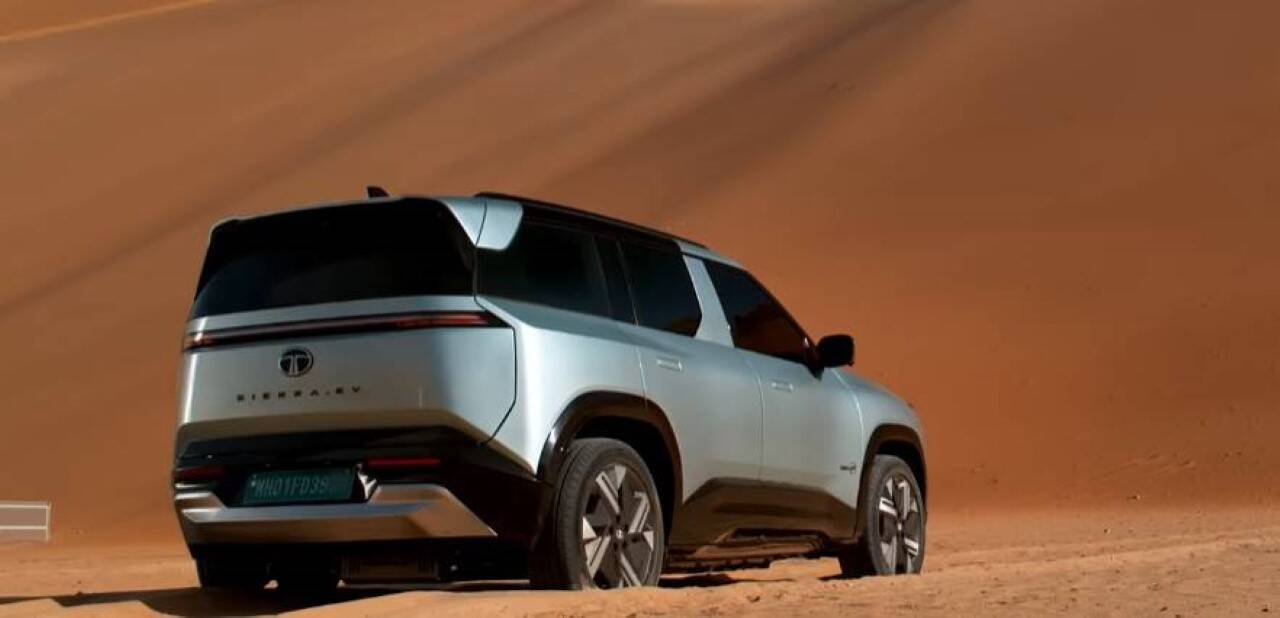
Indian automaker Tata Motors officially presented the long-awaited Sierra EV in the local market, with a starting price of 18.79 lakh rupees (equivalent to around R$120,000 at the current price, without considering import taxes and duties). The launch positions the electric SUV as a strong competitor in the growing battery-powered compact SUV segment, vying for space with models such as the Hyundai Creta Electric, Mahindra BE 6 and Maruti and Vitara. Reservations for the vehicle are now open, and deliveries are scheduled to begin on July 15th.
Even before its official arrival at retail, the Tata Sierra EV had already attracted attention by breaking a record, climbing the tallest sand dune of Tal Moreeb in the United Arab Emirates. This feat not only demonstrated the SUV’s rugged capability, but also served as a powerful marketing strategy for the model that shares design elements with the combustion engine Sierra (ICE) and battery components and electric motors with the more premium Harrier EV.

Pricing structure and engine options
The Tata Sierra EV is available in five distinct variants, offering rear-wheel drive (RWD) and all-wheel drive (AWD) configurations to suit different consumer needs. The choice of battery pack also varies, with options that directly influence the vehicle’s performance and range.
Check the launch prices (ex-showroom, without charger):
- Pure (63 kWh RWD):Rs 18.79 lakh
- Pure S (63 kWh RWD):Rs 19.99 lakh
- Adventure (63 kWh RWD):Rs 20.99 lakh
- Adventure (75 kWh RWD):Rs 22.19 lakh
- Empowered (63 kWh RWD):Rs 22.79 lakh
- Empowered (75 kWh RWD):Rs 23.79 lakh
- Empowered A (75 kWh RWD):Rs 24.79 lakh
- Empowered A (75 kWh AWD):Rs 25.99 lakh
For buyers who want a wall charger for home use, the 7.2 kW AC unit can be purchased separately for an additional Rs 49,000.
Bold design and inspiration from the classic model
Visually, the Tata Sierra EV adopts a contemporary and minimalist aesthetic, especially at the front, which features a thin, continuous LED light bar across the entire width of the vehicle, giving it a futuristic appearance. In contrast to the combustion version, which features a glossy black grille, the electric model replaces this element with a smooth panel in body color, contributing to a cleaner and more aerodynamic look. The LED headlights are strategically positioned lower on the bumper, which stands out with a striking black section and a silver protective plate.
On the side, the SUV maintains the tall and robust silhouette, characteristic of the Sierra line, with an almost flat roofline and large side windows. The blacked-out pillars, with the exception of the body-colored B-pillar, create a floating roof effect, and the original Sierra’s iconic Alpine window styling is preserved. The vehicle rides on 19-inch alloy wheels with a two-tone design, identical to the ICE model, and the front doors display the “Tata.ev” emblem, reinforcing the electric identity. The door handles are integrated, offering a cleaner profile, complemented by black roof rails and robust black cladding around the wheel arches and door bottoms. Dimensions include 4340mm length, 1841mm width, 1715mm height, 2730mm wheelbase and 205mm ground clearance. The rear follows the same clean design theme, with a wide, vertical trunk lid connected by a thin, continuous LED light bar that joins the two taillights.
Variety of colors and smart storage solutions
The Sierra EV arrives with a palette of seven color options, including two new tones that are not available in the combustion version: Rishikesh Rapids (new) and Bengal Rouge. The other options are Nainital Nocturne (borrowed from the Harrier EV), Andaman Adventure, Pristine White, Coorg Cloud and Pure Grey. It is important to note that the Nainital Nocturne color is exclusively associated with the all-wheel drive (AWD) variant.
In terms of interior space, the Tata Sierra EV offers a generous 622-litre boot with all seats in an upright position. Furthermore, the model stands out for including a “frunk” (front trunk), which provides additional storage space. The rear-wheel drive (RWD) variants have 55 liters of capacity in the frunk, while the all-wheel drive (AWD) version offers 35 liters.
Technological cabin and premium driving experience
The interior of the Tata Sierra EV replicates the overall dashboard design of the combustion version, featuring a modern and uncluttered layout. The cabin is enriched with soft-touch materials and contrasting finishes, which elevate the perception of luxury and sophistication. A three-screen arrangement dominates the dashboard, while the two-tone interior theme contributes to a feeling of spaciousness. Elements such as the four-spoke steering wheel, air conditioning vents, door armrests and central console were maintained from the ICE model, ensuring familiarity and ergonomics.
The seats have distinctive two-tone upholstery, with the tops being a darker shade than the standard Sierra version. All seats come with adjustable headrests, and the driver enjoys a power seat with memory function, adding to convenience. The climate control panel remains touch-sensitive and is finished in gloss black, which, while modern, can be less intuitive on the move and susceptible to fingerprints. Both front and rear passengers have central armrests, and rear occupants also benefit from air conditioning vents, USB Type-C charging ports and manual blinds for the side windows, highlighting the focus on everyone’s comfort.
Advanced features and cutting-edge security systems
The Sierra EV incorporates several advanced features, some of which are shared with the Harrier EV, such as Summon Mode and automatic parking assistant. The vehicle also features technologies specific to electric cars, including V2L (Vehicle-to-Load), which allows it to power external devices, and V2V (Vehicle-to-Vehicle), to share power with other electric vehicles. Another innovation is ‘DrivePay’, a payment feature integrated into the car.
Furthermore, the SUV shares with its combustion sibling a number of features that ensure comfort and convenience: a 12.3-inch infotainment screen, a 12.3-inch passenger entertainment screen, a 10.25-inch digital display for the driver, 6-way electrically adjustable and ventilated front seats with memory function, “Boss” mode for the passenger seat, dual-zone climate control, rear curtains, a sunroof panoramic, head-up display (HUD), wireless phone charger, NFC card key, air purifier, electric trunk with gesture control and a 12-speaker JBL sound system. For performance enthusiasts, the Sierra EV offers multi-terrain modes with a Boost mode, optimizing the driving experience.
On the safety front, the Sierra EV is equipped with a comprehensive suite of technologies, including Level 2 Advanced Driver Assistance System (ADAS), a 540-degree camera with transparent view under the hood, six airbags, electronic stability control (ESC), electronic parking brake with auto hold, tire pressure monitoring system (TPMS), ISOFIX child seat anchors, four-wheel disc brakes and front and rear parking sensors.
Battery and autonomy: Power and efficiency for long journeys
The Tata Sierra EV is offered with two battery options, with the larger unit shared with the Harrier EV, ensuring robust performance and competitive range in the electric SUV segment.
Here are the detailed specifications of the battery and motorization configurations:
- Battery Pack:
- * 63 kWh RWD:An electric motor. Range of 565 km. Power of 238 PS. 315 Nm torque. DC fast charging (0 to 80%) in 25 minutes.
* 75 kWh RWD:An electric motor. Range of 665 km. Power of 209 PS. 315 Nm torque. DC fast charging (0 to 80%) in 26 minutes.
* 75 kWh AWD:Two electric motors (209 PS rear, 140 PS front). Range of 624 km. Torque of 504 Nm. Acceleration from 0 to 100 km/h in 5.8 seconds. DC fast charging (0 to 80%) in 26 minutes.
All models support 120 kW DC fast charging, which can charge the battery from 20 to 80 percent in approximately 26 minutes. Additionally, the vehicle offers 7.2 kW AC home charging and 3.3 kW portable charging options, providing flexibility for recharging in a variety of situations.



