
Massive Russian attack with missiles and drones turns Kyiv into night of horror with dozens killed and injured

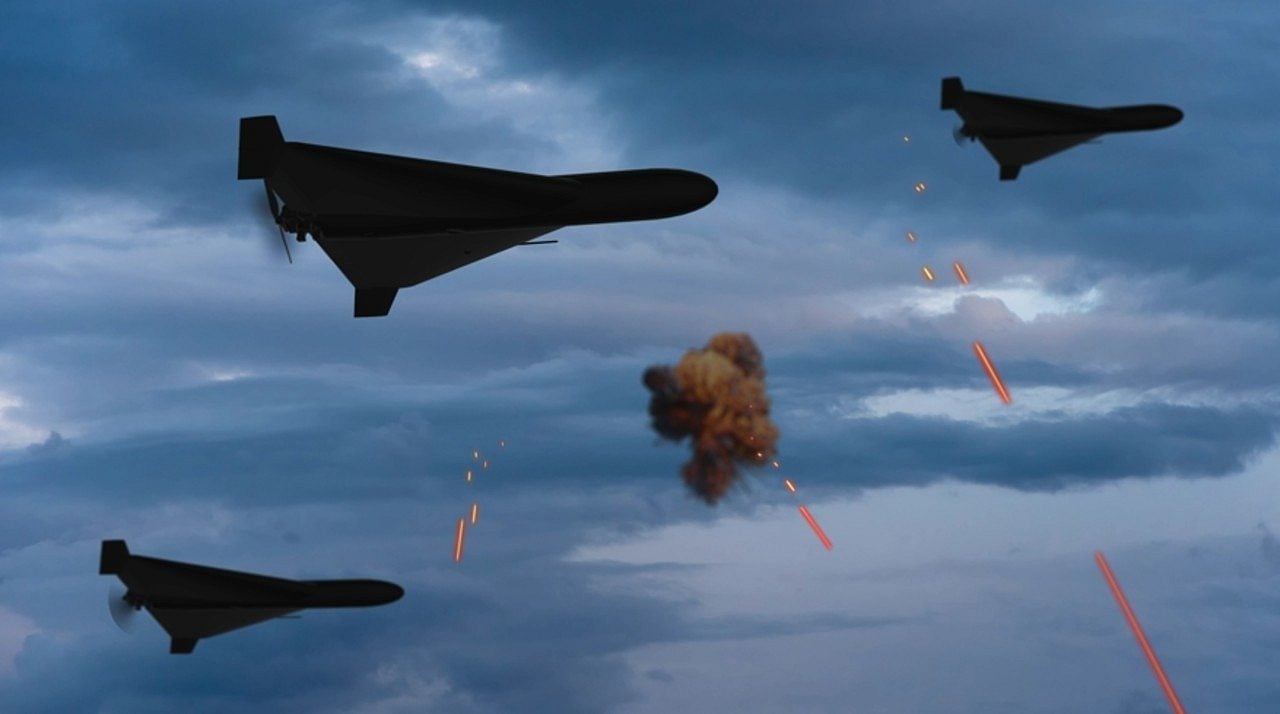
Russian forces carried out a series of missile and drone attacks aimed at Kyiv, the capital of Ukraine, in an event classified by local authorities as a “night of horror”.
The initial assessment indicates that at least twenty people lost their lives, and more than eighty suffered injuries, according to information from an authority in the region. Search and rescue teams remain active in the area.
In a statement on Thursday, Ukrainian President Volodymyr Zelensky revealed that Russia fired more than seventy missiles of different categories at Ukraine throughout the night, with almost half being ballistic. In addition, around five hundred attack drones, including jet models, were also used.
The attacks were recorded in more than thirty points spread across the capital’s districts, including residential areas. The population was forced to seek protection in air raid shelters and underground metro stations.
In response to the attacks, Vitali Klitschko, mayor of Kyiv, declared an official day of mourning, ordering flags on municipal buildings to be flown at half-mast.
Other Ukrainian regions such as Sumy, Dnipro, Zaporizhzhia, Cherkasy and Kharkiv also recorded impacts from the bombings.
Andrii Sybiha, Ukraine’s Foreign Minister, called the attack a “night of horror” and called Russian President Vladimir Putin a “war criminal.”
He argued that the Russian leader “is only capable of conducting a vicious and terrorist war against civilians, women and children” as “in his confrontation with the Ukrainian Defense Forces he achieves no results.”
In turn, the Russian Ministry of Defense reported that the “massive offensive” represents retaliation for recent Ukrainian drone attacks on Russian territory.
Dmitry Peskov, Kremlin spokesman, assured that the targets of the attack were “military installations or those linked to the armed forces” and assured that Russia “will maintain increased pressure” on Ukraine until it achieves its goals.
This escalation comes at a time when Ukraine has intensified its drone attacks on Russian oil refineries, which, according to reports, has led to Russia facing a growing fuel crisis over the summer period, adding a layer of context to Russia’s motivation.
The previous week, President Zelensky had authorized a “forty-day influence operation” for the Ukrainian Security Service, targeting the “aggressor state for the purpose of compelling an end to the conflict.”
The Ukrainian president had traveled to Dublin, Ireland, on Monday, to discuss Ukraine’s future in the European Union, coinciding with Ireland assuming the presidency of the European Council on Wednesday. However, he interrupted the visit and returned to his country after being informed about “another major Russian attack”.
Immediately after the offensive, leaders of several European nations reiterated their full support for Ukraine and its people.
Yvette Cooper, UK Foreign Secretary, stated: “Russia has again chosen escalation over peace with this disgraceful attack on Kyiv, which involved dozens of missiles and hundreds of drones, resulting in deaths and injuries among civilians, including children.” She added: “We will continue to intensify international pressure on Russia by strengthening Ukraine’s air defenses — in solidarity with Ukraine.”
Thomas Byrne, Irish Minister of State, called the night attacks proof of Russia’s “absolute brutality and inhumanity”, saying Ireland will maintain its support for Ukraine “as long as necessary”.
The European Union’s chief diplomat, Kaja Kallas, declared that “simple words of condemnation will not be enough to stop the attacks against Kyiv. Only uninterrupted military support for Ukraine and increasing pressure on Moscow will achieve this.”
She promised: “Today, I will present the proposal to impose sanctions on other entities that support Russia’s military-industrial complex in response to these attacks. The more Moscow directs offensives against civilians, the more sanctions will need to be implemented.”
On Tuesday, the EU paid the first installment of its defense package, worth €6 billion, intended to assist in the purchase of drones, forming part of a total loan of €90 billion to Ukraine.
Marta Kos, European commissioner for enlargement, pointed out that the recent attack reinforces the need for “Ukraine to have the resources to defend itself and a reliable path towards EU membership”.
How is Ukraine’s accession to the European Union going?
Ukraine has advanced another stage in its European Union accession process, after authorities inaugurated the first negotiating group last month, marking the beginning of a fundamental stage in the talks.
President Zelensky has consistently defended Ukraine’s EU candidacy as a strategy to consolidate its security guarantees in the face of constant Russian aggression.
Although it has strong political support from certain European leaders, the country still has an extensive and intricate journey before its entry into the bloc becomes a reality. Zelensky’s aspiration to speed up the accession decision by 2027 has been met with caution.
Since its formal application for membership in 2022, shortly after the large-scale Russian invasion, Ukraine has demonstrated considerable progress in meeting the requirements of EU Member States, continuing to harmonize its laws and regulations with European guidelines through the Association Agreement.
Although the previous month’s preliminary negotiations symbolized an important milestone for Ukraine, several challenges still persist.
Accession negotiations are structured into six distinct groups, with the initial group being considered the most relevant. This group, called “fundamentals”, addresses crucial pillars such as democracy, rule of law, governance and judicial reform, essential elements for full integration.
In short, the final determination on EU enlargement rests with the Member States. Throughout the membership journey, each of the groups must be initiated and completed by unanimous consensus.
The perspective on Ukraine’s inclusion in the European Union varies among the continent’s nations.
According to reports, countries such as Germany and France express support for a faster “symbolic” accession for Ukraine and, in general, have shown greater receptivity to Ukrainian ambitions.
However, other nations maintain a more reserved stance. Hungary, even with its new management, has already indicated its objection to any initiative aimed at accelerating Ukraine’s entry into the European bloc.



