During the night, every 40 seconds for the next ten years, a camera the size of a small car will record incredibly detailed images of the southern sky. These captures will form a time-lapse panorama of intergalactic evolution, potentially revealing persistent secrets of the cosmos.
This historic undertaking, called the Legacy of Space and Time Survey (LSST), officially began on Tuesday. The initiative is led by the Vera C. Rubin Observatory, a state-of-the-art facility located in Chile that houses the world’s largest digital camera, weighing approximately 3 tons.
Over the course of its decade-long investigation, the camera will use a series of colorful filters to gain superhuman vision, scanning the night sky and building a dynamic picture of how celestial objects, from asteroids to supernovae, transform and move.
The color-rich images of exploding stars, black holes and cosmic collisions will also guide the attention of other global observatories. This coordination will allow multiple institutions to collaborate to collect comprehensive observations of notable celestial events, expanding the scope and depth of astronomical research.
The Rubin Observatory team began taking preliminary images with the LSST Camera on April 15, 2025, a crucial step in initial adjustments to the system before the main survey officially begins.
The project set several important goals, including creating a new inventory of our solar system and the Milky Way. Furthermore, it seeks to advance the understanding of dark matter by observing the distorted light from distant galaxies.
“Today, we begin filming the greatest cosmic movie ever made,” said Brian Stone, who currently serves as acting director of the US National Science Foundation, in a statement released on Tuesday. He highlighted that this moment is the result of decades of vision, innovation and the power of federal investment.
The project that reveals the universe in never-before-seen details
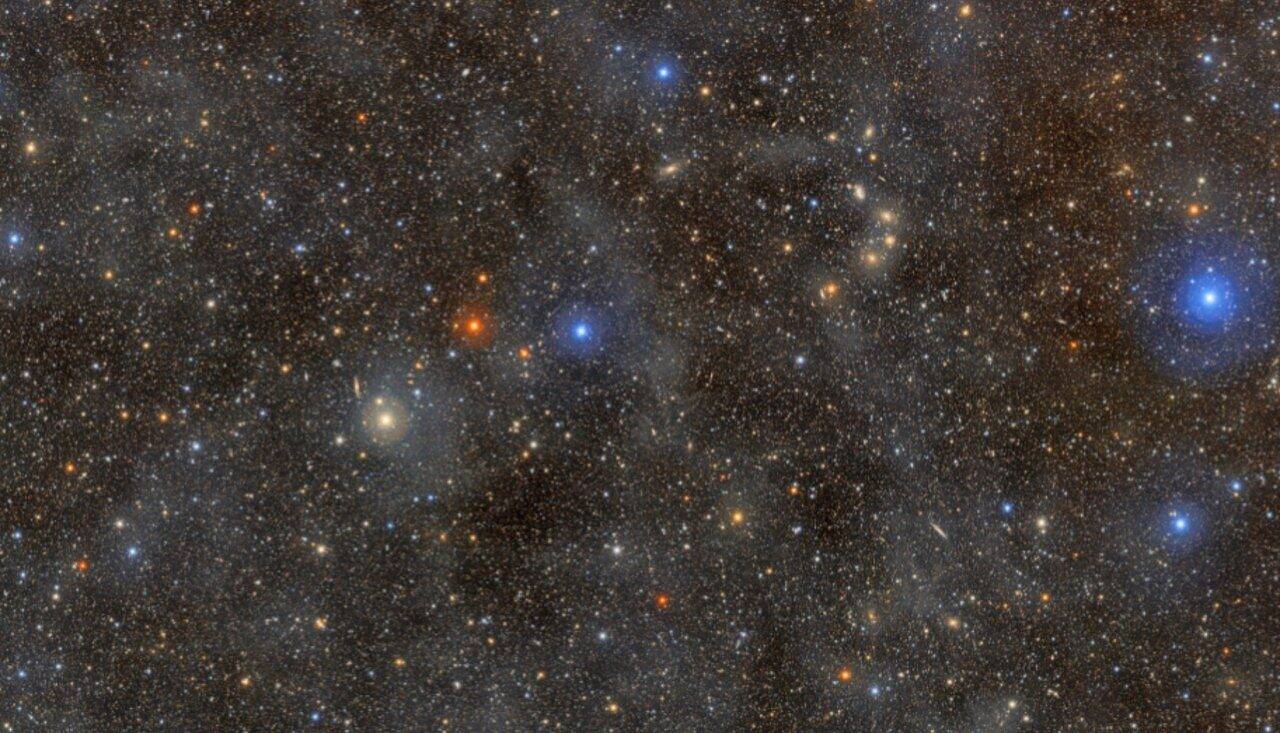
A 1.7 gigapixel image, called “Ocean of Stars”, which shows the Lupus constellation, already demonstrates the Rubin Observatory’s unprecedented visualization capabilities. This preview offers a glimpse of the potential for future discoveries.
With an investment of $800 million, the Rubin Observatory is jointly funded by the US National Science Foundation and the Department of Energy. It is located on the summit of Cerro Pachón in northern Chile at an altitude of 2,682 meters, an ideal location due to its dark skies and dry air.
After the observatory captured its first images last year, LSST was expected to begin in early 2026. However, testing and adjustments took longer than expected.
“The decision to officially launch LSST was made after a period of system optimization and a careful operational review of technical readiness, data system performance and scientific validation,” explained Željko Ivezić, head of LSST, in a statement. Factors such as image quality, effective search speed, system uptime and reliability, and calibration accuracy were crucial to this decision.
The observatory’s camera will capture thousands of images every night, completing a complete mapping of the Southern Hemisphere sky every few days. Over the course of its decade-long survey, the telescope will be able to revisit the same spots in the night sky hundreds of times. This will create a “living” picture of the evolution of every sector of observable star systems and galaxies, allowing scientists to study rare and difficult-to-detect events with an unprecedented level of detail.
“Rubin is bringing the universe to life, illuminating a treasure trove of discoveries: pulsating stars, supernova explosions, the fossil record of galaxies, clues to the mysteries of dark energy and dark matter, and entirely new phenomena never seen before,” the observatory team shared in a statement.
An image combining 678 distinct records, obtained by the Rubin Observatory in just over seven hours of observation, illustrates the equipment’s ability to collect vast volumes of data in short periods.
Using images captured to optimize the new system, the observatory has already identified 11,000 new asteroids and recorded dozens of other never-before-seen objects in our solar system, demonstrating the initial effectiveness of the technology.
As the observatory time-lapse unfolds, researchers will employ artificial intelligence and machine learning to sift through the data. The goal is to detect notable changes over time. Scientists estimate that the system will send around 7 million alerts per night, signaling interesting movements, explosions or important phenomena.
“When LSST is completed, the final dataset will contain billions of objects with trillions of measurements, all accessible through regular data releases,” according to the observatory’s statement. This is the first time that such a vast amount of astronomical data will be available to so many people, opening doors to new discoveries for both scientists and the general public.