
Yale Discovery of Fossil Teeth of Deep-Sea Fish Redefines Their Evolutionary History and Resilience

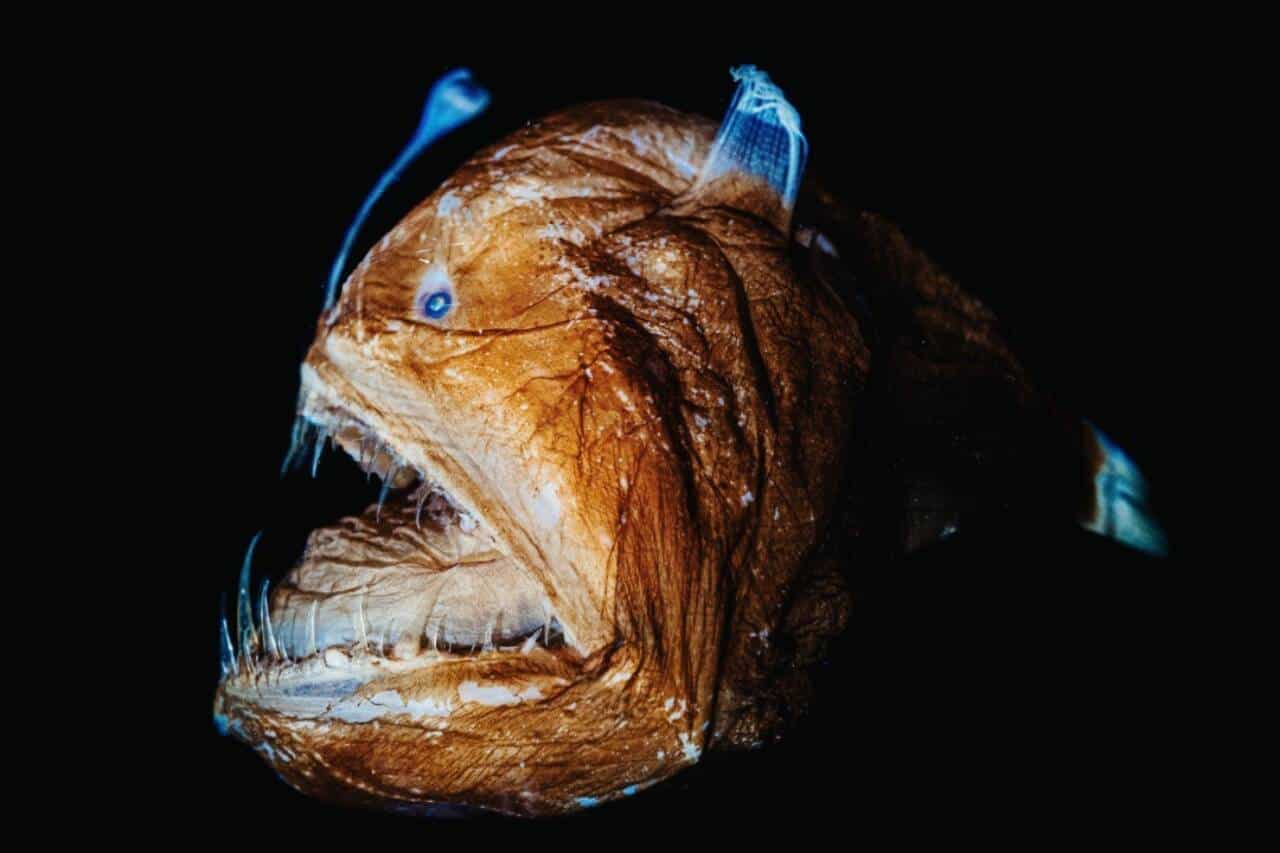
Recent research has brought to light the ancient origins of the Cyclothone, the ocean’s most abundant deep-sea fish, through the analysis of tiny fossilized teeth. The findings promise to transform understanding of life in the oceans.
Experts from Yale University used microscopic teeth, found in ocean sediments, to trace the evolutionary timeline of this genus of fish. Research indicates that the Cyclothone has existed for at least 55 million years.
Distinctive marks in the form of spiral striations, present in the teeth of current species of Cyclothone, correspond to patterns observed in fossils more than 55 million years old. This genus of fish is the most numerous on the planet, inhabiting the deep sea.
Despite being a vast environment, with depths of over 60 meters and housing 90% of marine life, the seabed has its fish that are poorly represented in the fossil record. The conservation of whole bodies is rare in brackish depths, making it difficult to understand evolution in this habitat.
Now, in a recent publication, Yale researchers have presented a new method for investigating the origins of abyssal fish species. The technique relies on an abundant source of evolutionary evidence: tiny fish teeth fossilized in ocean sediments.
The investigation focused on comparing the characteristic spiral striations in the teeth of contemporary Cyclothone species with the patterns of fossilized teeth, including specimens from Yale’s Peabody Museum. These striations are unique to the Cyclothone and are not found in other fish strains.
This crucial find anticipates the oldest known presence of Cyclothone in the fossil record by more than 40 million years. The discovery moves the estimate of its existence from a cold period of the middle Miocene (between 11 and 16 million years ago) to the extremely warm climate of the early Eocene.
Karinne Tennenbaum’s contribution to the Yale study
Student Karinne Tennenbaum, who will graduate from Yale in 2026, began this research during a freshman seminar. The course, titled “Peabody Museum Collections”, explored scientific questions through the analysis of specimens and objects from the institution.
According to the study’s lead author, Karinne Tennenbaum, analyzing the surface texture of the dental microfossils offered a clearer view of Cyclothone’s evolutionary history. The presence of the ancestors of the genus in warm Eocene oceans suggests greater resilience to climate change than previously imagined, a relevant finding given the increase in global temperatures.
The full results of the work were officially published in the journal Proceedings of the Royal Society B.
To further the research, scientists used high-resolution images to examine the teeth of 236 fish specimens. These belonged to 63 of the 68 existing orders of ray-finned fish, including 46 specimens representing 36 species of Stomiiformes, the order to which Cyclothone belongs.
Detailed analysis revealed that most fish had smooth teeth, but several Stomiiformes species had varying textures. Some had polygonal grooves or striations, while others displayed striations on only one side of the tooth. Cyclothone’s curved, conical teeth were distinguished by their unique spiral striations, not found in other Stomiiformes or anywhere else in the fish phylogenetic tree.
Experts highlighted that the similarity in the shape of most deep-sea fish teeth makes it difficult to directly associate fossils with specific lineages.
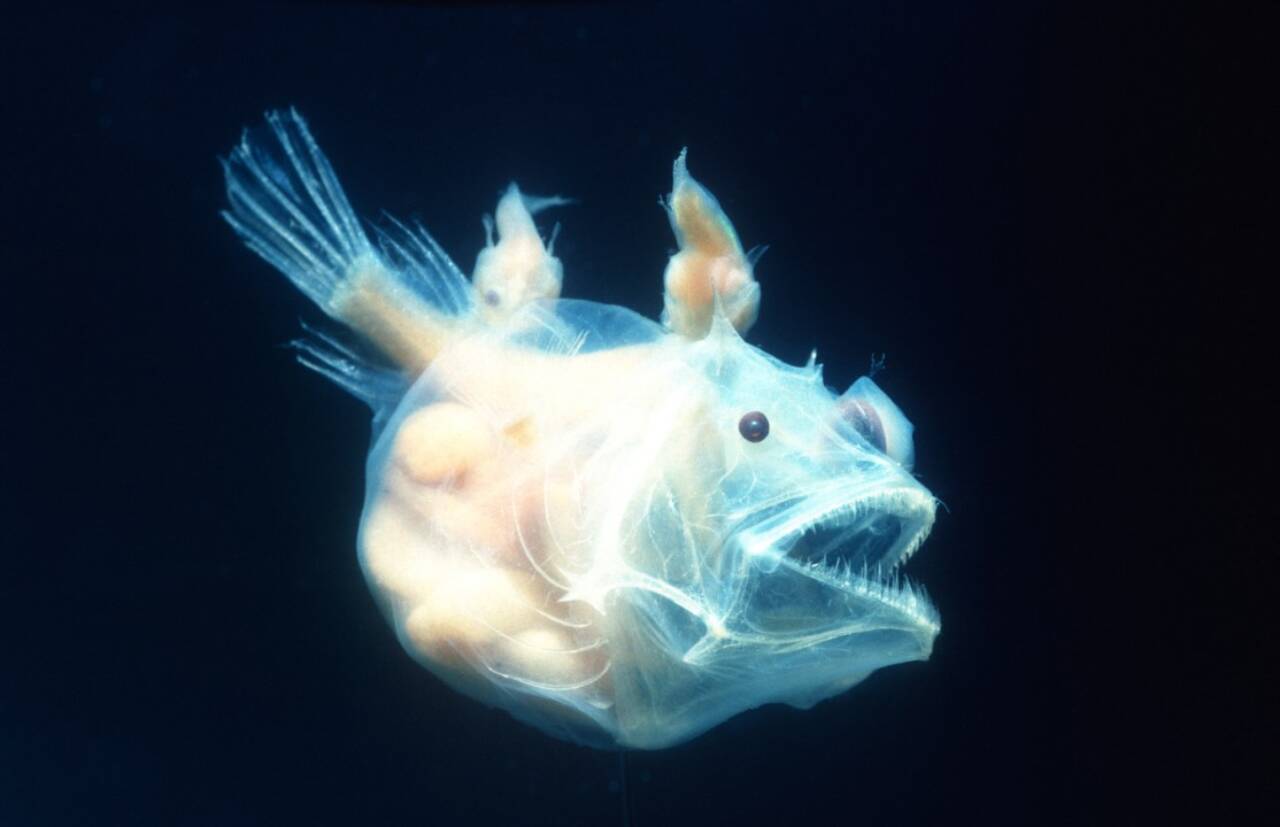
Advanced tools reveal microscopic features
The use of a high-resolution digital microscope was essential for the discovery. Technology has allowed the identification of minute details in fossilized teeth.
Dr. Elizabeth Sibert, former Hutchinson Postdoctoral Fellow at the Yale Institute for Biosphere Studies and senior author on the paper, explained that microfossil fish teeth are abundant but challenging to identify taxonomically. The study, driven by a decade-old database she developed, enabled reliable taxonomic identification by pinpointing unique dental features.
The mineral composition of fish teeth is crucial as it prevents them from dissolving in the corrosive waters of the ocean floor. In just one gram of ocean sediment, hundreds of fossilized teeth can be found, which are accurately dated using marine sediment core dating techniques.
In a direct comparison with current species, most of the fossilized teeth examined by researchers were smooth. However, several examples of fossils of conical and curved teeth have been found in the Southern Ocean that display spiral striations identical to those on the teeth of living species of Cyclothone. These fossils were attributed to an ancient lineage of the genus or a similar ancestral lineage, with a minimum age of 55 million years.
This revelation connects the Cyclothone fossil record with time-calibrated molecular phylogenies, that is, evolutionary trees based on genetic data. Such analyzes estimated the origin of the genus between 35 and 56 million years ago, and the discovery now aligns with these projections.
Karinne Tennenbaum also highlighted that the same method of analyzing dental microfossils can be applied to expand the fossil record of other groups of deep-sea fish that have teeth with characteristic textures. The researcher, a Marshall Scholar from Ann Arbor, Michigan, will begin her PhD in biology at the University of Oxford next fall.
Scientist Karinne Tennenbaum stated that the study of dental microfossils can significantly deepen knowledge about the evolutionary trees of abyssal fish species that live today. She reinforced that gaining a clearer view of evolutionary history improves understanding of climate resilience and how open-ocean fish survive and adapt.
The inspiration for the study dates back to Tennenbaum’s first semester at Yale College, during the “Peabody Museum Collections” seminar. Mentored by David Skelly, ecologist and director of Yale’s Peabody Museum, the opportunity to use a high-resolution digital microscope and collaborate with Greg Watkins-Colwell, senior collections manager, sparked the student’s interest in this research project.
David Skelly, one of the course advisors, professor of Ecology at Yale, explained that the objective of the seminar is to offer students the experience of research from the beginning of their degree. He expressed delight in seeing Karinne’s hard work resulting in a publication, recognizing her precocious talent and enthusiasm.
Elizabeth Sibert currently serves as an assistant scientist at the Woods Hole Oceanographic Institution in Massachusetts. Study co-authors include Immanuel Chas Bissell of Yale and Karly E. Cohen of the University of Washington.



