
Eight Tunisian players test positive for banned substance from contaminated meat in Mexico during World Cup

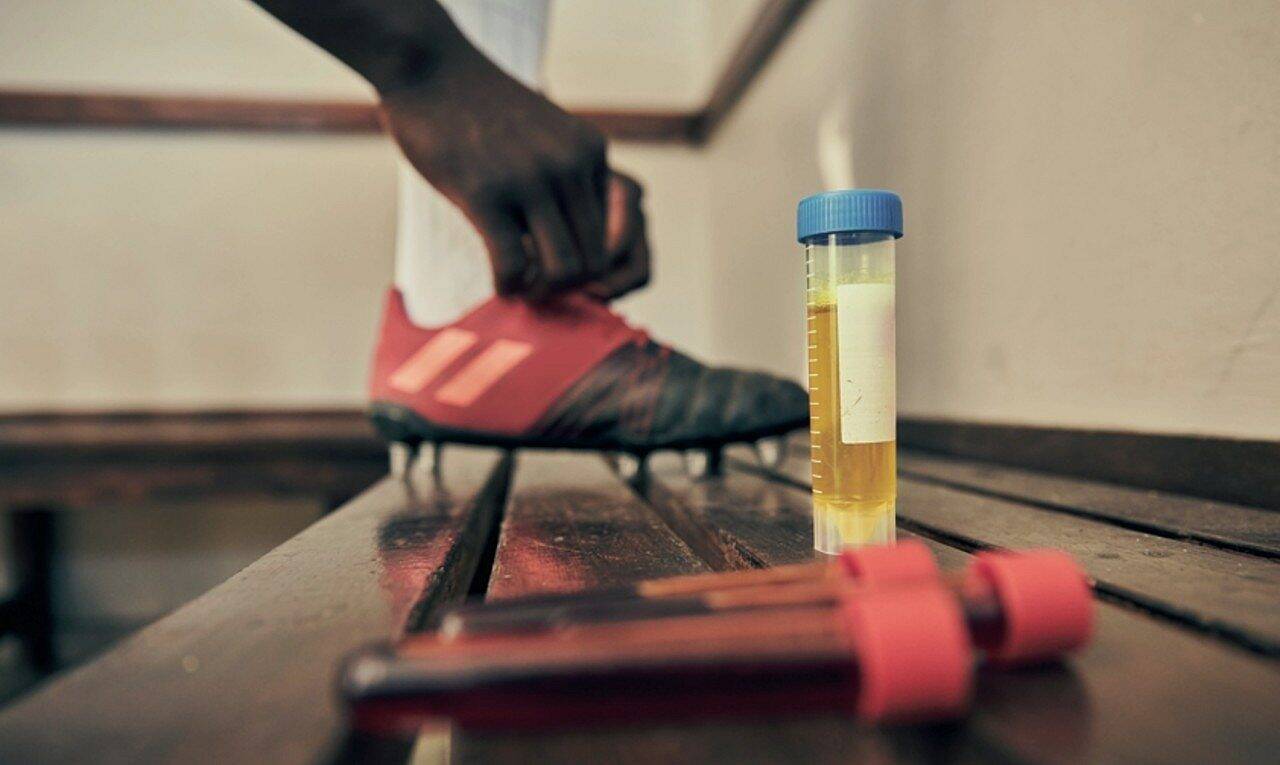
The Tunisian team’s poor performance at the World Cup suffered a further setback following revelations that several athletes, including some who play in the United Kingdom, showed traces of a banned substance in doping tests.
Sources close to the investigation revealed that at least eight members of the North African team, which surprisingly changed coaches after the first game, had atypical results for clenbuterol. This substance is known to relax the lung airways and is listed as banned by the World Anti-Doping Agency (WADA).
However, subsequent investigations conducted by authorities indicated that the detection of the substance was likely the result of food contamination, specifically the meat consumed by the team at their training base in Mexico, and not an attempt to improve sporting performance.
The clubs of the players involved have already been notified about what happened. Despite the notification, the chances of athletes facing additional sanctions are considered remote.
During the tournament, Tunisia had a very complicated participation, suffering significant defeats: a 5-1 score against Sweden on June 15, 4-0 against Japan on June 21 and a 3-1 result against the Netherlands on June 26.
Anti-doping tests on at least eight Tunisian players revealed the presence of a banned substance, but the names of the athletes involved have not been publicly released.
After the defeat to Sweden, the Tunisian team made history as the first country to replace its coach after just one World Cup match, with the departure of Sabri Lamouchi, who had previously coached Nottingham Forest and Cardiff City.
The test results, released progressively throughout the competition, may have influenced the team’s performance. Clenbuterol is often used by bodybuilders to reduce body fat and preserve lean muscle mass, and in some nations, such as Mexico, it is used as a growth promoter in beef animals, aiming to increase livestock volume.
There is a documented history of athletes testing positive in Mexico after unknowingly eating contaminated meat. A notorious case occurred at the 2011 Gold Cup, where five Mexican players were caught, removed from the competition, but later cleared after the Mexican Football Federation and WADA confirmed food contamination.
In 2011, at the U17 World Cup, also held in Mexico, a surprising 109 athletes tested positive for clenbuterol. FIFA and WADA decided, at the time, not to proceed with any proceedings, given the strong evidence of widespread contamination.
The Mexican team, which ended up winning the tournament, was declared doping-free in all anti-doping tests carried out, as its athletes adopted a diet based on fish and vegetables before the start of the competition.
In 2022, WADA issued a crucial technical letter, establishing that the detection of clenbuterol in concentrations lower than 5 ng/mL in urine should be classified as an Atypical Finding (AR), and not as an Adverse Analytical Finding (AAR), which implies greater severity. In these scenarios, an investigation is conducted to verify whether the presence of the substance is due to contaminated meat. If this hypothesis is confirmed, no further disciplinary action is taken, offering a clear path to innocence for the Tunisian players.
During this same period, England were preparing to travel to Mexico for the round of 16 game against the hosts, in Mexico City. The English Football Association (FA), however, takes a precautionary measure by taking its own chefs to tournaments, ensuring that all food consumed by the delegation complies with strict safety and quality standards.
FIFA chose not to comment on the case. The Tunisian Football Federation, in turn, did not respond to requests for a statement.



