
New research reveals two giant planets with a density less than cotton candy and questions star formation theories
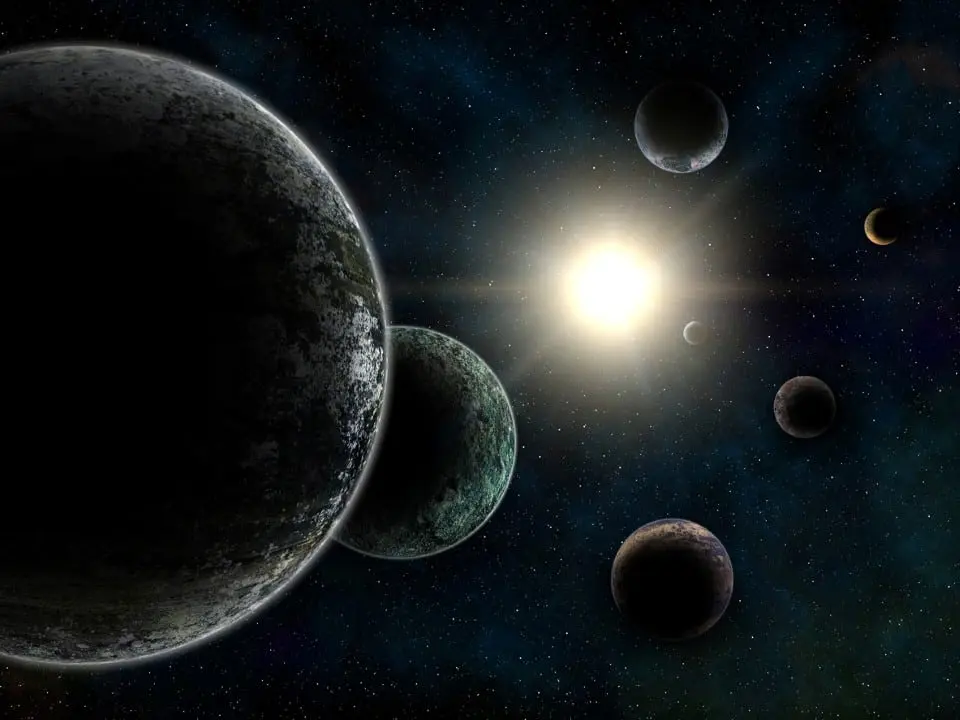
The universe continues to surprise astronomers with findings that defy established logic. Recently, the confirmation of the existence of two gas giants, orbiting a distant star, aroused great interest in the scientific community. These peculiar planets, whose density is less than that of cotton candy, force researchers to reevaluate current theories about planetary evolution.
The revelation of worlds with exceptionally low density
The most notable aspect of these celestial bodies is their extremely low density, which makes them less consistent than cotton candy. This unusual feature calls into question traditional models of core accretion, which describe how large gaseous envelopes are formed around a solid core. The recorded data shows some of the lowest densities ever identified for exoplanets, adding them to a rare category of “super-puffs” or inflated planets.
This phenomenon suggests that intense heat can expand the outer layers of these planets to the maximum. Such expansion creates gas giants with immense volumes but surprisingly low mass, forcing astrophysicists to review fundamental concepts about how planets develop and evolve in distant galaxies.
Understand the case: Unprecedented observation reveals giant exoplanets forming in the Wispit 2 system, 437 light-years away
Innovative methodology for detecting gas giants
The discovery of these exoplanets was possible through detailed analyzes of variations in the transit of celestial bodies. An international collaboration of scientists used advanced telescopes to capture signals indicating the presence of these worlds. The detailed study, led by researcher Georgina Dransfield and published in June 2026 in a renowned international scientific journal, brought to light these new exoplanetary systems and their unique cosmic structures.
The planetary transit method involves observing the small drop in a star’s brightness when a planet passes in front of it. With this precise technique, astronomers were able to determine the orbital periods of each of the gaseous worlds. Continuous monitoring of gravitational perturbations between planets has allowed the collection of crucial data about their masses and the characteristics of their atmospheres.
Full coverage: Latest News (EN)
The colossal dimensions of the exoplanets TOI-791 b and TOI-791 c
The two newly discovered planets are impressive for their gigantic proportions, comparable to our own Jupiter. The first of them, called TOI-791 b, demonstrates a size almost identical to that of the largest planet in our solar system. This finding illustrates the possibility of a colossal planetary radius, even when the amount of compact matter inside is minimal.
The second gas giant, TOI-791 c, is even larger and has a significantly longer orbital cycle. The presence of a pair of celestial bodies with such characteristics offers a unique opportunity to investigate orbital dynamics and long-term stability in stellar systems beyond our own.
- Exoplanet Details:
- TOI-791 b:Radius 0.993 radius of Jupiter; orbit of 139.29931 days.
- TOI-791 c:1.155 radius of Jupiter; orbit of 232.01570 days.
The role of the star TOI-791 in the enigmatic planetary expansion
The host star, known as TOI-791, plays a key role in maintaining these planets’ inflated atmospheres. Positioned in an area considered strategic, it emits stellar winds and radiation that interact directly with the gas that makes up the planets’ atmosphere. Studying this radiation is vital to uncovering how distant suns shape the atmospheric layers of the planets that orbit them.
More on this story: Comet 3I/ATLAS shows interstellar orbit data on September 11
Furthermore, observation of the main star is crucial to mapping the exact cycles of cosmic transit. This in-depth analysis is the basis for new theories about how planetary systems with long orbital periods manage to survive without suffering severe gravitational vacuums or significant disruptions in their original planetary alignments, a mystery that still intrigues scientists.
Reassessment of theories on planetary formation and evolution
The remarkably low density of the exoplanets TOI-791 b and TOI-791 c drives a profound revision in theoretical models of giant planet formation. The core accretion theory, for example, suggests that a giant planet forms from the accumulation of solid material that then attracts gas. However, “cotton candy” planets like these indicate that alternative processes, or extreme environmental conditions, may be at play. The added value lies in the way in which the existence of these super-puffs forces the scientific community to consider less conventional scenarios, such as the rapid formation of gaseous atmospheres in environments of intense stellar radiation or the influence of planetary migration in very early stages, resulting in planets that absorb large amounts of heat and expand significantly.
These findings suggest that heat radiated by the star can massively expand the outer layers of planets. This leads to the creation of gas giants with an impressive volume but a surprisingly light mass. Such characteristics modify current theories about galactic planetary evolution, opening the way for new hypotheses.
Learn more: 3I/ATLAS reveals interstellar trajectory from September 11 data
- Planet densities:
- TOI-791 b:0.038 grams per cubic centimeter
- TOI-791 c:0.047 grams per cubic centimeter
Next steps in exploring and studying these distant systems
Continuity of research is essential to improve knowledge of contemporary astrophysics. With the confirmation of these exoplanets, the next steps include planning new advanced atmospheric observations. These future investigations will seek to better understand the composition and dynamics of these inflated atmospheres, using state-of-the-art instruments that can provide detailed spectra of light.
The continued study of stellar systems like TOI-791 is crucial to unlocking the mysteries of planetary formation and evolution across the cosmos. Data collected from future observations will help refine theoretical models and possibly reveal new mechanisms for how such unusual planets can develop and exist in our vast universe.
More news in Latest News (EN)
See more → Hull City holds Chelsea to 2-2 draw as João Pedro scores
 Redmi 17 5G arrives with 7,500 mAh cell at $249 global price
 Comet 3I/ATLAS shows interstellar orbit data on September 113I/ATLAS reveals interstellar trajectory from September 11 dataLos Perros del Mal seize AAA world trios championship at Triplemania 34 in Las VegasLegisladores de Iowa proíbem programas de renda garantida, gerando críticas sobre ‘guerras ideológicas’ e autonomia localProminent actresses discuss extended celibacy and new dating approaches in candid interviewsJoão Pedro scores to level 2-2 for Chelsea in Premier League
 Norris takes historic Spanish GP pole as Bortoleto grabs 12th
 Apple unveils iPhone 18 Pro to replace aging iPhone 15 ProFrench authorities probe potential sabotage in passenger train derailment near Rouen, injuring dozens
 Pacific El Niño warms waters by 2 degrees before 2027 winter
More news on Mix Vale
- 1Tooro kingdom mourns King Oyo as news anchor Edward Kijanangoma assumes royal mantle in Uganda
- 2Nepali hydropower tunnel collapse traps six; air pocket discovery sparks hope amid arduous rescue efforts
- 3T-Mobile sets $5 monthly fee for one number on two iPhones
- 4Moacir Rosa defends 20-hour fasting method for weight loss
- 5Daniel Magnoni warns shoyu packs 900 mg of sodium in one spoon
- 6Inca projects 17,000 new cervical cancer cases across Brazil
- 7Bromidrosis signals diabetes and renal failure in patients
- 87 daily habits slow aging and cut Alzheimer risk in adults
- 9USP links 500 ml of daily orange juice to lower blood sugar
- 10Lucas Jaques de Oliveira lists 6 illnesses linked to pigeons