World Seabird Day is celebrated annually on July 3, a date that commemorates the disappearance of the giant moose in 1844. This celebration is dedicated to the tireless birds that inhabit the oceans, and also marks the last time that the giant moose, a flightless species from the northern hemisphere, was sighted. Its extinction, caused by human action, today serves as a blunt warning about the consequences of intervention in the environment.
The commemorative date, therefore, encourages reflection on the approximately 350 species of seabirds that have adapted to oceanic life, and which are currently among the most threatened vertebrates globally. In this scenario, penguins gain prominence, not only because of their charismatic and unmistakable image, but also because they symbolize the severe pressures that these birds face in the face of current environmental transformations.
More than a simple nostalgic memory, the celebration aims to expand knowledge about these creatures and inspire effective measures for their preservation. Each individual, no matter how small their contribution, has the ability to act to safeguard these important species.
Within this panorama, penguins play a central role. Almost two-thirds of all penguin species are on the IUCN (International Union for Conservation of Nature) Red List. The list categorizes species into different levels of threat, from vulnerable to critically endangered, highlighting the urgency of the situation and reflecting problems such as overfishing, pollution and global warming, factors that put their existence at risk.
Penguins, albatrosses, cormorants, gulls and pelicans make up this remarkable group of seabirds. Although the eggs hatch on land, most of these birds dedicate more than 90% of their lives to the sea, traveling across extensive territories in search of food and performing essential ecological functions. The sad episode of the extinction of the giant alca serves as a strong reminder: it is essential to intensify the protection of species that face increasing difficulties in increasingly fragile marine ecosystems.
Global efforts to preserve penguins
The condition of penguins and other seabirds acts as a direct indicator of the health of the oceans. The adversities they face reveal global challenges, such as climate change, overfishing and pollution that affects both marine environments and coastal areas.
The degradation of their natural habitats and the introduction of predators, such as cats and rats, by humans have significantly impacted the colonies that nest on land. In this way, penguins not only fight a battle for survival in the waters, but also in their breeding grounds, where they face dangers that are often underestimated, but which persist continuously.
For decades, the Global Penguin Society has been tirelessly dedicated to ensuring the continuity of the 19 species of penguins that reside in the southern zones of the planet. Its activities range from in-depth scientific research to the establishment and improvement of protected areas, the recovery of degraded ecosystems and the implementation of environmental education initiatives.
The entity also encourages community engagement on a local and global scale, in addition to defending the inclusion of protective measures in laws and public policies. The objective is to ensure that the safeguarding of penguins goes beyond the scientific field and takes the form of practical and effective actions.
The projects developed cover territories such as Argentina, Chile, New Zealand, South Africa and Antarctica. In these places, synergy between researchers, government authorities and social entities makes it possible to apply solutions that are based on the most robust scientific evidence.
As a result of this collaborative effort, millions of hectares of marine protected areas have been established and consolidated. The actions also resulted in conservation policies and educational programs that annually reach thousands of individuals in different regions of the southern hemisphere, fostering a deeper understanding of the relevance of these animals and the fragility of their ecosystems.
Intriguing features and current threats to penguins
Penguins, in particular, have a set of unique characteristics and are exposed to increasingly greater dangers:
- Ancestral origin:The oldest fossil record of penguins dates back to around 55 million years ago. Their ancestors, who were birds capable of flight, lived on the planet between 140 and 65 million years ago.
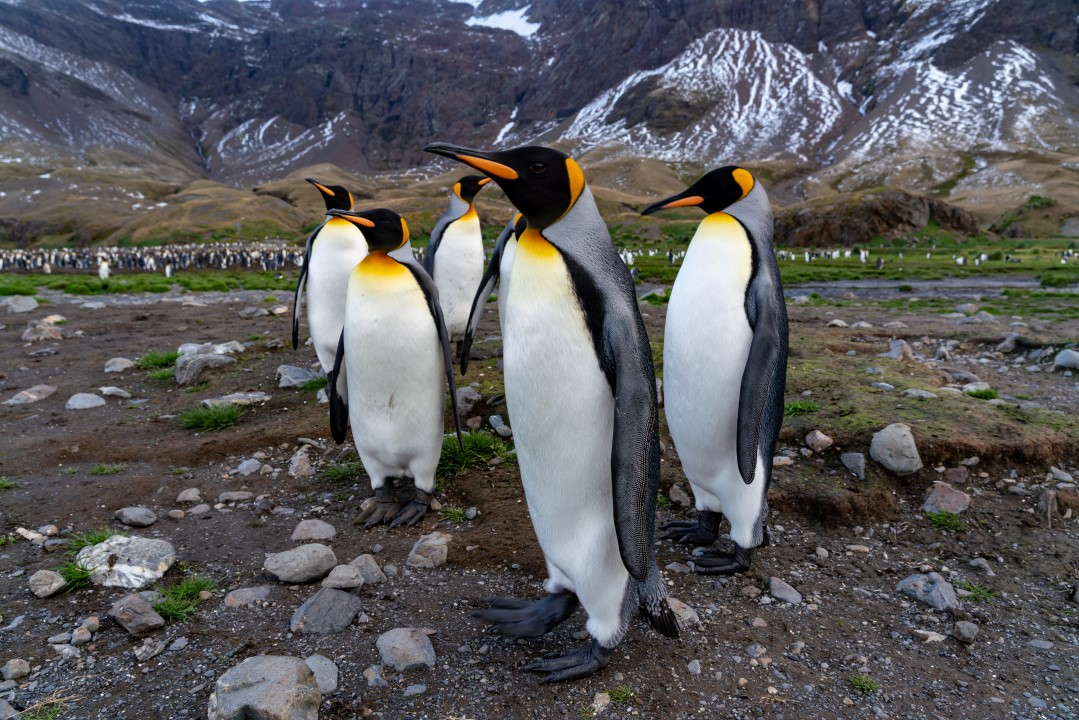
- Extended playback:The king penguin has one of the longest reproductive cycles among seabirds, lasting up to 15 months, as its chicks remain with their parents for a long period.
- Diving ability:The emperor penguin demonstrates a remarkable capacity, managing to reach depths of up to 500 meters and remain submerged for 23 minutes without breathing.
- Ultraviolet perception:Penguins are able to see in the ultraviolet spectrum, which allows them to identify a wide range of colors underwater and hone in on locating their prey.
- Adapted plumage:Their feathers, naturally waterproof, together with a layer of air trapped close to the body, ensure that they remain dry and maintain their body temperature in freezing waters, close to the freezing point.
- Distinctive vocalization:In colonies that can bring together hundreds of thousands of individuals, many species identify their partners and offspring through unique vocalizations, functioning as a particular “sound signature”.
- Threat Status:Around two-thirds of penguin species are included on the IUCN (International Union for Conservation of Nature) Red List, due to dangers such as climate change, unsustainable fishing, pollution and the deterioration of their habitats.
The impressive migration of penguins: routes and challenges
Thousands of Magellanic penguins annually begin an extraordinary journey from Punta Tombo, in Argentine Patagonia, towards the vast expanses of the South Atlantic. This natural reserve has established itself as a notable example globally, housing the largest continental colony of this species on the planet, with approximately 500,000 individuals arriving on its beaches to nest. The site, with 210 hectares in the province of Chubut, is a crucial sanctuary for marine fauna and a model of preservation that attracts interest from both the scientific community and ecotourism.
The relevance of Punta Tombo was emphasized not only by its ecological importance, but also by recent events, such as the historic court case that resulted in the conviction for the destruction of 175 nests during the 2021 breeding season. This verdict established a legal milestone in environmental protection. The protected area aims to maintain nesting sites and safeguard adjacent marine fauna, promoting conscious observation and environmental education activities.
With the ability to travel more than 11,000 kilometers in each migratory cycle, Magellanic penguins leave the Argentine coast to reach distant beaches in Uruguay and even in southern Brazil. Using satellite transmitters, researchers are able to map their travel routes, identify feeding areas and collect essential data to ensure their protection.
The annual migratory movement begins in April, shortly after changing plumage. During this period, penguins enter the open sea, transforming the ocean into their main environment. In an interval of just one year, they can cover a distance of more than 11,000 kilometers, overcoming large stretches with remarkable vigor.
Some individuals have been recorded traveling up to 16,000 kilometers in a single season, advancing an average of 170 km per day. Continuous monitoring not only highlights the magnitude of their movements, but also the multiple challenges they face: variations in sea currents, regions with little food availability and the dangers arising from human activities in the South Atlantic.
Before entering the ocean, penguins are equipped with tiny satellite transmitters, which make it possible to track each stage of their journey. Approximately 70 specimens from eight different colonies in the provinces of Chubut and Río Negro have already been monitored by the Global Penguin Society.