
After Cristiano Ronaldo and Neymar, who will be the next star to be eliminated from the 2026 FIFA World Cup? Messi, Mbappé and Haaland are still alive


The world of international football has repeatedly witnessed the cruelty inherent in the FIFA World Cup, a stage where even the sport’s greatest icons can see their dreams of glory shattered. The competition, known for its unpredictable emotions, has already presented fans and sports lovers with the elimination of legends such as Cristiano Ronaldo and Neymar in past editions, reinforcing the idea that no star is immune to falling.
As the world prepares for the 2026 edition, which will be held in the United States, Mexico and Canada, an inevitable question hangs in the air: which of the current superstars, such as Lionel Messi, Kylian Mbappé or Erling Haaland, will be the next to face the harsh reality of an early elimination? Recent history suggests that the journey to a world title is one of the most challenging in sport, full of pitfalls and surprises.
Cristiano Ronaldo’s bitter farewell to the Portuguese national team
The 2022 World Cup in Qatar marked a particularly painful chapter for Cristiano Ronaldo and the Portuguese team. The star, who had already won several titles with clubs and with Portugal in the European Championship, was looking for the only trophy missing from his vast collection: the World Cup. Expectations were high, but reality was relentless.
Portugal advanced to the quarter-finals, but Ronaldo’s journey through the knockout stage was marked by a controversial decision by coach Fernando Santos, who left him on the bench. The team ended up being surprised by Morocco, in an exciting match that ended in a 1-0 African victory. The image of Cristiano Ronaldo leaving the field in tears after the final whistle became a symbol of the frustration of a generation and the end of a cycle without the much-desired world title. It was an outcome that highlighted the difficulty of staying at the top in such a demanding tournament.
The interruption of the Brazilian dream and Neymar’s journey in the World Cup
Neymar Jr., in turn, represented the hope of an entire nation in the quest for a sixth world championship, a feat that Brazil has not achieved since 2002. The Brazilian team arrived in Qatar as one of the big favorites, displaying offensive and engaging football during the group stage, despite an initial scare with the injury of number 10. The expectation was that, with his return, Brazil would become unstoppable.
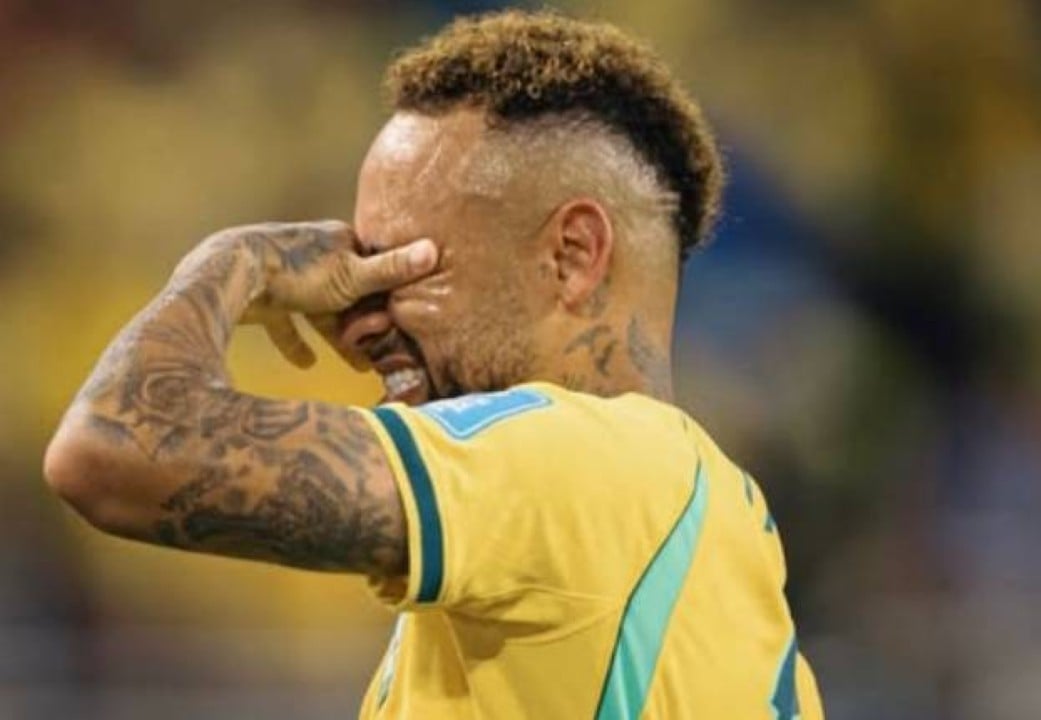
However, Brazil’s journey was abruptly interrupted in the quarter-finals, in a dramatic clash against Croatia. After opening the scoring in extra time with a goal from Neymar, who equaled Pelé as the team’s top scorer in official games, the team conceded a draw at the end of the second extra time. The decision went to penalties, and Brazil was overcome, being eliminated from the competition. The defeat represented a heavy blow for Neymar, who, once again, saw his six-year dream slip away, reinforcing the curse of 20 years without the title.
The relentless dynamics of the World Cup for the stars
The history of the World Cup is a testament to its relentless nature, where individual brilliance, however intense, does not always translate into collective success. What makes the World Cup different from leagues and club tournaments is the “all or nothing” nature of knockout games, where one mistake, one tactical failure or one unfortunate day can put an end to months, even years, of preparation. This is the element of value that many superficial analyzes fail to capture: the World Cup is not just a test of skill, but of resilience and the ability to withstand unimaginable pressure.
Over the decades, several players who were considered the best of their generation have failed to win the world title. Big names like Johan Cruyff, Eusébio and Zico, despite their brilliant careers and unquestionable legacies, have never lifted the trophy. These stories serve to contextualize the fates of Cristiano Ronaldo and Neymar, showing that elimination is a common, albeit painful, facet of the trajectory of many football giants. The unpredictability and difficulty of winning multiple knockout games against high-level teams make the tournament a real challenge even for the most talented.
The next targets: Messi, Mbappé and Haaland in the 2026 World Cup
With memories of the last editions still fresh, the eyes of the world are already turning to the 2026 FIFA World Cup. The next edition will bring with it pressure and expectation on three of the biggest names in contemporary football: Lionel Messi, Kylian Mbappé and Erling Haaland. Each of them comes with a unique background and set of challenges, but they all share the ultimate goal of shining on the global stage.
Messi, now world champion, will have the rare opportunity to defend his title. Mbappé, who already lifted the cup in 2018 and was runner-up in 2022, is looking to consolidate his reign. Haaland, in turn, has not yet had the chance to showcase his talent at a World Cup, which puts him under even greater scrutiny. The competition will be a battleground for defining legacies and will inevitably produce new stories of triumph and, for some, painful elimination.
Expectations and challenges for the big names in 2026
The next World Cup will present different scenarios for these stars, with challenges ranging from physical management to performance under the pressure of defending or winning an unprecedented title.
- Lionel Messi:After his consecration in 2022, Messi’s main challenge will be defending his title, a very rare feat in the history of football. Advanced age in high-level sport will also be a crucial factor for your performance, requiring energy management and impeccable physical preparation. The search for an even greater legacy, becoming the only one to defend the title as captain, could be an extra motivation.
- Kylian Mbappé:The young French striker is hailed as the main successor to Messi and Ronaldo. For Mbappé, the 2026 World Cup is the chance to consolidate his status as the biggest global star. He will be looking for a second championship, which would put him on a legendary level. The pressure to maintain his individual performance and lead France to another title will be intense.
- Erling Haaland:The great expectation surrounding Haaland lies in his debut at the World Cup. Considered one of the greatest goalscorers of his generation, he will have to prove that his talent on the club scene can be replicated in a national team tournament. The ability to lead Norway, if qualified, to significant results and adapt to the pace and pressure of a World Cup will be the ultimate test of their rise in football.
The 2026 FIFA World Cup scenario: a new era of challenges
The 2026 edition will mark a turning point in the history of the FIFA World Cup, introducing an expanded format with 48 participating teams, distributed across three host countries: the United States, Mexico and Canada. This significant change promises to further intensify competition, increasing the number of games and, consequently, the physical exhaustion of athletes. The logistics of traveling between countries will also be a factor to consider, directly impacting the teams’ performance.
With more teams in contention, the probability of “zebras” and surprises increases, which, in turn, increases the risk of unexpected eliminations for football’s great powers. The expansion of the tournament means more decisive games and less recovery time between them, creating a scenario where squad depth and energy management capacity will be crucial. This new era could make the line between success and downfall even more blurred for the world’s biggest stars.
As preparations for 2026 progress, expectations surrounding Messi, Mbappé and Haaland grow exponentially. The stage is set for another football spectacle, where passion and rivalry meet the harsh reality of the sport. While the world is rooting for the biggest stars to shine, the history of the World Cup reminds us that elimination is a real possibility for anyone, making the path to glory even more fascinating and uncertain.





