
British fighters intercept Russian plane in the Norwegian Sea and warn of unsafe conduct


UK defense forces intercepted a Russian maritime patrol plane after the aircraft approached an aircraft carrier strike group in Norwegian waters several times. The British Ministry of Defense (MoD) reported on the incident, describing the behavior as dangerous and unnecessary.
Identified as a Bear-F, the Russian plane flew low and approached the British aircraft carrier HMS Prince of Wales. According to information from the MoD, the military aircraft launched approximately ten sonobuoys into the sea last Thursday.
In an official note, the Defense ministry categorized Moscow’s attitude in the Norwegian Sea area as “unsafe and unprofessional”, which accentuates the tension in international air interactions.
This incident comes just weeks after the boarding of a Russian tanker by British marines in the English Channel. The top leader of the United Kingdom’s Armed Forces had previously warned that the current risks to the country represent the greatest threat since the Cold War period, which highlights the seriousness of such encounters.
The United Kingdom’s Aircraft Carrier Strike Group, which comprises 1,500 British troops, is positioned near Iceland and operates under NATO supervision. The composition of this naval force includes the aircraft carrier HMS Prince of Wales, the Type 45 destroyer HMS Duncan, as well as F-35 fighters, Merlin and Wildcat helicopters, receiving logistical support from the refueling tanker RFA Tidespring.
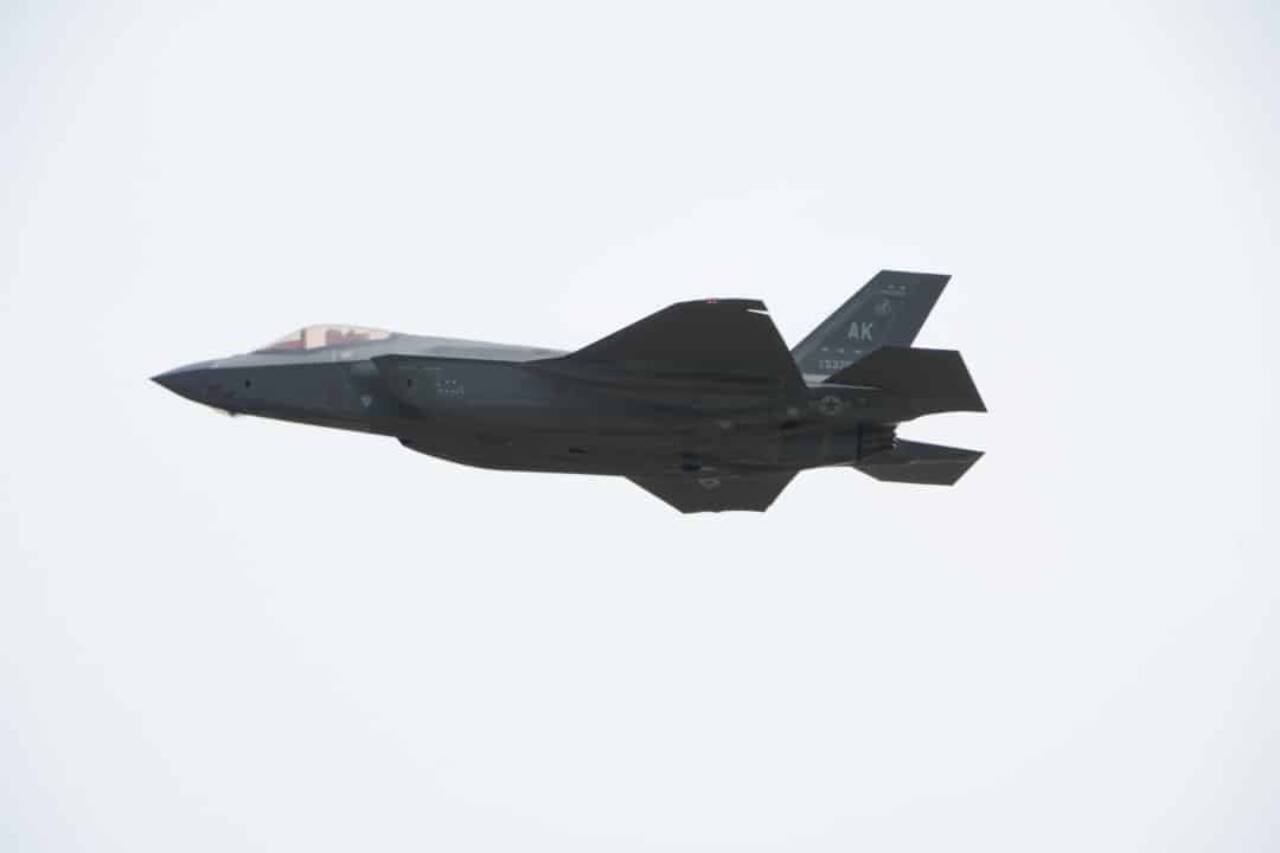
The current deployment represents a historic milestone, as it is the first occasion on which NATO has carried out airspace policing operations using an aircraft carrier belonging to a European nation.
The monitoring devices, supposedly launched by the Bear-F plane, are equipment that float on the sea surface and use sonar technology to identify submarines and other submerged vessels.
UK forces attempted to establish contact with the Russian aircraft via international communications frequencies, but the pilots did not respond.
Due to the lack of communication and the continuous approach, two F-35 fighters took off from the aircraft carrier Prince of Wales to escort the Bear-F and guide it away from the Attack Group.
Defense Secretary Dan Jarvis visited British troops aboard the flagship HMS Prince of Wales last weekend.
During the inspection, Jarvis stated that the current situation is one of increasing danger and uncertainty, and that operations like this, with the support of allies and partners like Iceland, strengthen NATO’s deterrence and defense capacity.
He also highlighted to the media that the threat from Russia is constant and comprehensive, acting in all domains: underwater, maritime, land, air, space and cyber.
In June, the Chief of the Defense Staff, Sir Richard Knighton, had given an interview warning that Russia was “investigating, challenging and testing Western defenses”, “raising the risks and crossing a subtle threshold”.
In turn, NATO issued a warning statement suggesting that Russia could be ready to use military force by the year 2030.
The previous week, the British government had made public its long-awaited defense investment plan. The then Prime Minister, Sir Keir Starmer, had proposed a £15 billion increase in military costs, with part of this financed by reductions in other budgetary spheres.
However, both opposition parliamentarians and members of the armed forces expressed criticism of the volume of investment suggested, stating that it would be inadequate to face the scale of the Russian threat.
In June, John Healey and Al Carns left Sir Keir’s government because they disagreed with a previous version of the plan, which ended up contributing to the prime minister’s subsequent downfall. Labor Party Defense Secretary James Cartlidge said the Russian maneuvers highlighted the urgency for his party to detail how it plans to fund its “chaotic” Defense Investment Plan.
According to Cartlidge, only by prioritizing investments in defense to the detriment of a more comprehensive social welfare state will the government be able to guarantee essential resources for the national armed forces.



