
Disastrous mistake by goalkeeper Freese allows the Belgium team to extend the score against the United States


The United States national team saw its dream of advancing at home in the 2026 FIFA World Cup suffer a severe blow on the Seattle Field turf. During the round of 16 clash, the host team lost 3-1 to Belgium in the second half. The moment that complicated the American situation once and for all involved a serious failure in the defensive system, culminating in a disastrous shot for goalkeeper Freese, who threw a bucket of cold water into the packed stands.
The weight of individual error in the construction of the third European goal
In the 11th minute of the second half, a long throw towards De Ketelaere forced the American archer to leave the penalty area. Freese tried to anticipate the play, but caught his boot on the pitch and lost possession of the ball to the opposing attacker. With the goal completely wide open, Hans Vanaken followed the move and shot straight into the empty goal. Defender Ream even stretched out in an attempt to block the shot, but the ball crossed the fatal line, consolidating the Belgian advantage in a cruel way for the home team.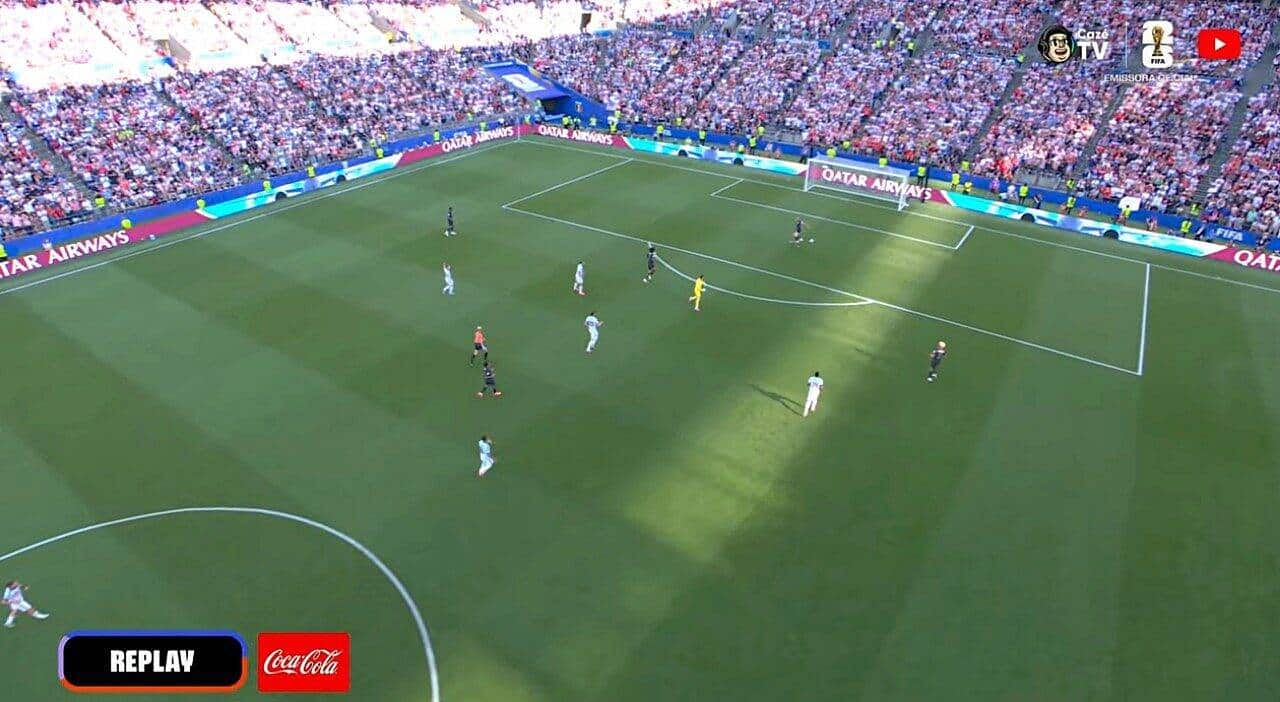
The current script contrasts sharply with the history of knockout matches between the two nations. At the 2014 World Cup, also in the round of 16, American goalkeeper Tim Howard broke the all-time record for saves in a single match to hold back Belgium’s attack, forcing extra time at the time. Twelve years later, it is precisely a technical failure in the same position that paves the way for the hosts’ likely elimination from the tournament.
Injury to the main articulator worsens the American technical crisis
Soon after conceding the third goal, the coaching staff had to deal with the loss of their main reference in the offensive sector. In the 13th minute, Christian Pulisic felt the impact of a strong tackle with Tielemans and was unable to continue running on the field. The number 10 left the pitch limping and was caught on camera crying on the bench, being immediately replaced by Berhalter. The absence of the captain momentarily silenced the stadium, which soon after started shouting the name of the country in unison to try to push the remaining players.
Main movements that defined the rhythm of the second stage
The restart of the match after the break concentrated the most decisive actions of the match, alternating wasted chances by the hosts and the absolute lethality of the European attack at crucial moments.
- In the 6th minute, Pulisic fell at the edge of the area after contact with Tielemans, but the referee ordered the game to continue, generating much anger from local fans.
- In the 8th minute, Adams found Freeman in a great position inside the box, but the error in control cost him a clear chance to reduce the score.
- In the 11th minute, Freese’s mistake outside the area resulted in Vanaken’s goal, extending the score to 3-1.
- In the 13th minute, the forced substitution of Pulisic for Berhalter disrupted the home team’s creation scheme.
- In the 20th minute, the Belgian coach renewed his offensive momentum by replacing Doku and Lukaku with Lukébakio and De Ketelaere.
- In the 24th minute, De Ketelaere had already made his mark earlier by beating Ream high up, completing a precise cross from Trossard.
The tactical clash between Mauricio Pochettino and Rudi Garcia’s schemes
The configuration of the teams showed different proposals from the opening whistle. Belgium, set up by Rudi Garcia in a classic 4-3-3, bet on the quick transition and the width generated by Trossard on the wings. This structure allowed the Europeans to exploit the spaces left by the American defense when attacking. On the other side, the 3-5-2 designed by Mauricio Pochettino depended heavily on creativity in midfield to use the wingers in depth. Without its main playmaker on the field in the second half, the United States team began to rely on forced crosses and direct connections, making it easier for the opposing defense to hit.
The challenge of seeking an unprecedented turnaround in the final minutes
Overturning a two-goal deficit in the final stretch of a knockout game requires a level of precision that the home team has yet to demonstrate throughout the competition. While the Belgians manage possession of the ball and use the experience of their defenders to run out the clock, the Americans are racing against time and against their own accumulated physical wear and tear. Maintaining this result guarantees the European team’s passage to the quarter-finals, leaving the hosts with the frustration of an early fall in front of their own fans at the World Cup.



