
Donald Trump reveals that he asked FIFA to cancel his red card and questions Brazilian referee

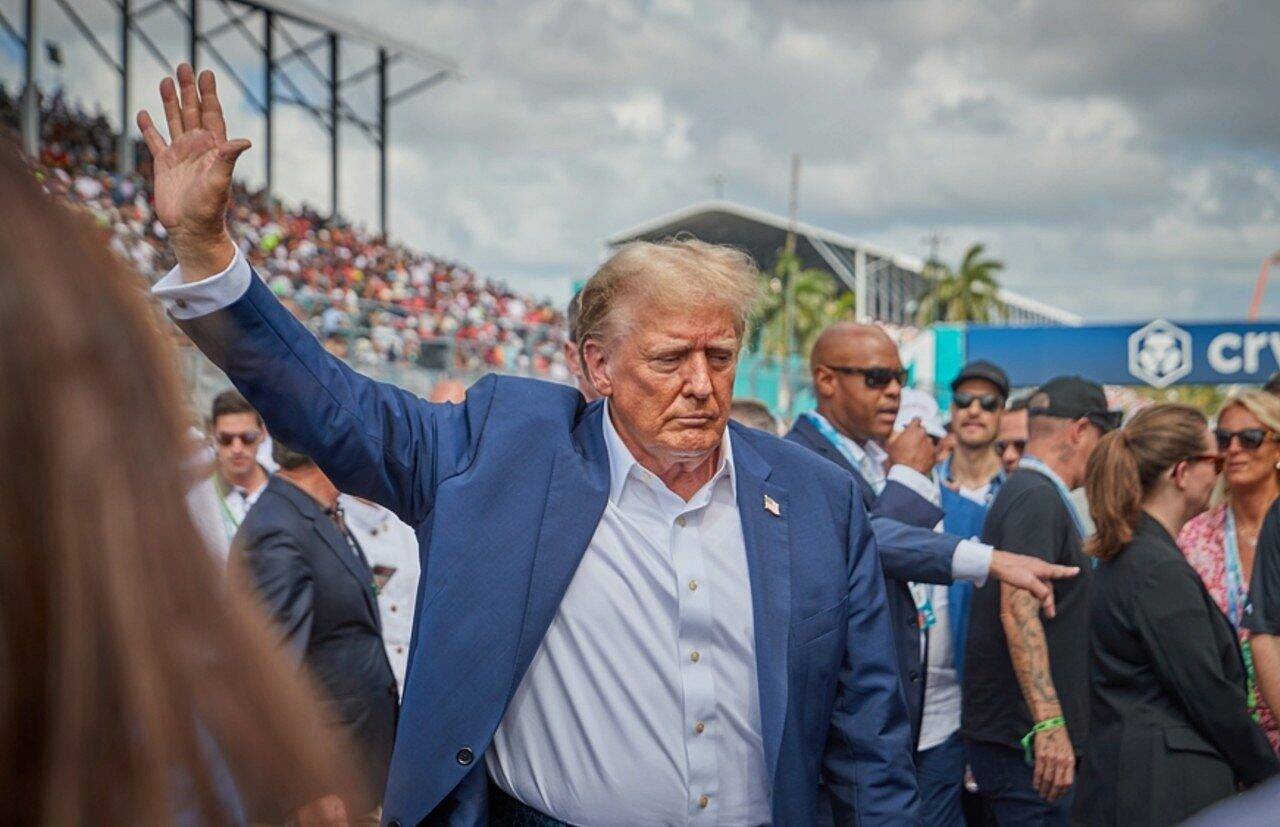
Donald Trump, President of the United States, confirmed on Monday (6) that he had asked the International Football Federation (FIFA) to review the red card given to athlete Folarin Balogun, from the American team, during the recent World Cup clash against Bosnia Herzegovina. The intervention of a head of state in a sporting decision of such magnitude sparks discussions about the autonomy and integrity of international competitions.
During a press conference held in the Oval Office of the White House, Trump expressed his disagreement with the foul being called by what he called a “horrible” referee, while at the same time rejecting allegations of political interference in the tournament.
The American president defended his action, stating: “All I did was ask for a review, because I didn’t think it was foul. I didn’t tell FIFA what to do. The committee made the right decision. It’s unfair to exclude one of the best players from the USA.”
The refereeing of the game was in charge of the Brazilian Raphael Claus.
Raphael Claus, after analyzing the move by VAR, decided to expel Balogun in the 18th minute of the second half. The striker was punished with a red card for stepping on opponent Muharemovic’s ankle.
Following his criticism of the Brazilian referee’s performance on the field, the American president raised suspicions about possible inconsistencies linked to Claus’ professional history.
“This referee is a little suspicious. If you check his background… I don’t want to say that, because I don’t like to create controversy, but very suspicious, as if I could show you the history. He made a call that no one could believe, you know? Even people on the other side”, declared Trump.
FIFA, when nullifying the effects of Folarin Balogun’s red card, used article 27 of the entity’s Disciplinary Code as a basis. This article specifies that a “judicial body may fully or partially suspend the application of a disciplinary measure”, allowing flexibility in specific situations, which could have significant implications for the fairness of the tournament.
Article 27 and the possibility of suspending disciplinary measures
The guidelines in Article 27 of the FIFA Disciplinary Code detail the ability to suspend punishments:
- The decision to suspend, in whole or in part, the execution of a disciplinary measure rests with the judicial body.
- In the case of suspension of the sanction, the punished person is subjected to a period of probation that can vary from one to four years.
- If the individual benefiting from the suspension commits a new infraction of a similar nature and severity during the probationary period, the suspension will be canceled by the judicial body and the original punishment will be applied, without ruling out additional sanctions for the new transgression.
- It is prohibited to suspend disciplinary measures linked to match manipulation.
In its official statement regarding the American striker, FIFA clarified that “if Folarin Balogun commits another infraction of a similar nature and severity during the probationary period (of one year, in his case), the suspension will be revoked and the sanction applied, without prejudice to any additional sanction imposed for the new infraction.”
FIFA President Gianni Infantino confirms Trump’s contact
The president of FIFA himself, Gianni Infantino, confirmed this Monday (6) that he was in contact with Donald Trump regarding the red card.
In a statement, Infantino said: “I regularly speak with the President of the United States about World Cup matters, and in fact received a call from President Donald Trump.”
However, Infantino highlighted the independence and autonomy of the federation’s judicial bodies: “Their independence is essential for the credibility and integrity of football, and must always be respected.”
The FIFA leader also mentioned having informed Trump that “the case [of the red card] would be decided in due course by the competent authorities”.
He added: “I read the decisions of the FIFA Disciplinary Committee when they are published. Sometimes they surprise me. Sometimes I agree with them, and sometimes I disagree. What I always do, however, is respect those decisions and the independence of the bodies that make them.”
Belgian Football Federation challenges revocation of suspension
Previously, the Belgium team, the United States’ opponent in the fight for a place in the quarter-finals this Monday (6), demanded explanations from FIFA about the annulment of the red card.
The Belgian Football Federation formalized an appeal against the reversal of Balogun’s suspension, based on the defense of the principles of “fair play” and the teams’ rights in the tournament. However, FIFA refused the request.
In a statement, the Belgian entity stated that it had not received “neither FIFA’s decision nor any explanation regarding this case”. For the federation, “in these circumstances, there is no other option but to challenge the player’s eligibility for the next match.”
The Belgians maintain that “Article 66.4 of the same FIFA Disciplinary Code clearly provides that a red card (expulsion) automatically results in suspension for the team’s next match, as has been the case with all previous red cards applied during this World Cup”, contradicting the annulment decision.
The Belgian federation also pointed out that the striker’s release contradicts Article 10.5 of the 2026 World Cup Regulations, which establishes the automaticity of the punishment. The Belgians claim that this rule was reiterated by FIFA in official pre-tournament statements and meetings.
Previously, the European Union and UEFA also spoke out criticizing FIFA for canceling the player’s card, which occurred after Trump’s request.
Repercussion of the decision and celebration of Trump and the US coach
On Sunday (5), Donald Trump had even congratulated FIFA for canceling the card.
“Thank you to FIFA for doing what was right and reversing a great injustice!”, expressed the president in his publication.
In a press conference also on Sunday, the coach of the North American team, Mauricio Pochettino, expressed his satisfaction with the decision.
“We were punished enough against Bosnia-Herzegovina by playing with one less for 30 minutes, in a completely unfair decision. And not just because I am the coach of the United States national team and I need to defend my side. It’s because I believe that 99.9% of people agree that that red card was unfair”, argued the Argentine coach.



