
Mix Vale Opinion: The usual Brazil, the battle at Azteca between Mexico and England and Haaland shining in the 2026 World Cup


On a Sunday of intense analysis about the 2026 World Cup, dated July 5th, the world football scenario presents stark contrasts in the reactions of fans and experts. While Mexico’s elimination from the tournament, after a fierce clash against England at the Azteca Stadium, generated a feeling of national pride due to the team’s unquestionable dedication, the Brazilian team’s exit, against Norway, reignited debates about the lack of commitment and tactical planning. On the same global stage, Erling Haaland’s brilliance continues to redefine the role of a modern center forward, demonstrating a determination that serves as a ruler for football’s elite.
The epic battle at Azteca: Mexico and England in a memorable clash

The Azteca Stadium witnessed, at the turn of last Sunday to Monday, precisely at a quarter past midnight in official Brasília time, one of the most vibrant clashes of this World Cup. Mexico and England played a match worthy of the final, where determination and dedication were the protagonists. Despite the 3-2 defeat, which ended Mexico’s long unbeaten run at their legendary stadium in World Cups, the host team’s performance captivated everyone. From the opening whistle, the Mexican team set a frenetic pace, incessantly seeking a goal and challenging the powerful English team. Every tackle, every tackle, every run was a testament to the desire to represent the nation with honor.
The match unfolded like a true strategic war, with both teams giving 100% of themselves. The intensity was palpable, and the tone of the game remained high every minute. Even with one less player on the field, due to an expulsion that surprised many in the second half, England did not back down, showing remarkable resilience by managing to extend the score and hold on to the advantage until the end. Mexico, in turn, took advantage of their numerical superiority to press even more, creating several opportunities and forcing the English goalkeeper to make spectacular saves. Despite the result, the Mexican fans present and the public at home did not spare applause, recognizing the total dedication of their athletes. There was no bitterness in the defeat, but rather a deep feeling of pride in having seen a team fight until the last breath, symbolizing the fierce soul of local football. The performance, although not victorious, resonated as a reminder of the passion and dedication that sport can inspire, even in moments of farewell.
Brazil and Norway: the disappointment of an apathetic performance
In complete contrast to the vigor demonstrated in Azteca, the elimination of the Brazilian team against Norway left a trail of frustration and deep questions among the population. Expectations, always high when the yellow jersey enters the field, were replaced by a general feeling of disappointment. The team’s performance was described as apathetic, unfocused and without the creativity expected from one of the greatest powers in world football. From the first minutes of the match, the team seemed to lack a clear game plan, resulting in a lack of cohesion between sectors and few effective dangerous plays.
The passivity of Brazilian players, the lack of intensity in marking and the lack of sweat on the field were widely criticized factors. The lack of determination and combative spirit, essential in a World Cup, stood out to those watching. Norway, on the other hand, demonstrated remarkable tactical and physical superiority. The Nordic team, led by its main star, played with intelligence, organization and, above all, with a spirit and dedication that its opponent lacked. The Norwegians controlled the midfield, exploited the weaknesses of the Brazilian defense and capitalized on their chances with two decisive goals, which sealed the victory and classification. Brazil’s defeat was not just a setback on the scoreboard, but a wound to the soul of the fans, who saw a team far from the tradition of struggle and overcoming that has historically marked the team. The difference between the two teams’ performances was one of the most debated points, with Norway praised for its strategy and Brazil criticized for its attitude on the field, which seemed to underestimate the importance of the challenge.
Erling Haaland: the Norwegian comet that lights up the World Cup
Norway’s success in this World Cup cannot be dissociated from the brilliance of its main player, Erling Haaland. Known as “the comet”, the center forward demonstrated unparalleled determination, determination and focus in each match. His performance went far beyond the goals scored; he embodied the dedication and professionalism expected of an elite athlete. Haaland moved incessantly, pressed opposing defenders, created space and, when he had the chance, finished with the precision that made him one of the best in the world in his position. He was the driving force, the tireless engine that propelled the Norwegian team forward with every move.
Haaland’s presence on the field brought not only technical quality, but also a winning mentality that infected his teammates. His ability to lead by example, not to give up on any play and to always be one step ahead of his markers was a crucial differentiator for Norway. In a scenario where Brazilian apathy was so evident, the Norwegian’s commitment served as a powerful contrast, showing what it takes to shine at the highest level of football. He not only delivered the goals but also his soul on the pitch, an effort that resonated deeply with the fans and was critically acclaimed. Haaland’s impact transcended the field, becoming a symbol of the strength and rise of Norwegian football.
Coach Carlo Ancelotti’s controversial tactical choices in the Brazilian national team
The elimination of the Brazilian team raised serious questions about coach Carlo’s strategy and decisions. Unlike many of his predecessors, Carlos demonstrated remarkable persistence in maintaining the team’s base, which, for many, ended up becoming a weakness. The lack of experimentation and the reluctance to make significant changes, even when performance was not satisfactory, left the team predictable and vulnerable. Maintaining a formation that was not generating results culminated in a stagnant performance, where the ability to adapt seemed to have been neglected. This tactical rigidity limited the team’s ability to react to different game scenarios and surprise opponents with new approaches.
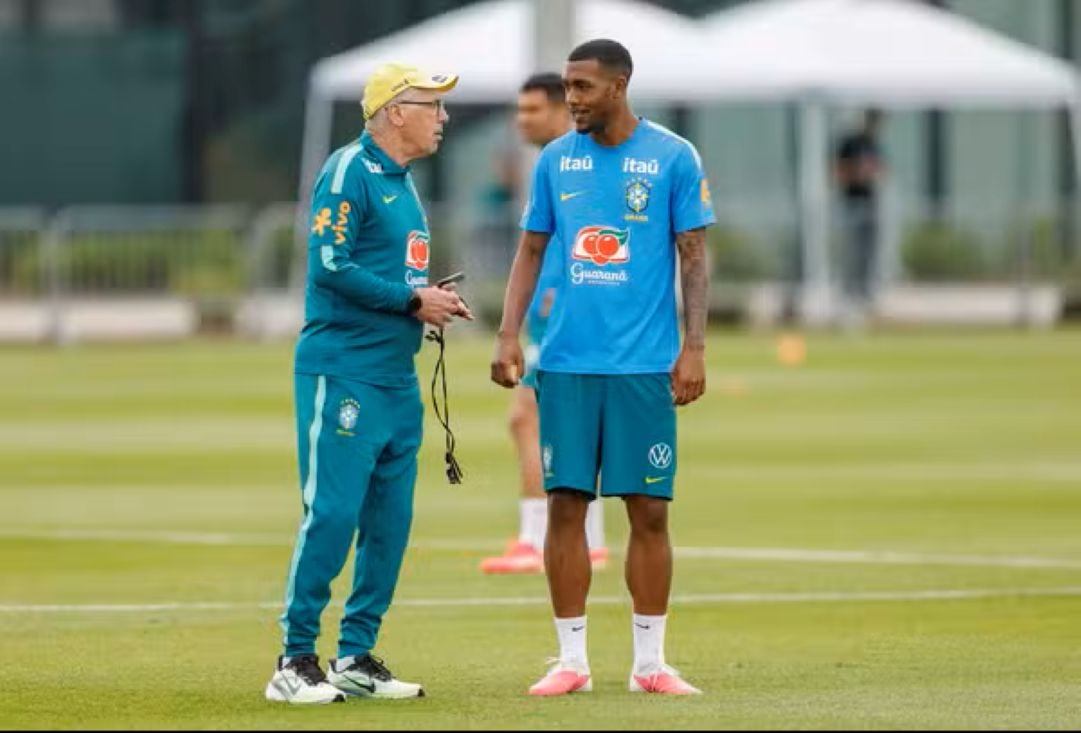
One of the most criticized points was the timing of the substitutions. Many argue that the changes were made late, when the game was already compromised and the opponent had consolidated its advantage. Players like Danilo Santos entered the field with little time remaining, without the chance to really influence the pace of the match or impact the score. This delay in acting revealed a difficulty in reading the game and making the necessary adjustments in real time. Furthermore, the decision to remove young Rayan from the field was seen as a fundamental tactical error. Rayan had been a vital support for Vini Júnior, offering depth and creativity on the pitch. His departure disrupted the team’s tactical scheme, which already had Neymar playing in a “false 9” position. Rayan’s absence left Vini Júnior isolated, without the necessary support for his sprints and dribbling, and also harmed Neymar’s dynamics, who had to retreat to get the ball, losing his firepower close to the area. The team was unbalanced, without an efficient link between the midfield and the attack, which was decisive for the loss of control of the game and for the two great goals conceded by Norway.
A cycle of disappointments: post-2002 Brazil and the search for identity
The bitterness felt by Brazil’s elimination in 2026 is not a new feeling for Brazilian fans, who have faced a series of disappointments since winning their fifth title in 2002. With each World Cup, the nation is filled with hope, but recent results have painted a picture of repeated frustration. The team has struggled to find a solid identity and a consistent style of play that sets it apart and puts it back at the top of world football. Since 2002, Brazil has gone through several coaches, with different philosophies, but none have managed to replicate the success and hegemony of the past. Promises of renewal and engaging football often do not materialize on the pitch, leading to a vicious cycle of expectations and disappointment.
The failures are not limited only to performance on the field, but also extend to aspects such as the athletes’ psychological preparation, pressure management and the ability to react to adversity. Brazilian football, which was once a reference in innovation and talent, seems to have lost part of its essence and its ability to produce players who stand out for their creativity and boldness. Compared to previous generations, who demonstrated an insatiable hunger for victories and exemplary tactical commitment, the most recent teams seem, at times, to lack that fire. The media pressure and demands from fans are immense, but the response on the field does not always reflect the magnitude of these expectations. The search for a path that takes Brazil back to the path of glory involves a deep self-analysis, which transcends the change of coaches and requires a restructuring that covers everything from the base to the elite of national football, rescuing the passion and dedication that made the team a global icon.
The contrast of responses: Mexican pride versus Brazilian frustration
The reaction of Mexican and Brazilian fans to their respective eliminations in the 2026 World Cup provides a fascinating study on sports culture and national expectations. In Mexico, the defeat against England, despite being a goodbye to the tournament and breaking a historical taboo at the Azteca Stadium, was received with a wave of pride and admiration. The population did not see bitterness, but celebrated the bravery, total dedication and dedication of their players. The team fought on equal terms against a world power, with one less player, and sold every goal dearly. For the Mexicans, the way the team said goodbye to the championship was more important than the final result, reinforcing a sense of national identity and resilience. The fans understood that, in such a competitive sport, victory is not always possible, but the effort and heart put into the field are non-negotiable and deserve recognition.
On the other hand, in Brazil, elimination was marked by deep frustration and a feeling of disappointment that echoes the failures of recent World Cups. The apathy and lack of effort perceived in the match against Norway generated widespread discontent. The Brazilian fans, accustomed to protagonism and excellence, were unable to accept their team’s tepid and lackluster performance. The perception that the players did not dedicate themselves to their fullest, that there was a lack of “blood and sweat”, fueled severe criticism. This difference in reactions reflects the disparity in expectations and the way each nation views football. For Mexicans, the honor of fighting is a primary value; for Brazilians, victory and a convincing performance are almost an obligation. The disparity in post-elimination emotions serves as a barometer of the connection between the fans and their team, exposing the complexity of the relationships between sport, identity and national passion.
Lessons from a World Cup: inspiration and reflection for the future of football
The events of the 2026 World Cup, with its dramatic eliminations and memorable performances, offer valuable lessons for the future of global football. Mexico’s unwavering dedication and England’s resilience in adverse situations show that determination and team spirit can surpass even the wildest expectations. The example of Erling Haaland and Norway highlights the importance of exceptional individual talent, but also the need for a cohesive tactical system and a winning mentality that inspires the entire squad. The passion and dedication seen on the pitch, even in defeat, are crucial elements that keep the football flame burning and connect fans to their heroes.
For Brazil, this World Cup serves as a painful, but necessary, mirror. The repetition of the same phrases and disappointments since 2002 indicates that the problems are deeper than simple changes of command. It is imperative that the Brazilian team makes an honest and courageous analysis of its deficiencies, both tactical and emotional. The persistence in schemes that do not work and the slowness in tactical decision-making, such as those observed with coach Carlo, need to be urgently reviewed. Valuing the base, the search for a modern game identity and the instillation of a culture of dedication and unconditional effort are essential steps so that Brazil can, in the future, celebrate victories with the same pride that Mexico felt in its honorable defeat. The 2026 World Cup ends, but its lessons will echo for years, shaping the paths that teams and players will follow in search of football’s ultimate glory.





