
Death of Benedito Ruy Barbosa reveals details of Pelé’s first biography with never-before-seen portraits of the king of football


Benedito Ruy Barbosa passed away last Tuesday in São Paulo, aged 95. The renowned author was hospitalized due to complications caused by chronic kidney failure, a health condition he had been living with for approximately three years.
Before consolidating himself as one of the biggest names in Brazilian television drama, the writer began his literary career by writing the first book about Pelé’s life. The work, entitled “Eu sou Pelé”, was launched in 1961 by the publisher Francisco Alves, recognized as a pioneer in the country, and represents the first autobiography of the King of Football.
Written in the first person, Benedito Ruy Barbosa’s publication reveals aspects of Edson Arantes do Nascimento’s childhood, who, as a child, dreamed of being an aviator and even worked as a shoeshine boy. The narrative offers a personal glimpse into the sporting icon’s early years.
Pelé’s biography, written by Benedito Ruy Barbosa, presented a less censored side of the player, in a period with fewer restrictions. Author of highly successful soap operas such as “Pantanal”, “Renascer” and “O Rei do Gado”, Benedito began his career as a sports reporter, closely following Pelé’s early years for the newspaper “Última Hora” and the magazine “Manchete”, before dedicating himself to television drama in 1964.
Benedito himself recalled, in an interview with ge in 2020, on the occasion of Pelé’s 80th birthday, about the invitation to do the job. “The owner of the bookstore Francisco Alves came to me. He said: ‘look, Ruy, we need a book about a football player. We’ve already had Leônidas, Jair da Rosa Pinto… but we want something about Pelé’. I argued that Pelé was a boy, but he insisted, mentioning that in Europe they already called him king”, said the author.
Benedito’s initial hesitation gave way to a period of conversations with Pelé himself about the work. During train trips across the country, he managed to convince the player to collaborate in writing that brief story, recording the first steps of a star of Brazil’s most popular sport.
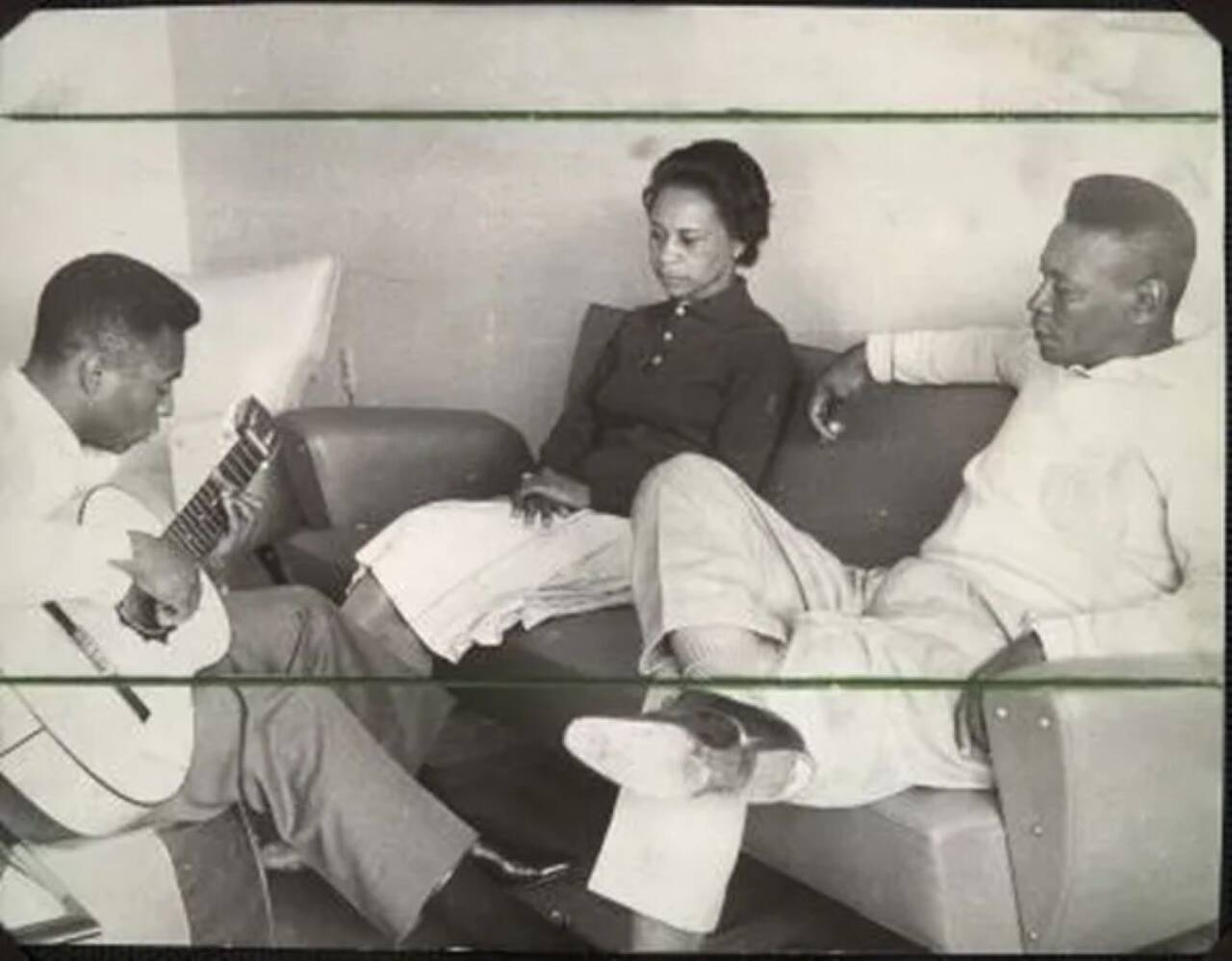
In the biography, the writer described moments of rebellion by Pelé, who, for example, reacted and cursed anyone who criticized his father, Dondinho, a player with limited success whose career was interrupted by a knee problem. The book also narrates his humble childhood between Três Corações and Bauru, until the beginning of his stardom and his arrival at Santos.
Benedito reported an unusual occasion: “One day he had lunch at my house, as he couldn’t eat in restaurants in São Paulo. There were so many requests for autographs that he had no privacy. And Pelé was very kind. We left without eating, the food on my plate got cold. He asked me: ‘Hey, Ruy, invite me to eat at your house’. I took him and didn’t tell the neighbors. I had to move house, I became the enemy of the entire block.”
Revelations about Pelé’s youth and parties with limits
In Santos, Pelé dedicated himself to a rigorous routine to strengthen his muscles and become a high-level athlete. Away from Dondinho and his mother, Dona Celeste, Pelé was closely supervised by coach Lula. However, he was never considered a troubled young man. In the work, he describes his first experience with women at the age of 14, with “a certain girl with a bad reputation”, as “a passing thing that I couldn’t avoid”.
During the Swedish Cup, where he arrived in pain and underwent intensive treatment with masseur Mário Américo, Pelé reported the success he had with blonde women. He watched as people touched his face and arms and then admired his hands, surprised that they weren’t covered in black paint.
In Sweden, Pelé became an attraction. In the book, he describes how people touched him, impressed that his hands were not painted black.
He mentioned that his white teammates were jealous and was enthusiastic when reporting on a dinner and dance in honor of the world champions. “That was a real spree, within limits, of course!”, he said.
This more reserved temperament of Pelé, even in a moment of great wonder for a young man with the world at his feet, is attributed by Benedito to Dondinho’s teachings. Pelé says that his father made him stop smoking after a few puffs and gave him advice on how to deal with the press.
Benedito Ruy Barbosa stated: “He (Dondinho) is responsible for Pelé being the way he is. Pelé treats people as he learned from his father. Dondinho was uniquely gentle. He was a man who called his son’s attention. He didn’t play with Pelé, he was a firm, strict, but friendly father. And Pelé always obeyed his father very much, he adored Dondinho. I never heard him speak ill of his father, I never saw a fight between the two.”
“He said: ‘Those who make a name for themselves are those who can also bring you down. Athletes in general need to be kind to those who are kind to them. If you show off, you’re in trouble. You’re not good, you’re great, but you need to know that, not others,'” the writer recalled.
Pelé’s frustration with his first agent and controversial excerpts from the work
Throughout his career, Pelé sought to distance himself from controversy, an attitude for which he was often accused. Benedito’s book, however, exposes a prejudiced approach to homosexuals that would be unthinkable in a current edition. When narrating several receptions around the world, Pelé describes the team’s meeting with a representative of a Brazilian consulate, who invited them to dinner at his home. The man, not identified by Pelé, “sung” the players “with a kind of strange conversation”.
“It is not appropriate for a country like ours to be represented in another nation by a pederast”, expresses Pelé in the 1961 book. “I know that, sometimes, the person is not to blame for being like that, but, what the hell!, at least they should know how to behave as a representative of Brazil”. This excerpt, inserted in a context of the time, offers an insight into social perceptions of the mid-20th century, and Pelé, in 2011, commented on social maturation in relation to homosexuality, demonstrating the importance of reevaluating historical narratives in the light of contemporary values.
In 2011, in a hardcover book from publisher Magma, which reproduced the original text of “Eu sou Pelé”, the King commented on this excerpt: “Look at how we have evolved… Today homosexuality is more respected and accepted in any segment of society, including in sport: we have excellent homosexual athletes and they are respected.”
Pelé also reflects in the work on the overload of games he was subjected to at Santos, the Seleção and even with the army team – he estimated that he played more than 100 games in 1958. Benedito Ruy Barbosa’s biography brings outbursts from the King, which clashes with the boos directed at Gilmar, Corinthians’ goalkeeper. “One day I could also be booed… I want to be prepared for that, so I don’t suffer too much.”
In the final pages, the King lamented people’s interest in exploiting him for his money. In his autobiography, he declared that he would die “single” – Pelé married three times, the first time three years after the book’s publication – as he never knew if anyone was interested in Edson or just Pelé. Benedito recalled his relationship with Pepe Gordo, Pelé’s first agent, who also worked with Zito and other Santos players.
“Pelé was honest, he had no malice. He trusted Pepe Gordo too much. When Pelé was at home, I served him and, of course, Gordo a bottle of wine. Pelé didn’t drink it. This Pepe Gordo consumed my entire bottle and that was the last time I saw him. Shortly afterwards, he disappeared with all the money that Pelé had left in his hands. And it was a considerable amount, Pelé was doing very well financially. And Pepe robbed him and other players from the club. Santos. He was never heard from again,” reported Benedito.





