
Earth moves further away from the Sun this Monday, but without influence on the weather seasons

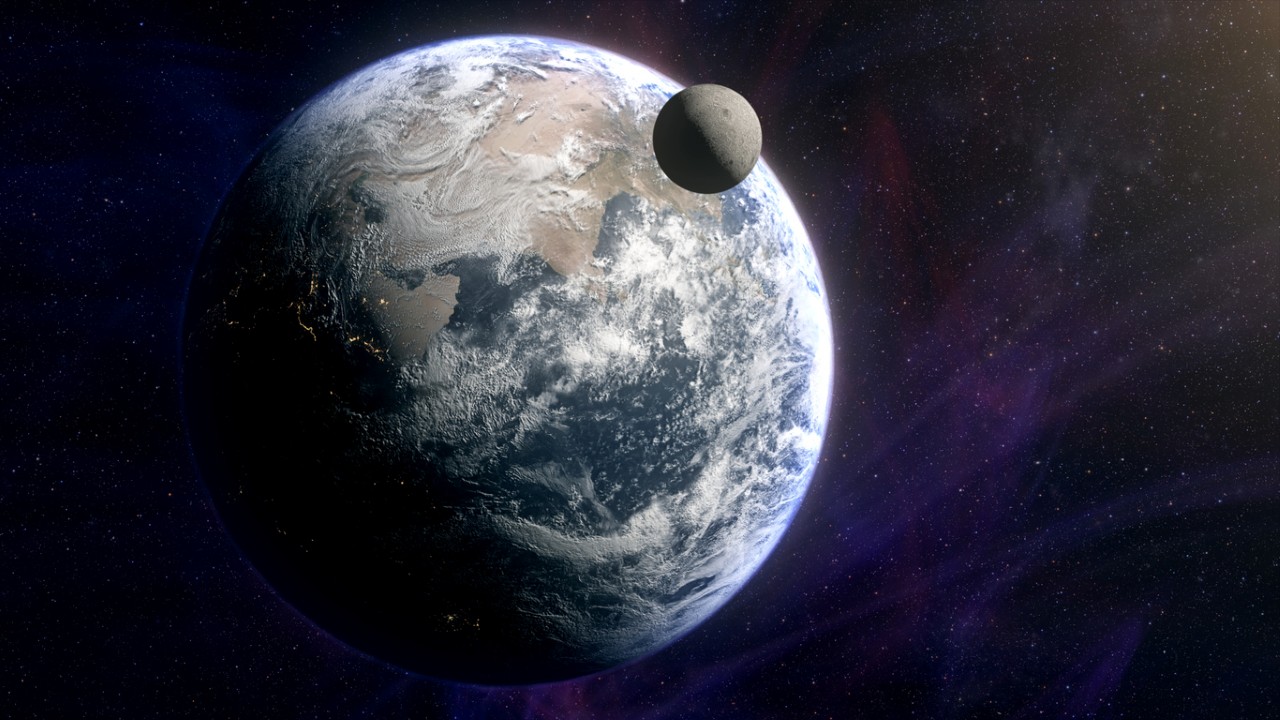
Planet Earth reached its aphelion this Monday (06), the designation for the moment in which it is at the furthest point in its orbital trajectory from the Sun. During this event, the estimated distance between the Earth and the star reached approximately 152 million kilometers, exceeding perihelion by approximately five million kilometers, the point of greatest proximity to the Sun, which generally occurs in January. Even with this significant separation, the phenomenon does not cause direct changes in global temperatures nor is it the determining factor in the seasons.

The occurrence of aphelion is a consequence of the Earth’s orbit, which does not describe a perfect circle, but rather an elliptical trajectory. When completing its translational movement around the Sun, the planet oscillates between two extremes: perihelion, when it is closer, and aphelion, when it is positioned at the furthest point. This variation in the Earth’s total distance from the Sun reaches around 3% throughout the year.
Contrary to the popular belief that winter is the result of the Earth’s greater distance from the Sun, scientific data demonstrates that this perception is incorrect. The real reason for the existence of seasons lies in the tilt of the Earth’s rotation axis, which remains at around 23.5 degrees. It is this specific inclination that unevenly distributes the incidence of sunlight over each Earth’s hemisphere throughout the different phases of the year.
Consequently, while countries in the Southern Hemisphere experience winter at the same time, regions in the Northern Hemisphere experience summer, despite being equally distant from the Sun. If distance were the predominant factor, the entire planet would experience the same season simultaneously, a condition that does not occur in reality.
Aphelion also generates a subtle decrease in the speed at which the Earth moves in its orbit. As Kepler’s second law establishes, celestial bodies tend to slow down when they move away from the central star and accelerate as they get closer. However, this variation in speed is imperceptible to the planet’s inhabitants and does not have any impact on daily life or climatic conditions.
Furthermore, the occurrence of aphelion causes a slight change in the amount of solar energy that reaches the Earth’s surface. During its furthest point from the Sun, the planet captures approximately 7% less solar radiation compared to perihelion. Despite this fluctuation, the influence is considered minimal compared to the decisive impact of the tilt of the Earth’s axis, which remains the primary factor in seasonal climate variations.
For the astronomical community, aphelion constitutes an annual and fully predictable event, representing an inherent phase in the Earth’s orbital cycle. Although it contributes to a better understanding of planetary movements, the event serves to reiterate a fundamental principle of astronomy: the sensations of cold and heat experienced during the year are much more linked to the way in which solar radiation falls on each of the hemispheres than merely to the distance between the planet and the Sun.



