
Explosive attack in Damascus near Macron’s hotel leaves 18 injured during presidential visit to Syria


Two detonations were recorded in Damascus, the Syrian capital, on Tuesday (7), in the vicinity of the hotel hosting French President Emmanuel Macron. The episode resulted in 18 people being injured, according to information released by the Syrian government.
Representatives of the French presidency confirmed that the leader is safe and did not notice the bangs. Macron, on an official visit to the country, met with Syrian President Ahmed al-Sharaa shortly after the events.
At the time of publication of this article, there was no confirmation about the possible connection between the explosions and Macron’s diplomatic agenda.
The official Syrian agency reported that two explosive devices were detonated on a busy road in the capital, located between the Ministry of Tourism and the Syrian national museum, and close to the Four Seasons hotel, where Macron is staying. Among the 18 people injured in the explosions, four were police officers.
The incidents highlight the complexity of security challenges that persist in Syria in the period following Bashar Al-Assad’s rule. Macron’s visit is notable because he is the first head of state from a prominent European Union nation to go to the country since insurgents, under the leadership of Sharaa, deposed the former Syrian dictator in 2024. This diplomatic gesture, which signals the reestablishment of ties, contrasts with the persistent instability that the attacks reveal, highlighting the latent tensions despite the political transition.
The first of the artifacts exploded minutes after Macron’s entourage left the scene, heading towards the presidential palace.
Visual footage from an international news agency revealed flames and thick smoke emerging from a garbage container, while a second explosion was captured on cameras just meters away. The second detonation occurred next to an ambulance that was parked at the location, where approximately twenty individuals had gathered.
An area near commercial establishments in the background showed flames and thick dark smoke, while rescue teams worked to control the fire.
Footage from an international news agency recorded the presidential convoy traveling along a highway towards the presidential palace, before the explosions – the route between the hotel and the palace is approximately 7 kilometers. Later photographs documented the French president alongside Sharaa and in meetings with other government representatives and Syrian military officials.
Syrian police have begun search operations to locate the perpetrators of the attacks, as reported by a state broadcaster, which cited a source linked to security. A local official revealed that streets were closed and additional security measures were put in place following the explosive events.
The French presidential office declared that the sounds of the explosions were not heard by Macron’s convoy, and a reporter from a news agency who accompanied the president did not hear the detonations or notice any change in the normality of the morning’s appointments.
Macron’s advisor reported that the French head of state intended to continue with the agenda planned for the day, ignoring the incidents.
Hours after the detonations and the meeting with Al-Shaara, Macron used his digital platforms to announce that his visit to Syria would continue, although he did not make direct reference to the incidents.
“This morning, I came across Syria in its vast diversity. I witnessed dignity, bravery and resilience. (…) Nothing will be able to silence the Syrian people’s desire for a fully sovereign, secure, pluralistic and united nation”, declared the president.
The challenges of political transformation in Syria
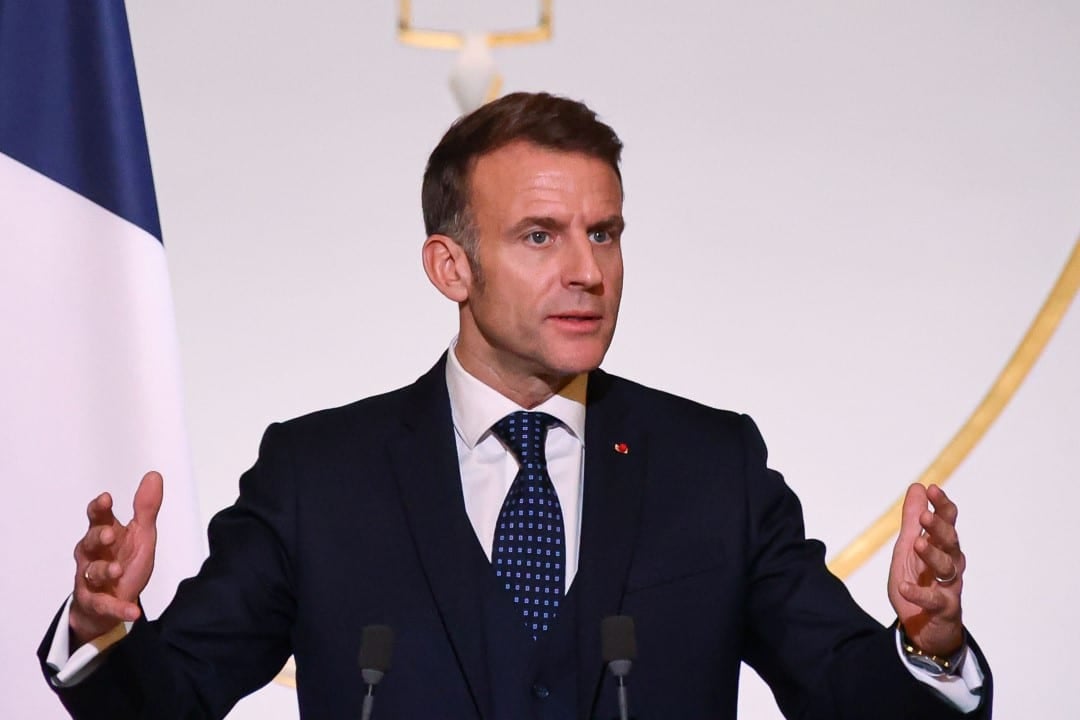
The agenda of Macron’s visit aimed to highlight the political changes in Syria under the leadership of Al-Sharaa, a figure who built closer relations with Western and Middle Eastern nations, which previously maintained isolation in relation to Assad.
The current Syrian government is also committed to recovering a country devastated by 13 years of conflict. Throughout the Syrian civil war, different militant factions, such as the Islamic State, have established a strong territorial presence.
During the previous week, a bomb attack in a Damascus coffee shop killed nine people and injured 20 others. To date, no organization has claimed responsibility for the attack.
The extremist group Islamic State has claimed responsibility for multiple attacks targeting government forces in Syria since February, when the jihadist organization declared the beginning of a new phase of offensives against the administration of Sharaa.
Sharaa, who belongs to Syria’s Sunni Muslim majority, had promised to establish a new, more inclusive order in the country after the end of more than five decades of authoritarian rule by the Assad family. However, this promise has been put to the test by recurring episodes of violence, involving clashes between forces loyal to the government and members of religious and ethnic minorities, resulting in hundreds of deaths in the previous year.




