
Fans mock Donald Trump on social media after the USA defeated Belgium in the World Cup and controversial attitude at FIFA


Fans from all over the world directed their frustrations and jokes at the former president of the United States, Donald Trump, after the American team suffered a defeat by Belgium in the 2026 World Cup. The significant defeat triggered a series of ironic comments on his profile on a social network, especially in light of a recent controversy involving the International Football Federation (FIFA).
The flood of provocations on social media
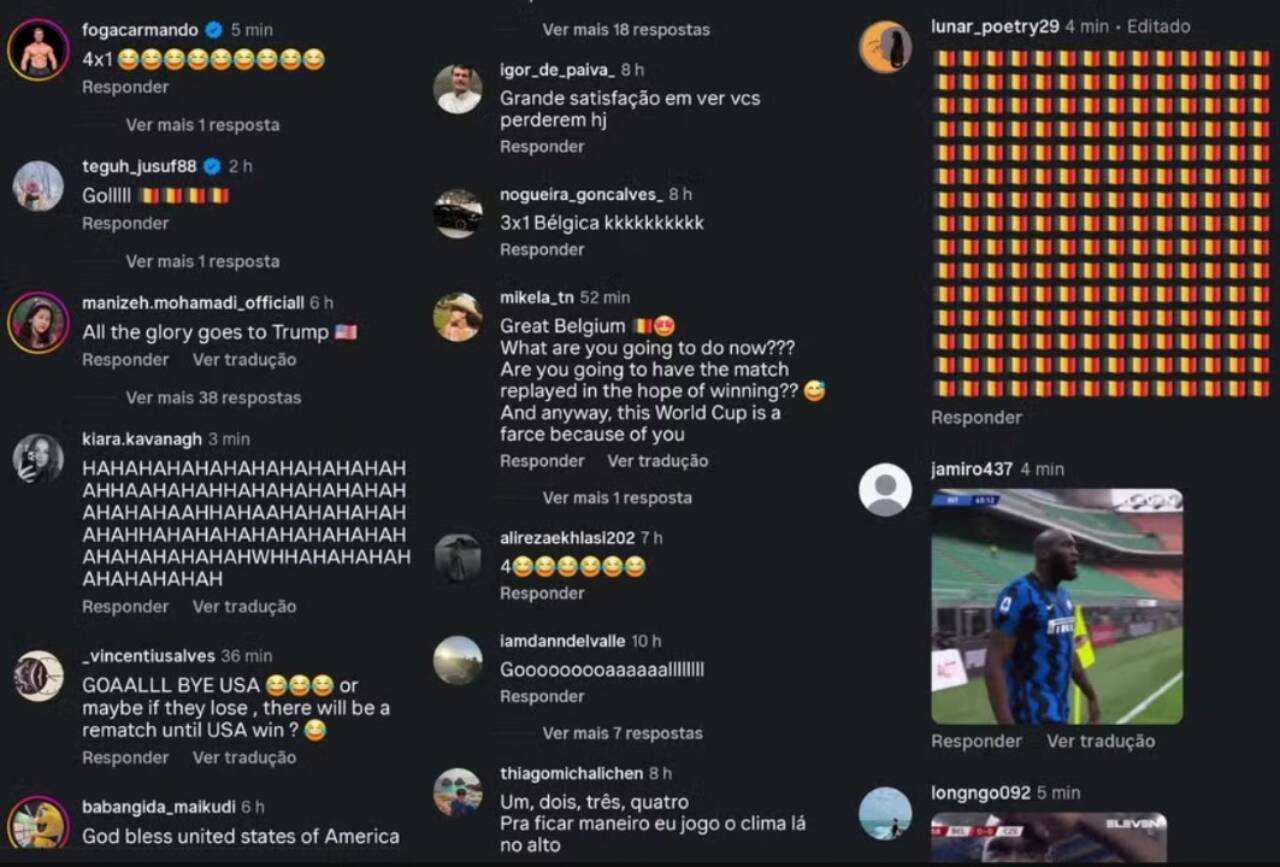
Thousands of messages flooded the former president’s page, including phrases such as “great satisfaction to see you lose” and “order Belgium’s goal to be disallowed now”. Many users also posted emojis of the Belgian flag, reinforcing the tone of mockery for the defeat suffered by the United States team.
The viral reaction occurred shortly after the result of the confrontation on the field, which ended with a score unfavorable to the Americans. The provocations intensified due to the public perception of an alleged favoritism towards the USA, a country that, alongside Canada and Mexico, will host the next football world cup.
The controversial presidential intervention in FIFA
The central cause of the indignation and jokes originated in an official request made by Donald Trump to FIFA. The former president had requested a review of a red card given to player Balogun during the USA’s previous match, against Bosnia and Herzegovina, which took place on July 1st.
This intervention by a head of state in football disciplinary decisions is unusual, raising debates about the autonomy and integrity of global sport. Historically, politics and sport have sought to maintain a clear separation to preserve the impartiality of competitions and arbitration decisions at the international level.
Trump criticizes Brazilian referee Raphael Claus
During his statements about the incident, Trump did not hesitate to openly criticize Brazilian referee Raphael Claus. He described the referee’s actions as “a bit suspicious”, vehemently contesting the decision to send Balogun off the field.
The former president stated that the red card was given unbelievable, generating perplexity among fans and even “people on the other side”, in his words. The direct criticism of an international arbitration professional added more fuel to the already existing controversy.
FIFA’s independent position
Given the repercussion of the case, FIFA President Gianni Infantino spoke publicly. He confirmed having received a call from Donald Trump, but made a point of ensuring the independence of the federation’s judicial bodies.
Infantino emphasized that disciplinary decisions are made autonomously and that he himself does not always agree with all of them. However, the president of football’s highest entity highlighted his respect for the autonomy of these bodies, seeking to dispel any impression of political interference.
The rules of the disciplinary code and the autonomy of bodies
According to the FIFA Disciplinary Code, there is the possibility that a measure such as a red card may be suspended, whether in whole or in part, depending on the analysis of the competent committees. This legal prerogative allows the review of penalties in specific circumstances.
However, Infantino’s assurance that “FIFA’s judicial bodies are independent” serves to underline the complexity of responding to external requests, especially from influential political figures. Maintaining sporting credibility at global events directly depends on this autonomy.
The impact of the controversy on the image of football
Despite FIFA’s explanations, the controversy generated a series of negative reactions, not only against Trump, but also against the player Balogun himself. Many users expressed that “a red card is a red card”, indicating that the referee’s decision should be upheld without external questioning.
Some comments were even more incisive, questioning the ethics of the athlete involved and suggesting that he should not have participated in the following match. This episode sheds light on the delicate interface between sport, politics and the public perception of fairness and impartiality in major competitions like the World Cup.





